Will Udhayanidhi Apologize to Trisha After Khushbu’s Demand?
Editorial desk - AUG 4, 2026

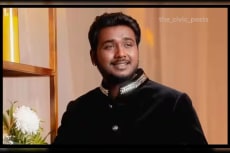
The political arena in Tamil Nadu witnessed a sharp escalation in rhetoric following a highly controversial public statement made by Dravida Munnetra Kazhagam leader and Leader of the Opposition, Udhayanidhi Stalin, during a political demonstration in Thanjavur.
Organized to highlight the long-standing and emotionally charged Cauvery water sharing dispute between Tamil Nadu and Karnataka, the protest rally was intended to focus on regional agricultural grievances and policy critiques directed at the state executive.
However, the discourse took a sudden and dramatic detour when commentary from the podium ventured into personal and gendered territory, targeting acclaimed film actor Trisha Krishnan. The resulting fallout quickly expanded beyond standard partisan sparring, drawing swift and severe condemnation from political leaders, civil rights advocates, and prominent members of the film industry.
Among the most outspoken critics was veteran actor and Bharatiya Janata Party leader Khushbu Sundar, who launched a scathing critique of the speech, framing the incident not merely as an isolated slip of the tongue, but as a troubling symptom of systemic misogyny within contemporary political campaigning.
The flashpoint occurred while Udhayanidhi Stalin was delivering an impassioned address criticizing Chief Minister C. Joseph Vijay over his administration's handling of the Cauvery water crisis and his public silence regarding state water allocation. As the opposition leader spoke, sections of the gathered crowd began chanting the name of actress Trisha Krishnan, referencing persistent social media gossip and tabloid speculation linking the actor to the Chief Minister.
Rather than ignoring the interruptions or steering the audience back to the substantive policy matters concerning delta farmers, Udhayanidhi paused and responded with a remark widely interpreted as a suggestive double entendre and sexual innuendo.
Although he immediately smiled and attempted to soften the statement by asserting that he was making a technical analogy about river water connectivity, the implied reference was unmistakable to attendees and digital viewers alike. The clip circulated rapidly across social media platforms and television broadcasts, sparking widespread public outrage and intense media debate.
Reacting forcefully to the video footage, Khushbu Sundar issued a detailed public statement condemning the language used at the rally in unequivocal terms. Describing the speech as crass, cheap, and deeply derogatory, the senior politician argued that such rhetoric reflected poorly on the political movement and democratic traditions that the opposition leader sought to inherit and represent.
Khushbu emphasized that political rivalries and policy disagreements, regardless of how intense or contentious, must never be used as a license to attack the dignity of women or reduce them to instruments for scoring quick applause from male-dominated crowds.
Her critique articulated a growing societal frustration with the casual objectification of female public figures who hold no official role in electoral contests or administrative governance, asserting that public platforms should never be degraded into venues for gendered harassment.
In her intervention, Khushbu Sundar explicitly demanded an unconditional public apology from Udhayanidhi Stalin to Trisha Krishnan for subjecting her to insult before thousands of attendees. She warned that normalizing crude language and double meanings in the political sphere establishes a dangerous precedent that eventually compromises the safety, respect, and dignity owed to all women across society.
According to Khushbu, when female dignity is treated as a casualty of political mudslinging, no household or family remains immune from the broader cultural erosion of respect.
She challenged the political leadership to demonstrate moral courage, maturity, and accountability by acknowledging the mistake and offering a formal retraction, rather than hiding behind evasive explanations, political defenses, or partisan counter-accusations.
The condemnation extended well beyond party lines, gaining significant traction from influential voices within the cultural and artistic community, including renowned playback singer and voice artist Chinmayi Sripaada. Sharing her perspective on digital platforms, Chinmayi expressed deep disappointment over the recurring tendency of political figures to drag women into male-dominated power struggles.
She observed that while older generations of politicians often utilized coarse language that was regrettably normalized in past decades, younger political leaders are expected by the public to embody higher standards of gender sensitivity and decorum.
Chinmayi pointed out that an effective leader should possess the basic discipline to instruct an audience to behave respectfully, rather than indulging or amplifying crude crowd behavior for cheap political points.
She noted that many women initially failed to grasp the statement because it relied on an insider culture of objectification, underscoring the need for public figures to elevate public conversation rather than cater to low common denominators.
The backlash rapidly escalated into a major political and legal crisis for the opposition setup, with representatives from the ruling Tamilaga Vettri Kazhagam and the Bharatiya Janata Party issuing coordinated statements of protest.
Spokespersons from TVK accused Udhayanidhi Stalin of debasing Tamil political discourse and betraying the historic rhetorical standards of the state’s legislative traditions. Party representatives questioned whether such language reflected acceptable standards for an individual holding constitutional responsibilities, condemning the practice of treating women as collateral targets in state disputes.
BJP representatives similarly characterized the speech as obscene and unacceptable, alleging that it demonstrated a perverted attitude toward women in public life and demanding immediate accountability under applicable legal provisions.
As public indignation continued to build, law enforcement agencies initiated formal legal proceedings regarding the demonstration speech. Police registered cases under relevant sections governing public decency and defamation, leading to high-voltage political drama in Chennai. Police personnel were deployed outside Udhayanidhi Stalin’s residence, culminating in his brief detention by authorities. In response to the legal actions, the opposition leader moved the Madras High Court seeking anticipatory bail to prevent formal arrest.
Addressing reporters regarding the developments, Udhayanidhi defended his address by claiming that he had not explicitly named any individual other than the Chief Minister, alleging that the legal charges and media storm were politically motivated attempts by political opponents to divert public attention away from the genuine grievances of farmers suffering due to the Cauvery water shortage.
The controversy brings into sharp focus the persistent challenges surrounding gender dynamics, celebrity culture, and the boundaries of ethical communication in Indian politics. For decades, female actors transitioning into or intersecting with the political sphere have faced disproportionate personal scrutiny, intrusive speculation, and derogatory commentary compared to their male counterparts.
When political rallies substitute substantive policy debate with gendered insults and double entendres, it reinforces patriarchal structures that view women as passive objects rather than independent professionals. The decisive stance taken by leaders like Khushbu Sundar underscores a growing refusal within society to tolerate such practices, asserting that personal lives and professional women must be protected from opportunistic political weaponization.
Furthermore, the episode highlights the crucial role played by experienced female leaders and public intellectuals in establishing accountability across party lines. By refusing to let the incident pass as routine campaign banter, critics have forced a broader public reflection on the ethics of mass communication, the duty of speakers to manage audience behavior, and the absolute necessity of enforcing mutual respect in democratic engagements.
The insistence on an unconditional apology serves as a reminder that authority and high office carry an inherent obligation to uphold public decency, practice self-restraint, and respect the fundamental dignity of every citizen.
Ultimately, the confrontation surrounding Udhayanidhi Stalin's remarks regarding Trisha Krishnan marks a pivotal moment in the ongoing evolution of political discourse in Tamil Nadu. As the state navigates complex socio-economic challenges, resource disputes, and intense electoral competition, the demand for ethical leadership and respectful rhetoric remains stronger than ever.
The widespread disapproval generated by the incident demonstrates that public tolerance for derogatory remarks targeting women has diminished significantly, sending a clear message to leaders across the political spectrum that gender respect is non-negotiable and that political rivalry must always remain within the bounds of civil decency.