200 Units Free Power, Safety Force & Liquor Reform Plan Mark Vijay’s First Decisions
Alekhya Kota - MAY 13, 2026
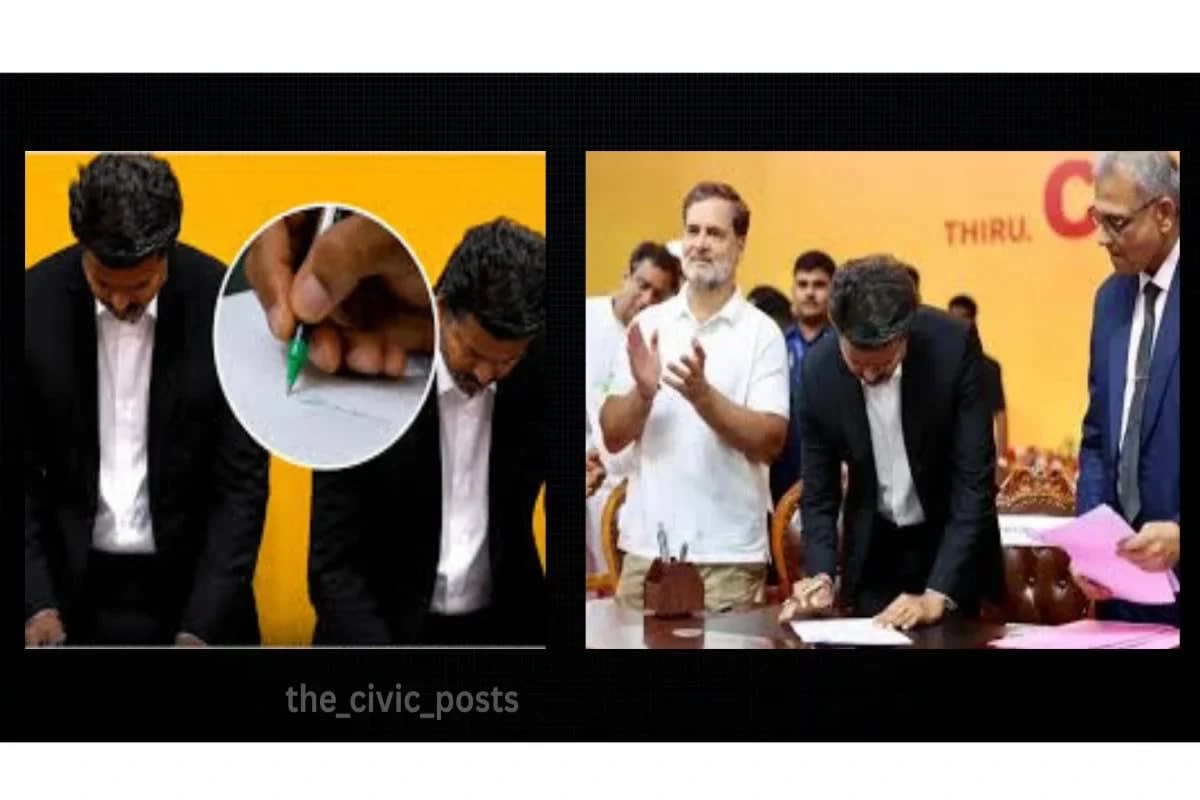
Vijay’s First Day in Office: Free Electricity, Women’s Safety Force, Anti-Drug Drive & Liquor Shop Reform Plans Take Center Stage
Tamil Nadu’s newly appointed Chief Minister Vijay has made a strong administrative start by announcing a set of major policy priorities on his very first day in office. His initial decisions focus on public welfare, safety reforms, and strict action against social issues, clearly indicating the direction of his governance.
One of the most impactful announcements is the extension of 200 units of free electricity to eligible households across the state. This decision is expected to provide direct relief to millions of families, especially from economically weaker sections. By reducing monthly electricity expenses, the government aims to ease financial pressure and improve household stability. The scheme is also seen as a continuation of welfare-oriented governance focused on basic needs.
In a significant step toward improving public safety, Vijay has also announced the formation of a dedicated Women’s Safety Force. This specialized unit will focus entirely on preventing crimes against women and ensuring quicker response mechanisms in sensitive situations. The force will work in coordination with local police stations and emergency systems to strengthen security in both urban and rural regions. The move has been widely seen as an effort to build greater confidence among women across the state.
Another major highlight of his early decisions is the creation of a state-level anti-narcotics unit. This unit will be responsible for tracking drug trafficking networks, preventing substance abuse, and conducting statewide enforcement drives. Special attention will be given to protecting youth from drug addiction through awareness programs and strict legal action against offenders. The initiative reflects the government’s intent to address the growing concern of drug-related issues in society.
Along with these welfare and security measures, discussions have also begun around a possible restructuring of liquor sales policy, including the gradual closure or regulation of government-run wine shops. The proposal aims to reduce alcohol-related social issues while considering public health and safety concerns. Although no final decision has been implemented yet, the idea has sparked wide debate among political observers and the public. Supporters believe it could reduce addiction and related problems, while critics warn about revenue impact and enforcement challenges.
Together, these decisions reflect a broader governance approach focused on social welfare, safety, and behavioral reforms. By combining financial relief measures like free electricity with strict law-and-order initiatives and policy-level discussions on liquor regulation, the administration appears to be targeting multiple dimensions of public life.
Political analysts note that these announcements are closely aligned with the promises made during the election campaign. However, they also emphasize that successful implementation will depend on strong planning, budget management, and administrative efficiency. Welfare schemes such as free electricity require sustainable funding models, while safety and anti-drug initiatives need consistent enforcement at ground level.
Public response to these early decisions has been largely positive, with many welcoming the focus on household relief and women’s security. At the same time, the discussion around liquor shop regulation has generated mixed reactions, reflecting the complexity of balancing social reform with economic considerations.
Overall, Vijay’s first day in office has set a clear tone for his leadership style-people-focused, action-driven, and reform-oriented. With key announcements covering electricity support, women’s safety, anti-drug enforcement, and potential liquor policy changes, the government has signaled a strong intent to address both economic and social challenges from the outset.
The coming months will be crucial in determining how effectively these plans are executed and how they shape the state’s development and governance landscape.