BJP Demands Apology from Rahul Gandhi After Controversial Protest at AI Summit
Kranthi Shekar - FEB 23, 2026
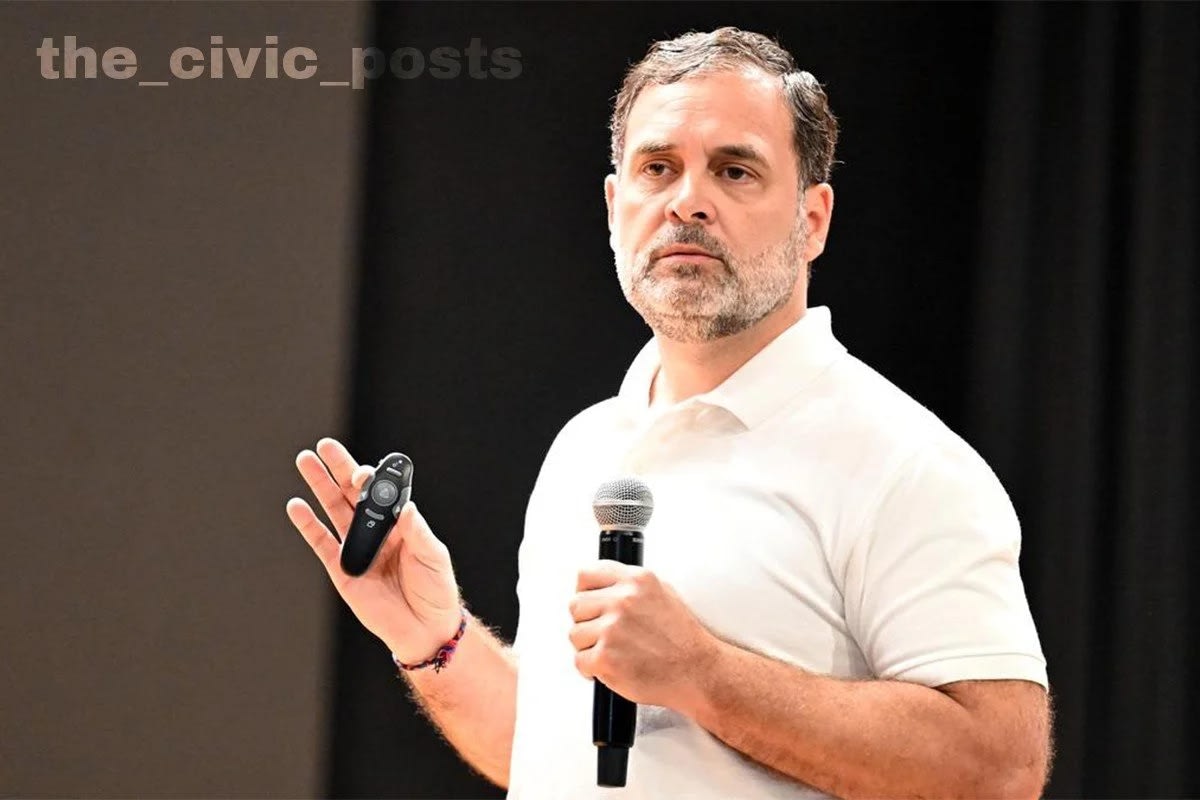
Political tensions have intensified following a provocative protest at a high‑profile artificial intelligence summit in New Delhi. Activists associated with the Congress party staged a demonstration inside the event that drew widespread attention. The protest involved participants removing their shirts and holding placards, an act that drew sharp criticism from the ruling Bharatiya Janata Party (BJP).
The BJP has strongly condemned the manner of the protest, saying it was inappropriate for a global forum and harmful to India’s image as a host nation. Party leaders have pinpointed Rahul Gandhi as responsible for the incident, arguing that as a senior leader of the Congress party, he should take accountability and publicly apologise for what they described as a disrespectful display in front of international delegates.
According to BJP spokespersons, their objection is not to peaceful dissent itself but to the way it was carried out inside the summit. They have said that the protest diverted attention from the key discussions on technology and innovation and instead cast the event into controversy. The party’s public statements have described the protest as an embarrassment that should not have taken place in such a forum.
The response has not been confined to rhetoric alone. BJP members and supporters staged demonstrations in various parts of the country to express their disapproval. In some locations, youth leaders from the BJP’s affiliated organisations held rallies and meetings, emphasising respect for national dignity and urging political leaders to uphold decorum, especially at international events.
While the demand for an apology from Rahul Gandhi has become a central focus of the BJP’s reaction, opinions across the political spectrum have varied. Some leaders within opposition ranks have also criticised the protest as ill‑timed or poorly conceived, saying that although protest is a rightful democratic tool, the setting and manner matter. These leaders have stressed that dissent should be expressed thoughtfully, without overshadowing the purpose of events meant to showcase India’s progress and potential.
Supporters of the Congress party, on the other hand, have defended the right of individuals and activists to protest government policies. They argue that political dissent is an essential part of democratic discourse. However, even some of these voices have acknowledged that staging such a demonstration in an international forum may not have been the most effective choice of venue.
The controversy has reignited broader debates about the nature and limits of political expression in India. This includes discussions on how protests should be conducted when dignitaries, foreign delegates, and global audiences are present. Critics of the protest say that the method chosen detracted from more substantive criticism of government policies, while proponents underscore the importance of visibility for political messages.
As the political discourse continues, the BJP’s demand for an apology remains a prominent element of the fallout from the summit incident. The party has framed its call for contrition as part of a larger appeal for responsible political behaviour, particularly in settings that attract global attention.
In the midst of these developments, both parties are navigating the implications of the episode for their public narratives. The controversy is likely to be referenced in future political exchanges, with each side seeking to reinforce its position on how political dissent and national representation should be balanced in public life.