Hyderabad Feels the Shockwaves as West Asia Turmoil Disrupts Global Air Links
Kranthi Shekar - MAR 3, 2026
Rising Conflict, Widening Impact
The escalating tensions in West Asia have begun to ripple far beyond the immediate conflict zone, affecting cities that serve as major international travel hubs. Hyderabad, home to the bustling Rajiv Gandhi International Airport, is among the Indian cities witnessing significant disruption. As critical air corridors across the Gulf region face restrictions or temporary closures, the effects are being felt strongly in flight schedules, passenger movement, and aviation logistics.
Though geographically distant from the epicenter of the unrest, Hyderabad’s global connectivity has made it vulnerable to the indirect consequences of the crisis. The city’s airport handles thousands of passengers daily, many traveling to or transiting through Middle Eastern destinations. With shifting flight paths and mounting safety concerns, both airlines and passengers are navigating a challenging period.
Airspace Closures Trigger Chain Reaction
The current turmoil in West Asia has prompted several nations to reassess the safety of their airspace. Heightened military activity and security risks have led to restrictions over key aviation corridors that typically serve as transit routes between Asia, Europe, and North America.
Airlines operating long-haul routes often depend on Gulf airspace due to its strategic geographic location. When these corridors become unavailable, carriers are forced to either reroute flights along longer paths or suspend services altogether. This has created a cascading effect across global networks, impacting airports like Hyderabad that rely heavily on smooth international transit.
Rerouting not only increases travel time but also raises operational costs due to additional fuel consumption and crew scheduling adjustments. In some cases, logistical constraints make rerouting impractical, resulting in outright cancellations.
Hyderabad’s Strategic Position in International Travel
Hyderabad has emerged over the years as a key aviation gateway for southern India. With strong passenger traffic to destinations in the Gulf, Europe, and North America, the city plays an important role in international mobility. Many residents travel frequently to Gulf nations for employment, education, and family visits.
The disruption of Middle Eastern airspace has directly affected these travel patterns. Flights connecting Hyderabad to cities across the Gulf region have experienced delays and cancellations. Moreover, onward connections to Europe and other western destinations have become less predictable due to changes in routing.
As a result, travelers who once relied on seamless connectivity now face uncertainty and frequent schedule changes.
Passenger Concerns and Immediate Challenges
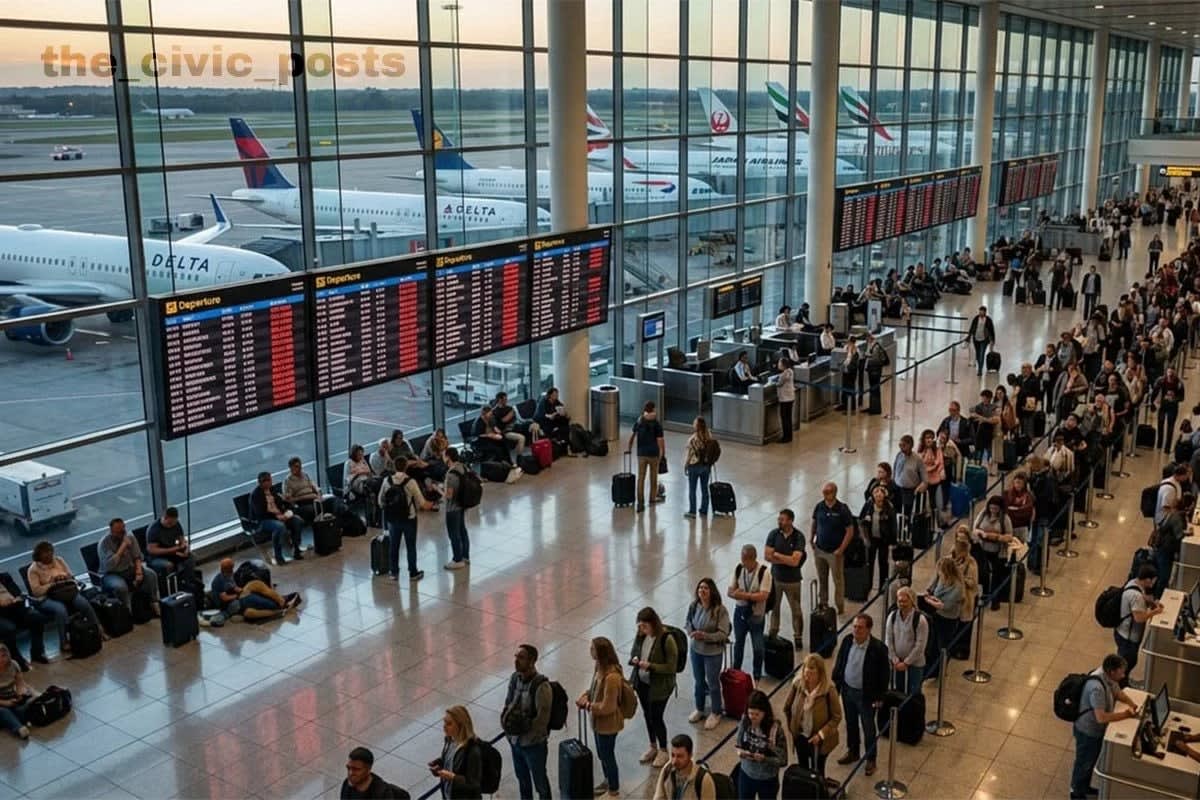
For many travelers, the sudden alterations have caused confusion and anxiety. Those planning urgent trips - whether for work commitments, medical needs, or family matters - have found themselves adjusting plans at short notice. Passengers arriving at the airport have sometimes discovered last-minute cancellations or significant delays.
Airport authorities have been working to manage the flow of information and assist affected individuals. Help desks and airline counters are experiencing increased footfall
as travelers seek clarification regarding rescheduling options and refund procedures.
Despite the inconvenience, officials emphasize that passenger safety remains the foremost priority. Airlines are making decisions based on evolving security assessments and guidance from international aviation regulators.
Airlines Adapt to a Fluid Situation
Carriers operating from Hyderabad are actively monitoring developments in West Asia and revising schedules accordingly. Some airlines have temporarily reduced the frequency of flights to affected regions, while others are exploring alternative transit hubs to maintain connectivity.
Passengers are being advised to regularly check their flight status through official airline websites or customer service channels before heading to the airport. Flexible rebooking policies are being extended in many cases, allowing travelers to modify their plans without heavy penalties.
Though these adjustments help mitigate inconvenience, the unpredictability of the situation continues to pose challenges for both airlines and customers.
Economic and Operational Implications
The disruption goes beyond passenger travel. Hyderabad’s airport also supports cargo operations, including shipments of pharmaceuticals, electronics, and perishable goods. Delays or route changes can impact supply chains, particularly when goods are time-sensitive.
From an operational standpoint, rerouted flights require additional fuel and longer crew duty hours, increasing overall costs. Over time, these added expenses may influence ticket pricing and airline profitability if the conflict persists.
Local travel agencies and tour operators are also grappling with cancellations and shifting itineraries. Many have had to coordinate extensively with airline partners to secure alternative arrangements for their clients.
Government and Aviation Authority Response
Civil aviation authorities are closely observing the evolving scenario. Airlines are coordinating with international regulatory bodies to ensure compliance with safety advisories. Travel guidelines are being updated as needed, and passengers are encouraged to rely on verified sources for information rather than speculation.
Officials have reiterated that all decisions regarding route suspensions or diversions are being made with caution and careful risk assessment. The aim is to prevent any compromise on passenger safety while maintaining as much connectivity as possible.
Looking Ahead: Uncertainty With Cautious Optimism
The timeline for normalization remains unclear, as it depends largely on how the geopolitical situation unfolds. Aviation networks are highly interconnected, and stability in one region often influences global operations.
For Hyderabad, resilience and adaptability will be key.
The city’s airport has previously managed disruptions caused by global events, including health crises and natural disasters. While the current situation presents its own complexities, coordinated efforts between airlines, airport authorities, and government agencies are helping to manage the impact.
Travelers are advised to remain patient, flexible, and informed. While disruptions are inconvenient, they reflect broader international efforts to prioritize safety in a volatile environment.
Conclusion: A Global Crisis With Local Consequences
The developments in West Asia demonstrate how interconnected the modern world has become. Events unfolding thousands of kilometers away can directly influence daily life in cities like Hyderabad. As major transit routes face restrictions, the ripple effects are visible in flight schedules, passenger experiences, and business operations.
Though uncertainty persists, continued coordination and transparent communication are helping to ease the burden on travelers. Until stability returns to the affected region, Hyderabad’s aviation ecosystem will continue adapting to safeguard both connectivity and security.