Massive Six-Lane Elevated Flyover Planned to Transform Vijayawada’s Road Network
Kranthi Shekar - FEB 23, 2026
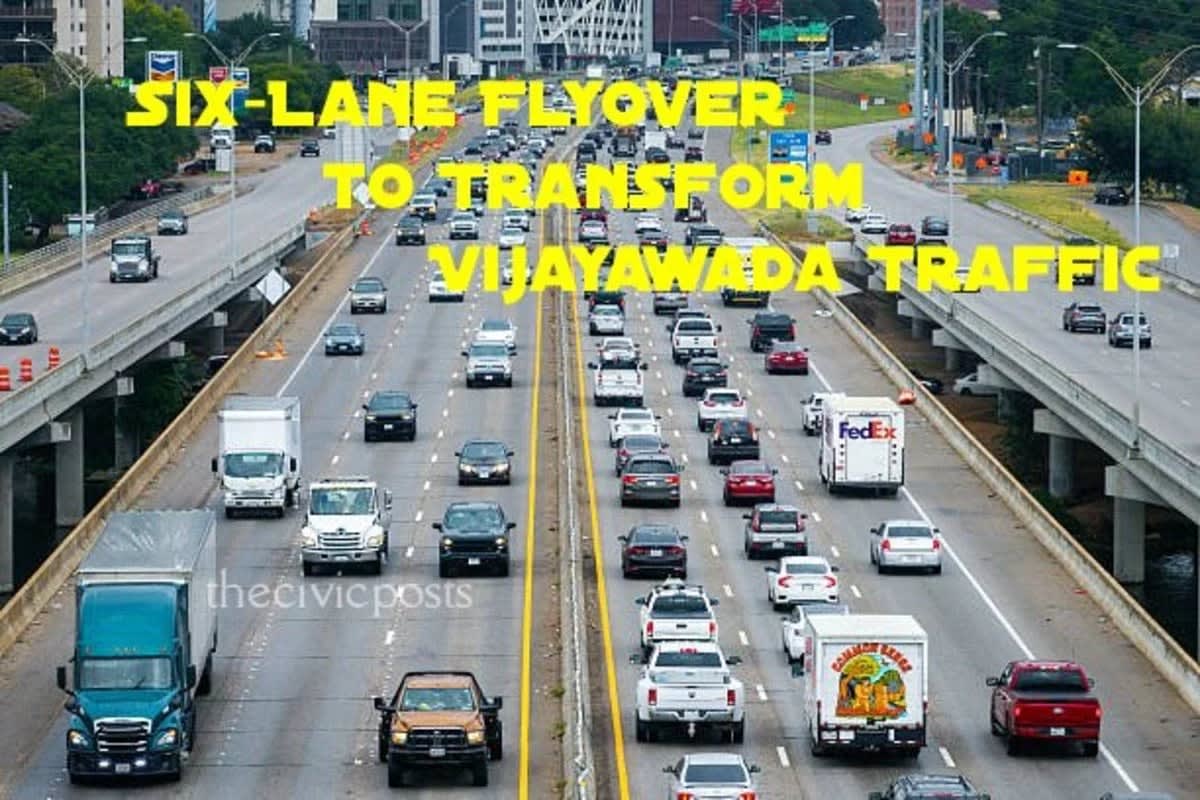
Vijayawada is preparing for a significant infrastructure upgrade with the proposed construction of a six-lane elevated flyover aimed at addressing long-standing traffic congestion in the city. As one of Andhra Pradesh’s busiest urban centers, Vijayawada has witnessed rapid population growth, commercial expansion, and a sharp rise in vehicle numbers. These factors have collectively placed enormous pressure on its existing road systems. The new elevated corridor is expected to offer a long-term solution to these mobility challenges.
Rising Traffic Pressure in a Growing City
Over the past decade, Vijayawada has strengthened its role as a commercial and transportation hub. Its strategic location connects multiple important highways, making it a gateway for passenger and freight movement across regions. While this connectivity supports economic growth, it has also led to severe traffic congestion, particularly during peak hours.
Heavy vehicles, long-distance buses, private cars, and local commuters often share the same surface roads. This mix slows down traffic movement and increases the risk of accidents. Even with earlier road expansions, certain stretches continue to experience daily bottlenecks. Recognizing the need for a more sustainable solution, authorities have planned an elevated flyover that will separate fast-moving transit traffic from local city movement.
How the Elevated Flyover Will Help
The six-lane elevated structure is designed to allow uninterrupted traffic flow above ground level. Vehicles that are simply passing through the city can use the flyover without being delayed by traffic signals, intersections, or pedestrian crossings. Meanwhile, local traffic will continue to use the roads below.
This separation of traffic types is expected to bring several benefits:
Significant reduction in travel time
Smoother traffic flow at busy junctions
Lower fuel consumption due to fewer stops
Reduced road stress and accident risk
Commuters who spend hours navigating crowded roads are likely to experience noticeable improvement once the project is completed.
Planned Alignment and Connectivity
The flyover is expected to cover a major stretch of one of Vijayawada’s busiest corridors. Engineers have carefully studied traffic density, future growth patterns, and structural feasibility before planning the alignment. The route will link important entry and exit points of the city, ensuring continuous connectivity.
Because the project involves building upward rather than expanding outward, the need for large-scale land acquisition is expected to be limited. This approach helps reduce displacement concerns and keeps disruptions to nearby properties relatively low. Modern construction techniques will likely be used to ensure durability, safety, and efficient maintenance.
Economic Boost for the Region
Infrastructure improvements often create ripple effects throughout a city’s economy. A high-capacity flyover can enhance logistics efficiency, benefiting businesses that depend on road transport. Faster movement of goods may encourage trade and attract new investments.
Improved connectivity also tends to raise the appeal of surrounding areas for residential and commercial development. Real estate activity near major infrastructure projects frequently gains momentum once accessibility improves. Over time, this can contribute to job creation and stronger economic growth.
Additionally, the construction phase itself will generate employment opportunities. Skilled workers, engineers, contractors, and support staff will all be involved in the project, creating both direct and indirect jobs.
Coordination and Urban Integration
A project of this magnitude requires careful coordination among multiple departments, including urban planning, transportation, utilities, and public safety authorities. Proper integration with existing roads, drainage systems, and public transport routes is essential.
Authorities are expected to incorporate safety features such as proper lighting, guardrails, and clear signage. Attention will also be given to maintaining smooth entry and exit points to prevent new bottlenecks from forming at access ramps.
Temporary Challenges During Construction
While the long-term benefits are promising, construction activities may temporarily inconvenience residents and commuters. Traffic diversions, reduced lane availability, and construction noise are common during such large-scale projects. Effective communication and phased execution will play a key role in minimizing disruption.
Public cooperation and patience will be essential as the city undergoes this transformation. If managed efficiently, the construction period can be handled without causing major setbacks to daily life.
A Step Toward Modern Urban Mobility
The proposed six-lane elevated flyover reflects a forward-thinking approach to urban development. Instead of repeatedly widening ground-level roads, the city is opting for a vertical solution that maximizes space and efficiency. This model is increasingly being adopted in growing cities where space constraints and traffic volume demand innovative planning.
Once completed, the elevated corridor could become a defining feature of Vijayawada’s transport infrastructure. By easing congestion, improving travel time, and supporting economic expansion, the project has the potential to reshape how people move within the city.
If executed successfully, the flyover will not only solve current traffic problems but also prepare Vijayawada for future growth, ensuring smoother journeys for years to come.