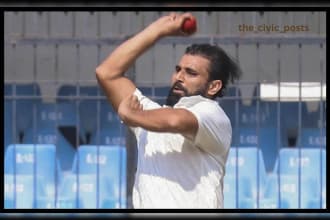
Ben Stokes Says No to Comeback, Yes to Coaching
Editorial desk - AUG 4, 2026

The landscape of modern international cricket has long been shaped by larger-than-life figures whose decisions resonate far beyond the boundaries of the playing field, and few individuals in recent memory have carried as much weight in that regard as former England Test captain Ben Stokes.
Having recently brought down the curtain on a legendary playing career that included unforgettable triumphs in the 2019 World Cup final and the iconic Ashes victory at Headingley, Stokes has once again captured the sporting world's attention by opening up about his definitive stance on his playing future and his explicit ambitions for the next chapter of his life in the game.
In his first major public interview since stepping away from international duty, during an in-depth conversation on the For The Love Of Cricket podcast hosted alongside his long-time international teammates Stuart Broad and Jos Buttler, Stokes provided absolute clarity regarding the rumors surrounding a potential comeback while simultaneously setting his sights on an ambitious long-term goal: eventually returning to the national setup as the head coach of the England men's cricket team.
For months following his retirement announcement, speculation had inevitably simmered across English cricket circles about whether the high-octane all-rounder might be tempted out of retirement for one final, heroic hurrah. Speculation reached a fever pitch after England's managing director of men's cricket, Rob Key, hinted publicly that the door would always remain open for a player of Stokes' pedigree, acknowledging that with a personality as unpredictable and fiercely competitive as Stokes, almost anything was within the realm of possibility.
Having previously reversed his decision to retire from One Day Internationals in order to feature in the 2023 World Cup, observers wondered if the lure of another high-stakes battle against traditional rivals might coax the iconic leader back into red-ball action. However, when questioned directly on the matter, Stokes left no room for ambiguity or hesitation, offering a blunt and uncompromising assessment that his playing career in England colors is unequivocally finished.
He emphasized that his decision was not made lightly or in the heat of a single moment, but was the result of a deep, honest realization that four demanding years at the helm of the Test team had completely drained his reservoir of emotional and physical energy.
The sheer physical and psychological toll of serving as both the team's primary all-rounder and its inspirational leader had reached a tipping point where he simply felt he had no fight left to give at the international level.
Stokes made it abundantly clear that he harbors no lingering doubts or secret desires to stage a sensational comeback, firmly shutting the door on any potential return for upcoming marquee assignments or future Ashes series. Yet, while his days as an active international performer have drawn to a permanent close, his connection to the game and his desire to shape the future of English cricket remain as vibrant as ever.
Far from walking away from the sport entirely to enjoy a quiet life of leisure, the thirty-five-year-old revealed that he is already actively preparing for his second act within the sport by undertaking his Level Three coaching qualifications while finishing out his domestic playing commitments.
Stokes explained that his goal is to have all of his official coaching accreditations fully signed off and completed by the time he hangs up his boots at the domestic and franchise levels, ensuring a seamless transition into top-flight coaching.
Stokes expressed an unyielding passion for staying deeply involved in the sport through tactical direction and leadership, unabashedly admitting that his ultimate ambition is to one day take charge of the England national team as its head coach. He voiced supreme confidence in his ability to excel in such a role, noting that his extensive firsthand experience leading the country through high-pressure scenarios gave him a unique perspective on the immense weight of responsibility that sits on a head coach's shoulders.
Having spent years making crucial, match-defining decisions in the heat of battle, he feels uniquely equipped to guide the next generation of players through the psychological and tactical challenges of elite international sport.
The prospect of stepping into a managerial and mentorship role allows him to retain the competitive adrenaline and strategic influence of top-level leadership without placing the relentless physical strain on his body that eventually brought his playing career to a halt.
Beyond outlining his personal career trajectory, Stokes offered a candid and insightful critique of the recent administrative decisions surrounding England's Test captaincy and squad hierarchy. In particular, he expressed surprise and mild disappointment over how the leadership transition was handled following his departure.
During his tenure as captain, Stokes had actively groomed dynamic middle-order batter Harry Brook as his designated vice-captain and natural successor, repeatedly praising the young batsman's freakish natural talent, fearlessness, and emerging leadership qualities.
Stokes reiterated his belief that when team management identifies a player as a potential future leader, the most effective approach is to grant them the responsibility outright rather than hesitating.
He referenced a specific instance during his final series when he missed a Test match, pointing out his confusion as to why Brook, despite officially holding the vice-captaincy, was not asked to step up and lead the side on that occasion.
From Stokes' perspective, bypassing a designated deputy during the captain's absence sends confusing signals about trust and hierarchy, missing a valuable opportunity to blood a young leader in live match conditions.
Stokes was similarly candid regarding the reappointment of Joe Root as Test captain alongside incoming head coach Stephen Fleming. While Stokes expressed profound personal affection and career-long admiration for Root, wishing his close friend and predecessor every bit of success in his second stint in charge, he could not entirely hide a layer of genuine concern for Root's personal well-being.
Having witnessed firsthand the immense strain Root endured during his first five-year tenure as captain between 2017 and 2022-a grueling period marked by intense bubble life, bio-security protocols, and a punishing schedule that eventually took a severe emotional toll-Stokes voiced worry about the job once again becoming overly consuming for England's premier run-scorer.
He noted that Root possesses a rare, selfless disposition where he consistently prioritizes the needs of the team, the institution, and his teammates far above his own personal comfort, often coming second to the collective cause.
Stokes made it clear that while he fully supports Root and expects him to thrive alongside a tactical mastermind like Fleming, his primary hope is that Root is protected from the crushing burdens that previously made the role so mentally exhausting.
The honesty with which Stokes spoke about these team dynamics reflects the defining feature of his entire tenure as captain: an unfiltered, authentic approach to leadership that transformed the identity of English red-ball cricket. Alongside former head coach Brendon McCullum, Stokes pioneered an aggressive, boundary-pushing philosophy that captured the imagination of cricket fans across the globe.
That era was defined not merely by rapid run rates or unorthodox field placings, but by a fundamental shift in mindset that eliminated the fear of failure and encouraged players to embrace calculated risk-taking at every turn.
By refusing to play for draws and constantly seeking positive outcomes even from positions of extreme vulnerability, Stokes redefined how Test matches could be contested in the modern era.
As Stokes steadily transitions from an active participant on the field toward a future in the coaching realm, his legacy as a cricketer is already firmly secure. He remains one of the most complete and captivating all-rounders in the history of English sport, a big-match performer whose greatest moments arrived precisely when the pressure was most suffocating.
From his heroic, unbeaten century at Headingley that pulled off an impossible chase against Australia, to his match-winning heroics in world tournament finals, Stokes demonstrated a rare ability to single-handedly alter the outcome of sporting events through sheer force of will. That same fierce determination and deep tactical intellect are what make his coaching aspirations so compelling for the future of English cricket.
In setting clear boundaries between his playing past and his coaching ambitions, Stokes has provided a blueprint for his own evolution while granting clarity to the national setup. By removing himself entirely from the playing narrative, he allows the current squad and its leadership under Root and Fleming to forge their own path without the lingering shadow of a potential savior returning from the sidelines.
Simultaneously, by openly stating his intention to earn his credentials and one day lead from the dugout, he gives English cricket something equally exciting to anticipate in the years ahead.
If his future coaching career matches even a fraction of the intensity, innovation, and success that characterized his playing days, the national team’s dressing room will eventually inherit a leader capable of inspiring greatness all over again.