Big Call for India: Vaibhav Sooryavanshi Should Partner Rohit Sharma in ODIs
Editorial desk - JUL 27, 2026

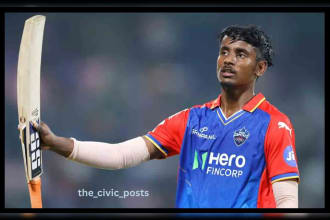
The debate surrounding the future structure of India's One Day International lineup reached a fascinating crescendo following a bold proposition from former Indian wicketkeeper-batter Farokh Engineer. Directing his recommendations toward Chief Selector Ajit Agarkar and team management, Engineer publicly endorsed the immediate fast-tracking of fifteen-year-old sensation Vaibhav Sooryavanshi into the national ODI squad.
Rather than treating the teenager as a future prospect to be nurtured solely through domestic ranks, Engineer suggested drafting him straight into the senior opening slot alongside captain Rohit Sharma, while simultaneously repositioning Shubman Gill to the number four position to solidify the middle order ahead of upcoming global tournaments.
The catalyst behind this high-level endorsement stems from Sooryavanshi’s explosive performances in international and representative white-ball fixtures. During India’s white-ball tour against Zimbabwe, the teenager captured the Player of the Series award after amassing 151 runs across three matches, highlighted by two fiery half-centuries.
What caught the attention of veteran observers was not merely the volume of runs, but the frightening ease with which he attacked opposition bowling during field restrictions. Operating with uninhibited flair, Sooryavanshi demonstrated a rare capacity to pick length early, clear the infield effortlessly, and maintain a high scoring rate without displaying visible anxiety.
In Engineer’s evaluation, white-ball cricket ultimately reduces to fundamental instincts-arguing that a half-volley remains an opportunity to score regardless of whether the match is played over twenty or fifty overs.
Central to Engineer’s tactical blueprint is the strategic advantage provided by a dynamic left-right opening partnership. Modern fifty-over cricket places an immense premium on maximizing the initial ten-over Powerplay, where fielders are restricted inside the circle and seamers look to extract early movement.
Pairing the seasoned authority and boundary-hitting prowess of Rohit Sharma with a fearless left-handed prodigy like Sooryavanshi creates an immediate tactical headache for opposition captains and opening bowlers.
A left-right combination forces constant readjustments in line and length, disrupts set field placements, and prevents bowlers from settling into comfortable rhythm channels early in the innings.
To accommodate Sooryavanshi at the top without discarding proven international match-winners, Engineer’s plan involves a significant structural shift in India’s top four. Under his proposed framework, Shubman Gill-who currently opens alongside Rohit Sharma-would slide down to the number four spot behind Virat Kohli at number three.
Farokh Engineer views this reshuffle not as a demotion for Gill, but as an upgrade to India’s middle-order stability. Gill’s classical technique, fluid stroke-making, and exceptional ability to rotate strike against spin make him an ideal candidate to control the middle overs between overs eleven and forty.
Placing a batter of Gill’s caliber at four provides an essential safety net, ensuring that if an aggressive opening pair loses early wickets, the middle order possesses sufficient depth to rebuild without stalling the run rate.
Beyond structural alignment, Engineer offered a crucial piece of advice to India’s coaching staff and selectors regarding how to handle rare teenage talent: avoid the temptation to over-coach. Drawing parallels to legendary, instinctive stroke-makers of past eras-most notably Sir Vivian Richards-Engineer cautioned against trying to force unorthodox prodigies into rigid technical molds.
Modern coaching frameworks often emphasize textbook mechanics and risk-averse shot selection, yet natural geniuses thrive on instinct, freedom, and unburdened confidence.
Trying to alter Sooryavanshi’s natural inclination to lift the ball or attack length carries the risk of dampening the very fearlessness that makes him special. As long as the teenager learns from situational mistakes and adapts to varied pitch conditions, keeping his natural flair intact remains paramount.
However, the selection committee led by Ajit Agarkar faces a far more complex set of variables than commentator room speculation. Transitioning a fifteen-year-old directly into fifty-over international cricket involves challenges that extend well beyond ball-striking ability.
Unlike short-format matches where explosive bursts are sufficient, the ODI format tests a batter’s physical endurance, mental concentration over extended periods, and tactical patience across fifty overs.
Team management and conditioning specialists must carefully manage physical workloads, ensuring that a young athlete's body adapts to the rigorous demands of international travel, intense fielding drills, and long days in the heat without sustaining stress injuries.
Furthermore, India’s current bench strength in the top-order department presents an embarrassment of riches. Candidates like Yashasvi Jaiswal have already established themselves as proven international performers across formats, offering left-handed opening options with demonstrated success in challenging overseas conditions.
For Ajit Agarkar and the selection panel, the primary mandate is managing a gradual, structured pathway where young talents like Sooryavanshi gain invaluable experience through India A tours and domestic tournaments before being thrust into high-pressure international scenarios.
Exposure to quality pace bowling on swinging, bouncy surfaces in foreign conditions will serve as the ultimate testing ground for Sooryavanshi's technical evolution.
Nevertheless, the widespread public and media enthusiasm generated by Engineer's comments highlights a broader ideological shift within Indian cricket culture. There is a growing appetite for aggressive, proactive cricket that refuses to wait for traditional generational cycles to run their course.
The willingness of former legends to advocate for radical team reshuffles reflects a belief that form, talent, and fearless intent should take precedence over age or seniority.
Whether the selectors decide to fast-track Vaibhav Sooryavanshi into the senior ODI squad immediately or allow him time to mature through developmental pathways, his meteoric rise has injected an undeniable sense of excitement into the national team's forward planning.
As Indian cricket continues its transition toward future global tournaments, the emergence of such uninhibited talent ensures that the pipeline remains vibrant, competitive, and firmly focused on dominance.