Corruption Costs Eight Years ICC Bans Akhilesh Reddy
Editorial desk - AUG 3, 2026

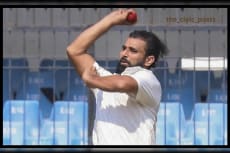
The governance of global cricket has delivered another stern message regarding integrity and fair play through a severe disciplinary sanction imposed on a professional player. The International Cricket Council has formally banned Bodugum Akhilesh Reddy, a cricketer of Indian origin representing the United States, from all forms of competitive cricket for a duration of eight years.
This decisive disciplinary measure was finalized after an independent Anti-Corruption Tribunal found the twenty-six-year-old athlete guilty of multiple violations of the sport's central anti-corruption code. The development marks a major milestone in the ongoing efforts of international sports administrators to dismantle illicit networks that seek to undermine the credibility of domestic and international cricket tournaments.
The trajectory of Reddy's cricketing career reflects the increasingly globalized nature of modern cricket, alongside the personal journeys of players seeking professional opportunities across international borders. Raised in the bustling cricketing hub of Hyderabad, India, Reddy honed his foundational skills within the highly competitive Indian domestic circuit.
His early development included selection for regional squad pools, notably featuring in the wider group for the prestigious Vijay Hazare Trophy. His technical abilities as a right-handed batsman and off-spin bowler earned him opportunities to participate in high-level training environments, including a spell as a net bowler for the Sunrisers Hyderabad franchise in the Indian Premier League.
Seeking greater international exposure and a direct path to top-tier representation, he later transitioned to the United States cricket system, eventually earning four T20 International caps for the national team following his debut against the Cayman Islands in the North America T20 Cup.
The specific infractions that triggered this extensive ban stem from events during the 2025 edition of the Abu Dhabi T10 league in the United Arab Emirates. During this franchise-based event, the International Cricket Council acted as the Designated Anti-Corruption Official on behalf of the host governing body, the Emirates Cricket Board. In this capacity, anti-corruption investigators were tasked with monitoring participant conduct, maintaining operational surveillance, and investigating potential security breaches.
Following a detailed investigation, formal proceedings were initiated against Reddy, leading to a provisional suspension in late November 2025. The player was given standard procedural timelines to respond to the charges, culminating in the tribunal's comprehensive review of the gathered evidence and subsequent guilty verdict across three distinct counts.
The formal charges proven against the cricketer highlight the various dimensions of corrupt activity targetable under global sporting regulations. The first primary charge relates to direct attempts to fix, manipulate, or improperly influence specific outcomes, progress, or other tactical aspects of matches within the Abu Dhabi T10 event.
Beyond direct match manipulation, the tribunal established guilt under provisions concerning the solicitation and facilitation of unlawful acts, finding that Reddy actively encouraged, persuaded, or induced other tournament participants to engage in improper practices.
Furthermore, the tribunal addressed procedural non-compliance, ruling that the player engaged in obstruction of justice by deliberately wiping messages and digital data from a mobile communications device during the active phase of the investigation.
The inclusion of the data destruction charge underscores the heightened focus that modern anti-corruption units place on digital forensics and cooperation during inquiries. Deleting communications or tampering with personal electronic devices during a formal probe is classified as a severe independent breach, as it directly hinders the capacity of investigators to establish the full network of individuals involved in illicit activities.
By treating digital obstruction with equal gravity to match manipulation attempts, governing bodies attempt to close structural loopholes that corrupt actors might otherwise exploit to hide conspiracy trails or shield operational accomplices.
This ruling arrives amidst a broader contextual challenge for USA Cricket and emerging associate nations, as rapid growth in international participation is accompanied by increased exposure to sophisticated gambling syndicates.
Reddy's eight-year exclusion is not an isolated event within the American cricketing landscape, as other prominent national figures have recently faced regulatory scrutiny. Senior USA national team player Aaron Jones was also placed under provisional suspension following allegations related to an offshore franchise league in the Caribbean.
The charges against Jones involved failures to report corrupt approaches to designated anti-corruption personnel and subsequent non-cooperation with administrative inquiries, signaling a disturbing pattern of vulnerability among players operating across fragmented international leagues.
The proliferation of franchise-based T10 and T20 competitions around the world has drastically expanded employment opportunities for cricketers, particularly those outside the traditional elite test-playing nations. However, this commercial expansion has simultaneously created operational vulnerabilities. Short-format private leagues, often organized under various regional boards, attract intense betting interest from global markets.
Because players in emerging cricketing nations may earn modest regular incomes compared to established superstars in major domestic leagues, anti-corruption authorities view them as high-priority targets for syndicates offering substantial financial inducements in exchange for spot-fixing or insider information.
The administrative response to such breaches reflects an evolving strategy centered on deterrence through severe penalization. An eight-year suspension effectively removes a twenty-six-year-old athlete from professional competition during what would typically constitute their prime athletic years. Upon serving the penalty, returning to elite performance standards presents near-insurmountable physical and logistical hurdles.
By issuing lengthy bans, the global governing body attempts to send an unmistakable signal to the international playing community: the financial gains offered by corrupt syndicates are vastly outweighed by the long-term ruin of professional careers and complete exclusion from the global sporting ecosystem.
The responsibility for preserving game integrity relies heavily on proactive education alongside punitive measures. Administrative bodies constantly update educational modules for players at all levels, emphasizing the mandatory obligation to report any suspicious approach immediately, regardless of whether money exchanged hands or an offer was refused.
Failure to report an approach constitutes a severe offense under the Anti-Corruption Code, designed to ensure that players serve as an active frontline defense against illicit approaches rather than passive observers.
As USA Cricket prepares for expanded international exposure, including the integration of cricket into major multi-sport events like the Olympics, establishing a robust culture of integrity remains essential for organizational credibility. The recent disciplinary actions serve as a somber reminder to administrators, coaches, and players alike that growth on the field must be matched by rigorous compliance off the field.
Transparency in governance, continuous surveillance during domestic and franchise tournaments, and absolute zero-tolerance policies toward corrupt conduct remain the fundamental pillars required to safeguard the sport's reputation as it expands into non-traditional territories worldwide.