Future Spin Hope? Ashwin’s Words on Saransh Jain Spark Excitement
Editorial desk - JUL 29, 2026

The landscape of modern international cricket selection often operates under the shadow of short-format league performances, where boundary-hitting flair and franchise visibility frequently dictate national call-ups. However, every so often, the traditional purity of red-ball cricket asserts itself, providing a heartening reminder that sustained excellence across domestic multi-day competitions remains a powerful pathway to the highest level.
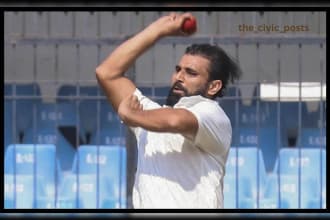
This narrative came to the forefront following India's announcement of a fifteen-member squad for the two-Test tour of Sri Lanka, where thirty-three-year-old Madhya Pradesh off-spinner Saransh Jain earned his maiden national team selection.
The decision to include Jain, stepping in as a replacement for the injured Washington Sundar, triggered widespread praise across the cricketing fraternity, none more compelling or technically insightful than the endorsement offered by legendary Indian off-spinner Ravichandran Ashwin.
Speaking on his digital analysis channel, Ashwin offered a heartfelt and detailed assessment of Jain's craft, expressing genuine delight at the veteran's long-awaited national breakthrough. For a bowler of Ashwin's stature-a master craftsman who has redefined off-spin bowling in the modern era-to openly state that he holds Jain in exceptionally high regard carries enormous weight in international cricket circles.
Ashwin highlighted that Jain represents a distinctly different breed of finger-spinner, characterized by a willingness to bowl wide off the crease, create challenging release angles, and maintain an uncompromisingly aggressive, wicket-seeking mindset rather than resorting to defensive containment tactics.
In Ashwin's estimation, Jain’s primary operational mandate on the field has always been to break partnerships and claim wickets, an attribute that makes his inclusion in subcontinental Test conditions both tactically sound and immensely exciting for cricket purists.
The story behind Saransh Jain’s call-up gains added significance when examined through the lens of modern Indian cricket economics and Talent Identification protocols. In an era where the Indian Premier League functions as the primary springboard for national team recognition, Jain’s selection stands as a remarkably rare exception.
By earning a spot in the national Test squad without holding an active franchise contract, the Indore-born spinner joined an exceptionally exclusive group of cricketers in modern Indian history, alongside figures like Murali Vijay and Mohammed Shami, who achieved red-ball national selection purely on the merit of their multi-day domestic performances.
For years, Jain traversed the demanding, unglamorous corridors of the Ranji Trophy, Duleep Trophy, and India A tours, continuously refining his skill set, accumulating hundreds of first-class wickets, and contributing vital runs with his left-handed lower-order batting. This long-term perseverance underscores the fundamental truth that multi-day domestic cricket remains an indispensable proving ground for international Test readiness.
Beyond celebrating Jain’s individual breakthrough, Ashwin’s commentary delved deeply into the broader tactical considerations surrounding India's spin attack for the upcoming series in Sri Lanka.
With conditions in Galle and Colombo traditionally offering substantial assistance to slow bowlers, managing the workload and role clarity of the spin unit becomes a paramount strategic objective for team management. The current squad features a diverse mixture of spin options, including veteran Ravindra Jadeja, wrist-spinner Kuldeep Yadav, left-arm orthodox spinner Manav Suthar, and Saransh Jain.
Evaluating potential playing XI combinations, Ashwin realistically noted that given the established status of Jadeja and Kuldeep, alongside the recent match-winning performances of Suthar, Jain might have to wait patiently for his debut opportunity on the field.
Nevertheless, Ashwin stressed that simply embedding a dedicated, wicket-taking off-spinner like Jain within the squad environment elevates the group's overall competitive standard and provides captain Shubman Gill with invaluable tactical flexibility.
In tandem with his praise for Jain, Ashwin used the selection update to initiate a thought-provoking discussion regarding role definition in modern red-ball cricket, specifically concerning the versatile Washington Sundar. Expressing empathy for Sundar, whose injury necessitated Jain’s inclusion, Ashwin raised critical questions about how multi-skilled all-rounders are managed and evaluated within the national setup.
While acknowledging Sundar's evident batting caliber and match-winning bowling capabilities, Ashwin insisted that team management must establish absolute role clarity for such players. He argued that when an all-rounder is left in a state of operational ambiguity-neither fully treated as a specialist top-six batter nor designated as a frontline bowler-they inevitably bear the brunt of public criticism whenever the team encounters a setback.
Ashwin asserted that if he were shaping team strategy, he would clearly communicate to Sundar whether his primary responsibility lies in fortifying the upper-middle batting order or leading the spin attack, thereby insulating the player from unfair performance expectations and allowing him to flourish in a defined capacity.
This nuanced critique on role definition highlights a recurring challenge in contemporary international cricket, where the demand for structural balance often leads teams to select all-rounders without providing clear operational parameters. When a player is shuttled between batting positions or used sporadically as a fifth bowling option, building consistent match rhythm becomes exceedingly difficult.
Ashwin’s insistence on transparent communication serves as a vital blueprint for player management, ensuring that talented multi-skilled cricketers are empowered rather than burdened by their versatility.
By drawing attention to these structural subtleties, the former South Africa and India opponent demonstrated why his insights continue to shape public understanding of high-level cricket governance.
The broader cultural impact of Saransh Jain’s call-up extends far beyond the immediate parameters of the Sri Lanka Test series. For hundreds of active domestic cricketers navigating the demanding multi-day circuit across India, Jain's elevation sends an empowering message: dedicated red-ball effort does not go unnoticed by national selectors.
In a sports media landscape heavily dominated by short-format highlights and white-ball metrics, witnessing a thirty-three-year-old domestic veteran achieve his dream of joining the Test squad acts as a powerful moral booster. It reassures players that spending years perfecting flight, dip, crease angles, and endurance in four-day matches remains a respected and viable path toward earning the coveted India Test cap.
From a technical standpoint, Jain's bowling method offers an intriguing study in modern finger-spin mechanics. Traditional off-spinners often rely on high-arm releases close to the stumps to maximize over-spin and bounce. In contrast, as Ashwin observed, Jain utilizes a wider point of release off the crease, allowing him to create natural drift into right-handed batters before turning the ball away or skidding it through on subcontinental surfaces.
This wider angle forces batters to constantly adjust their footwork and judgment of line, making him particularly effective on wearing pitches where footmarks created by fast bowlers come into play. Combined with his ability to bowl long, disciplined spells without losing control of length, Jain possesses the precise attributes required to pressure opposition lineups in subcontinental conditions.
As the Indian squad prepares to travel to Sri Lanka for the two-Test assignment, the prevailing sentiment surrounding the team is one of cautious optimism mixed with quiet anticipation. Under the leadership of Shubman Gill, the team represents a blend of seasoned international performers and eager domestic standouts seeking to establish their credentials on the world stage.
Whether Saransh Jain makes his official Test debut during the upcoming fixtures or serves as an essential squad member supporting the frontline attack, his presence reinforces the core values of red-ball cricket. High praise from a legendary figure like Ravichandran Ashwin not only validates Jain’s decade-long domestic journey but also sets a high benchmark for his future in national colors.
In an era of rapidly changing sporting priorities, the story of an unheralded domestic craftsman forcing his way into the Test team stands as a testament to patience, technical excellence, and the enduring romance of international cricket.