Naidu Signals Fresh Amaravati Push With Major Seed Access Road Opening
Alekhya Kota - AUG 13, 2026
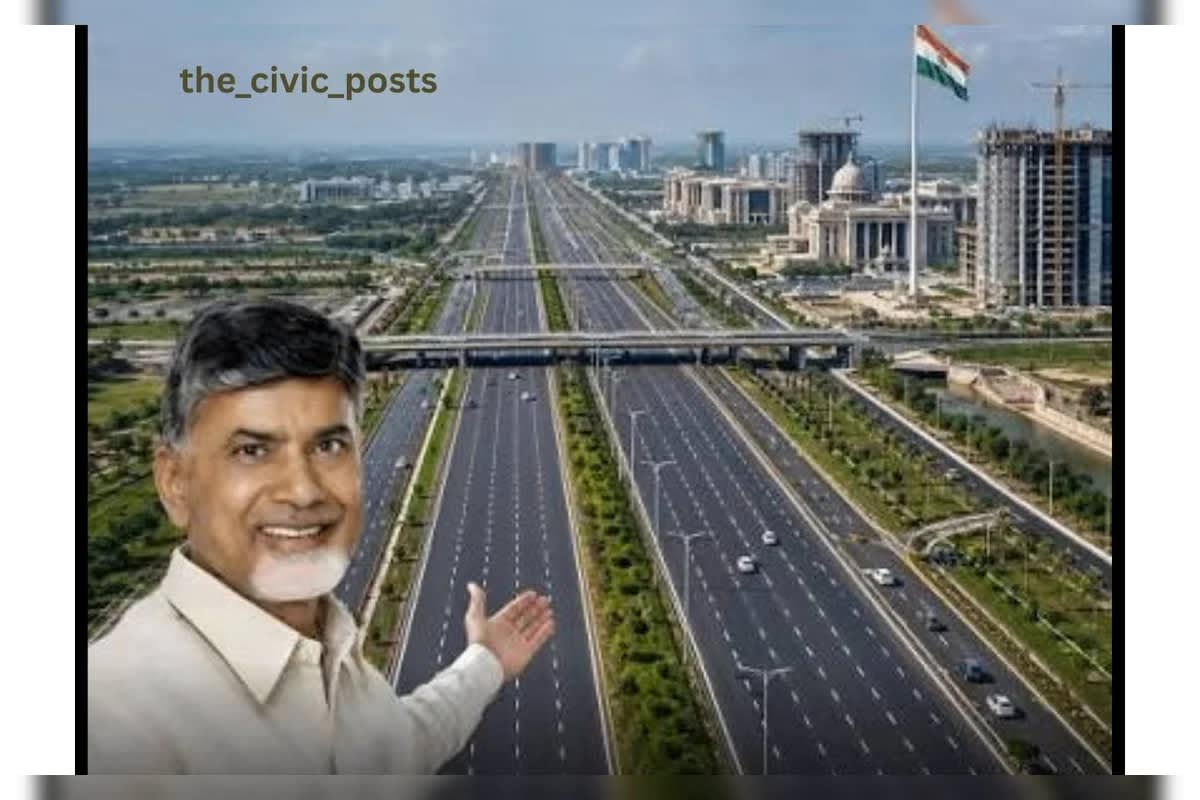
Andhra Pradesh Chief Minister N. Chandrababu Naidu has inaugurated the much-awaited Amaravati Seed Access Road along with two newly constructed steel bridges at Undavalli, marking a significant milestone in the development of the State capital region. The project is being viewed as a crucial piece of infrastructure for Amaravati because it's designed to connect several important parts of the capital region while improving access to Vijayawada and the National Highway network.
The inauguration on August 13 comes at a time when construction activity in Amaravati has gathered considerable momentum. After a prolonged period of uncertainty over the capital’s development, the State government has been trying to accelerate work on roads, government buildings, residential facilities and other essential infrastructure. Against this backdrop, the opening of the Seed Access Road is more than the completion of another road project. It represents an important step towards creating the basic transportation network needed for Amaravati to function as a growing capital city.
The Seed Access Road is planned as one of the major arteries of Amaravati. The larger E-3 corridor stretches for 21.77 kilometres from Dondapadu to NH-16 near Manipal Hospital in Tadepalli. it's designed as a 60-metre-wide, nine-lane corridor and is intended to serve as the main backbone connecting the N-series roads in the Amaravati capital grid. The entire project has been taken up in three phases at an estimated cost of ₹1,519 crore.
The portion inaugurated now is particularly important because it addresses one of the crucial connectivity gaps between the interior parts of Amaravati and the Vijayawada side. Phase 2 covers a 3.92-kilometre stretch between Venkatapalem and the old national highway at Undavalli. The newly constructed steel bridges along this stretch are expected to make movement through the area considerably smoother.
For Amaravati, connectivity has always been one of the biggest requirements. A capital city can't develop simply by constructing government offices and residential buildings. It needs a dependable network of roads through which employees, residents, businesses, visitors and public transport can move efficiently. The Seed Access Road is intended to provide exactly that foundation.
The road is also expected to strengthen the relationship between Amaravati and Vijayawada. The two areas are geographically close, and thousands of people are likely to travel between them as Amaravati develops further. Better road connectivity can reduce travel difficulties and provide quicker access to important commercial, administrative and residential locations.
The project has been designed with more than vehicles in mind. According to details released ahead of the inauguration, the wider corridor includes dedicated Bus Rapid Transit System lanes, service roads, cycling tracks, green belts and underground utility infrastructure. Such features are important because the government is planning Amaravati as a large urban region rather than merely a collection of government buildings.
The inclusion of pedestrian and cycling infrastructure could also become increasingly useful as the capital region grows. Modern urban roads have to accommodate different forms of mobility, and facilities for pedestrians and cyclists can help reduce the dependence on private vehicles over the long term.
Another important benefit could be the impact on surrounding development. Good roads often become the starting point for economic activity. When an area becomes easier to reach, businesses, commercial establishments, service providers and residential projects generally find it more attractive. As Amaravati moves into another phase of construction, the Seed Access Road could therefore influence development along its route.
For local residents, the immediate impact is likely to be simpler and more practical. Better roads mean fewer detours, easier access to neighbouring areas and potentially smoother traffic movement. Once other sections of the network are completed and connected, the benefits could become more visible across the wider capital region.
The inauguration also has considerable political importance for the Naidu government. Amaravati has been one of the most politically debated issues in Andhra Pradesh for years. The capital project saw a prolonged slowdown, and its future became uncertain during the previous government’s tenure. With the NDA alliance returning to power, the State government has once again placed Amaravati at the centre of its development agenda.
The physical completion of major infrastructure projects gives the government an opportunity to demonstrate that its renewed Amaravati plan is moving beyond announcements. Roads, bridges and buildings are visible signs of development, and the Seed Access Road is one such project that people can directly see and use.
At the same time, the road’s journey hasn't been entirely straightforward. Parts of the project faced delays because of land-related issues. The section around Undavalli was particularly important in this regard. Recent legal developments helped remove one of the obstacles to the project, with the Andhra Pradesh High Court dismissing petitions challenging the land acquisition process connected to the Seed Access Road.
That makes the inauguration significant from another perspective. A project that had faced delays and challenges has now reached a stage where a key portion can be opened for use. The completion of Phase 2 could also create momentum for the remaining components of the larger connectivity plan.
The road’s design reflects the government’s attempt to anticipate Amaravati’s future traffic requirements. A nine-lane corridor with service roads and dedicated transport facilities is intended to handle much higher movement than the region currently experiences. That capacity could become important as government institutions, residential areas and commercial activity expand.
The two steel bridges inaugurated along with the road are another critical part of the connectivity network. Bridges can often become bottlenecks in developing regions when road construction progresses faster than crossing infrastructure. Completing these structures alongside the road should help create a more continuous route between important parts of Amaravati and the Vijayawada side.
The larger vision is clearly not limited to solving today’s traffic problems. Amaravati is being planned for substantial future growth, and infrastructure has to be prepared before that growth reaches its peak. Building major roads in advance can prevent the capital region from facing severe congestion once large numbers of people begin using its administrative and commercial zones.
But, the ultimate success of the Seed Access Road will depend on how effectively it's integrated with other infrastructure. A major road can deliver its full potential only when it connects seamlessly with internal roads, highways, bridges and public transportation. The government will therefore have to ensure that other components of the Amaravati transport network progress alongside it.
The project could also become important for investment in the capital region. Businesses generally look for reliable connectivity before committing to large-scale development. A well-planned road network can reduce logistical difficulties and make commercial areas more accessible. If Amaravati’s other infrastructure projects move forward at the same pace, the Seed Access Road could contribute to creating a stronger environment for future economic activity.
For Chandrababu Naidu, the inauguration is also an opportunity to reinforce his government’s larger message about Amaravati. The Chief Minister has repeatedly presented the capital as a long-term development project rather than simply an administrative location. Infrastructure such as the Seed Access Road is essential if that vision is to become a functioning reality.
The road will also be watched by people who have been waiting for Amaravati’s development to regain momentum. For them, a completed road is a more tangible sign than another policy announcement. The opening of the corridor shows that construction is moving forward on the ground.
At the same time, expectations will now rise for other pending works. The Seed Access Road alone can't transform Amaravati. Government complexes, housing, public utilities, transport systems and commercial infrastructure all have to develop together. The challenge for the State government will be maintaining the pace and ensuring that individual projects eventually become part of one integrated capital city.
The inauguration therefore marks both an achievement and the beginning of another phase. The road provides a critical connectivity backbone, but its real value will emerge as Amaravati grows around it.
For now, the opening of the Seed Access Road and the two steel bridges gives the capital region a major infrastructure boost. Here's what I found the 21.77-kilometre e-3 corridor is designed to connect dondapadu with nh-16 and provide a strong transport link across the amaravati region. With its wide carriageway, service roads, BRTS provisions, cycling tracks, green belts and utility infrastructure, the project has been conceived with the future city in mind.
The bigger test begins now. If the remaining infrastructure projects progress as planned and the road is properly integrated with the wider capital network, the Seed Access Road could eventually become one of Amaravati’s most important transport corridors.
For Andhra Pradesh, its importance goes beyond asphalt, bridges and traffic lanes. it's part of the larger effort to turn Amaravati from a long-discussed capital project into a functioning, connected and economically active city. The inauguration by Chandrababu Naidu is therefore being seen as another visible step in that transformation.


