Telangana HC Calls for Inclusive Electoral Process, Suggests Urdu Forms
Alekhya Kota - JUN 30, 2026
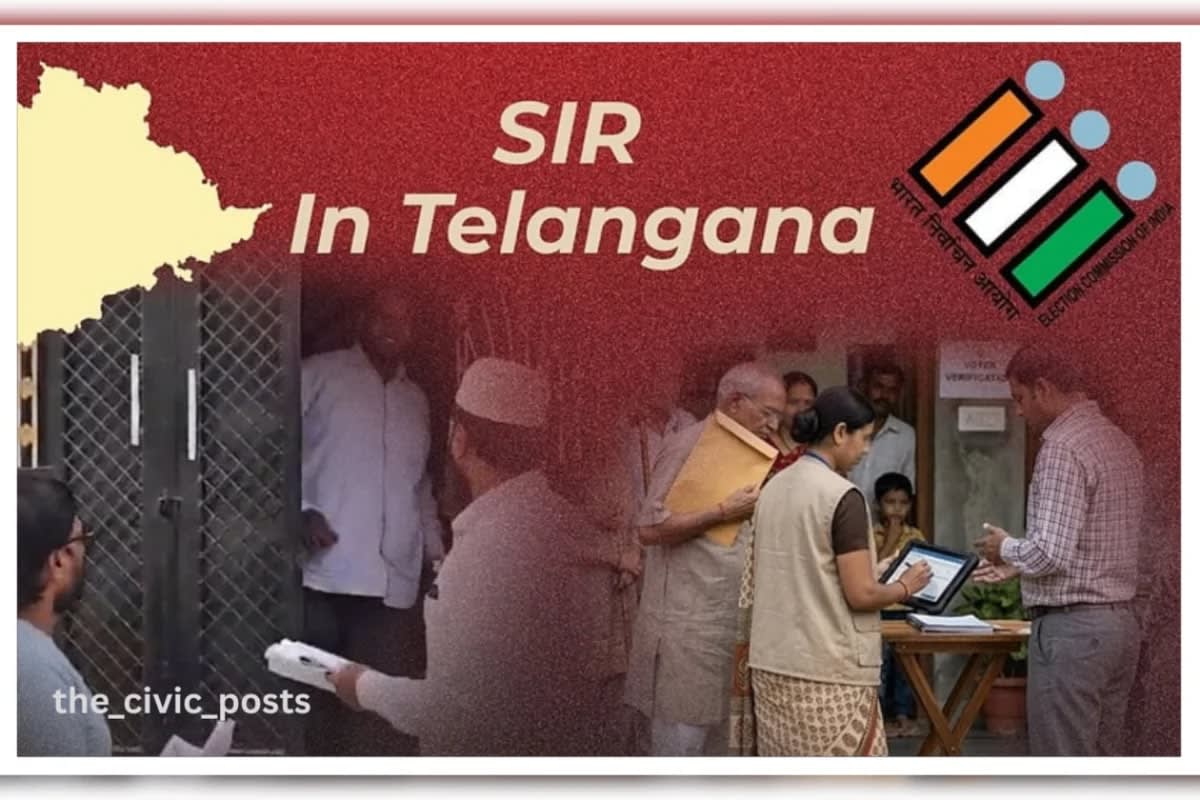
The Telangana High Court has highlighted the importance of making the electoral process more inclusive by encouraging authorities to consider the linguistic diversity of the state during the ongoing voter roll revision exercise. While hearing a petition related to the language used in voter enumeration forms, the court suggested that the Election Commission examine the possibility of making Urdu-language forms available in constituencies where a considerable section of the population is more comfortable using the language.
The observation has sparked a broader discussion about accessibility, equal participation, and the role of language in strengthening democracy. At the heart of the issue lies a simple yet significant question: Should every eligible voter be able to complete election-related documentation in a language they understand best?
The Special Intensive Revision of electoral rolls is one of the most important exercises undertaken before elections. Its purpose is to verify voter information, update residential details, include newly eligible citizens, remove duplicate entries, and ensure that the electoral rolls accurately reflect the current population. Since these records determine who is eligible to vote, the process must be transparent, accurate, and accessible to every citizen.
During the hearing, concerns were raised over the availability of voter enumeration forms primarily in Telugu. The petitioner argued that while Telugu is the dominant language of the state, Telangana is home to diverse linguistic communities, including a large number of Urdu-speaking residents. In several constituencies, particularly those with a historical and cultural association with Urdu, many citizens continue to use the language in their daily lives.
The argument presented before the court was that language should never become a barrier to democratic participation. If citizens struggle to understand official forms, there is always a possibility of incorrect information being submitted or eligible voters hesitating to complete the registration process. Such situations can ultimately affect the accuracy of electoral rolls.
Rather than issuing an immediate directive to replace the existing system, the High Court adopted a balanced approach. It advised the Election Commission to examine whether Urdu-language forms could be introduced in constituencies where Urdu-speaking residents constitute a significant percentage of the population. The court's suggestion reflects an attempt to balance administrative practicality with the need to make electoral processes more citizen-friendly.
The issue goes beyond the printing of forms. It raises an important discussion about the relationship between language and democratic inclusion. India is one of the world's most linguistically diverse countries, with hundreds of languages spoken across different regions. Although every state has its own official language, public institutions often need to consider local realities while delivering essential services.
Language accessibility becomes especially important during election-related activities because voting is one of the most fundamental democratic rights. Every eligible citizen should have the confidence to register as a voter without facing unnecessary communication barriers. When official documents are available in familiar languages, people can understand instructions more clearly and complete formalities independently.
Supporters of multilingual election forms believe that such measures improve public participation. Elderly citizens, individuals with limited knowledge of the state's primary language, and people from traditional linguistic communities often feel more comfortable reading documents in the language they use every day. Providing additional language options can therefore make the electoral process more inclusive without altering its legal framework.
At the same time, election authorities must also consider administrative challenges. Producing documents in multiple languages requires additional planning, translation, printing, and distribution. Since electoral exercises are conducted on a large scale involving millions of voters, every procedural change has logistical and financial implications. This explains why the Election Commission generally follows a standardised approach while conducting nationwide electoral activities.
However, the court's suggestion does not advocate introducing multilingual forms across the entire state. Instead, it focuses on constituencies where Urdu-speaking residents form a sizeable section of the population. Such a targeted approach seeks to address genuine accessibility concerns while avoiding unnecessary administrative complications.
Telangana has a unique linguistic identity. Although Telugu is widely spoken across the state, Urdu also holds considerable historical and cultural importance, particularly in Hyderabad and surrounding regions. The language has been part of the state's social fabric for generations and continues to be used in education, literature, business, and everyday communication by many communities.
Recognising this linguistic diversity can strengthen public trust in institutions. Citizens often feel more connected to government services when communication takes place in languages they easily understand. Whether it involves healthcare, education, public welfare, or elections, accessible communication plays an essential role in ensuring effective governance.
The discussion also highlights the evolving nature of public administration. Modern governance increasingly focuses on citizen-centric services rather than uniform administrative procedures. Governments today are expected to design policies that consider the needs of different communities while maintaining fairness and efficiency. Language accessibility has become an important aspect of this approach.
Digital technology further strengthens the possibility of multilingual governance. Many government portals already provide information in multiple languages, allowing citizens to access services according to their preferences. Similar technological solutions may eventually simplify the distribution of election-related documents in different languages without significantly increasing operational costs.
The voter roll revision exercise itself is crucial for maintaining the integrity of elections. Accurate electoral rolls prevent duplicate registrations, ensure that only eligible citizens participate, and improve confidence in the democratic process. Every revision exercise aims to strengthen the quality of elections by ensuring that voter records remain updated and error-free.
Public participation plays a decisive role in achieving these objectives. Citizens must verify their information, report errors, and complete registration formalities within prescribed timelines. If language creates confusion during this process, the effectiveness of the entire exercise may be affected. Therefore, improving communication can directly contribute to better electoral management.
The High Court's observations also reinforce the broader constitutional principle of equal access to public institutions. Democracy functions effectively only when every citizen has an equal opportunity to participate in governance. Administrative procedures should therefore be designed in ways that minimise unnecessary barriers while maintaining legal consistency.
Experts believe that inclusive electoral systems contribute to stronger democratic institutions. When people clearly understand registration procedures, polling instructions, and election-related documentation, they are more likely to participate confidently. Higher participation improves the representative nature of elections and strengthens public confidence in democratic governance.
Another important aspect of the debate is the need to preserve India's cultural diversity while promoting administrative efficiency. The country has successfully accommodated multiple languages across education, broadcasting, public services, and governance. Extending similar flexibility to electoral documentation in selected regions may represent another step toward inclusive public administration.
The Election Commission now has the responsibility of examining the court's suggestion and evaluating its practical feasibility. Any decision will likely consider demographic data, administrative resources, legal requirements, and the objective of ensuring that every eligible voter can participate without unnecessary difficulty.
Regardless of the final outcome, the discussion has drawn attention to an important issue that extends beyond one language or one state. It highlights the need for governance systems to continuously evolve in response to the changing needs of society. Democratic institutions remain strongest when they are both efficient and accessible.
As India continues strengthening its electoral framework, initiatives that improve voter convenience without compromising transparency are likely to receive increasing attention. Whether through better technology, improved public awareness, or language-friendly communication, every effort aimed at making elections more inclusive ultimately strengthens democracy itself.
The Telangana High Court's observations therefore represent more than a procedural suggestion. They encourage policymakers to view accessibility as an essential component of democratic participation. By considering the linguistic needs of different communities while maintaining administrative balance, electoral authorities have an opportunity to ensure that every citizen can participate confidently in one of the nation's most important democratic exercises-the right to vote.