Trisha Row Turns Explosive, Udhayanidhi Detained Amid Massive Uproar
Alekhya Kota - AUG 4, 2026
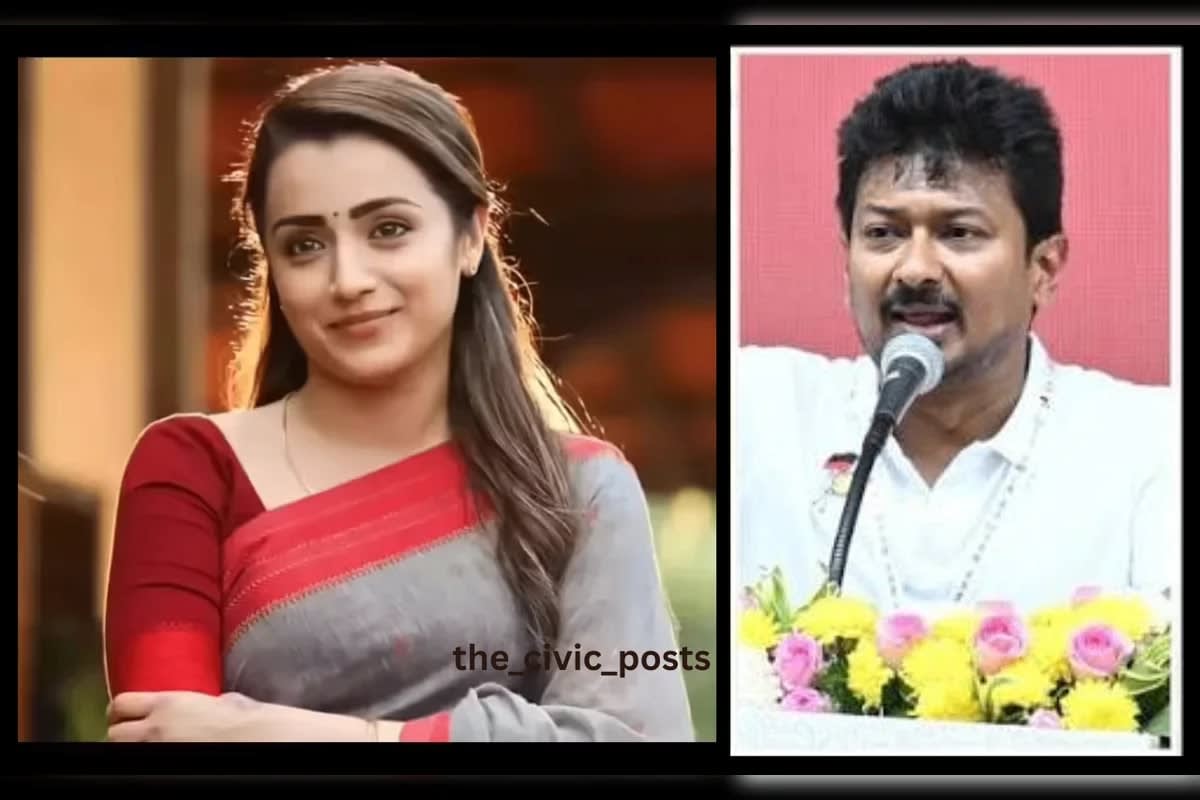
The political landscape of Tamil Nadu has been plunged into an unprecedented legal and ideological confrontation following the police detention of Dravida Munnetra Kazhagam (DMK) leader and Leader of the Opposition in the State Assembly, Udhayanidhi Stalin. The sudden law enforcement action was initiated after formal criminal complaints were lodged by representatives of the governing party, Tamilaga Vettri Kazhagam (TVK)-led by actor-turned-politician Chief Minister C. Joseph Vijay-alongside detailed petitions submitted directly to the National Commission for Women (NCW) in New Delhi.
The intense controversy centers on controversial, double-meaning remarks delivered by Udhayanidhi during a political address in the agrarian district of Thanjavur, which were widely criticized across the political spectrum as misogynistic innuendos targeted at celebrated film personality Trisha Krishnan.
This incident has rapidly escalated into a major political firestorm, highlighting the growing friction between the newly dominant TVK administration and the established DMK opposition while raising fundamental questions about public decorum, political ethics, and gender dignity in modern electoral speech.
To fully understand the gravity and swift escalation of this controversy, it is essential to examine the specific context in which the incident occurred. The controversy unfolded during a large-scale public rally organized by the opposition DMK in Thanjavur, a core district within the fertile delta region of Tamil Nadu. The demonstration was held to address the severe agricultural distress facing local farmers due to the ongoing Cauvery river water-sharing dispute, particularly amidst the critical Aadi Perukku agricultural period.
Addressing a dense crowd of party supporters and regional farmers, Udhayanidhi Stalin mounted a scathing political attack against the ruling TVK government, accusing Chief Minister Vijay of administrative inefficiency, political inexperience, and failing to secure Tamil Nadu’s rightful share of river waters from upstream states. The speech was designed to position the DMK as the primary defender of regional agrarian interests while attempting to expose perceived vulnerabilities in the current administration's governance model.
However, as Udhayanidhi’s speech progressed, the focus of the event dramatically shifted away from agricultural policy due to unscripted interactions with the gathered crowd. As the opposition leader leveled criticism at Chief Minister Vijay’s political background, sections of the audience began loudly chanting the name of actress Trisha Krishnan, a celebrated figure in Tamil cinema whose professional work alongside Vijay has frequently been elevated in popular culture and online social media chatter. Responding directly to the chanting crowd, Udhayanidhi paused his prepared remarks and made an indirect, double-entendre comment concerning water flow and reaching specific destinations.
Although he quickly realized the controversial nature of his phrasing and attempted to clarify that his comments referred strictly to the physical movement of the Cauvery river, video recordings of the interaction spread rapidly across social media platforms. Within hours, clips of the address went viral, generating immense public outrage over the perceived objectification and vulgarity embedded in the political speech.
The political response from the ruling TVK was immediate, structured, and legally aggressive. S. Bairavi, the Central District Women's Wing Organiser for the TVK in Thanjavur, filed a formal complaint at the Thanjavur East Police Station, requesting immediate criminal registration against the DMK leader.
Simultaneously, the TVK legal cell escalated the matter to the national level by submitting a formal petition to the National Commission for Women in New Delhi. The party argued that the comments went beyond permissible political banter and constituted a deliberate attempt to outrage the modesty of a prominent woman in public life.
The formal complaints cited relevant provisions under the Bharatiya Nyaya Sanhita (BNS), including sections related to public obscenity, statements conducing to public mischief, and actions intended to insult female dignity, demanding that law enforcement take decisive action to uphold legal standards and public decency.
Acting on the registered First Information Report and the growing public unrest, law enforcement agencies moved swiftly to enforce accountability. In an early morning operation that drew widespread media attention, police personnel arrived at Udhayanidhi Stalin's private residence in Neelankarai, Chennai, and officially placed him under detention for formal questioning. He was subsequently transported under police escort toward Thanjavur to undergo judicial procedures connected to the case.
In response to the sudden detention, senior legal counsel representing the opposition leader filed an urgent anticipatory bail application before the Madras High Court, contending that the police intervention was disproportionate, politically motivated, and based on a willful misinterpretation of statements that were originally intended as regional political critique regarding river management.
This high-voltage confrontation underscores the deeply entrenched, unique relationship between Tamil Nadu’s political architecture and the Tamil film industry, commonly known as Kollywood. For over seven decades, cinema and statecraft in Tamil Nadu have been inextricably linked, with iconic cultural figures like C.N. Annadurai, M. Karunanidhi, M.G. Ramachandran, and J. Jayalalithaa transitioning from movie sets to the highest political offices in the state.
However, the political entry and electoral victory of actor Vijay under the banner of Tamilaga Vettri Kazhagam marked a dramatic realignment of this historic legacy, breaking the traditional two-party binary long maintained by the DMK and AIADMK.
Because both Chief Minister Vijay and Udhayanidhi Stalin possess deep personal and familial ties to the film industry, political debate between their respective camps frequently blurs the boundaries between public policy and cinematic rivalries, often dragging non-political film personalities into partisan conflict.
Beyond the immediate party rivalries, the incident has reignited a critical national debate regarding the prevalence of gendered personal attacks and misogynistic rhetoric in Indian political campaigning. Scholars, social commentators, and women's rights advocates have noted that political discourse frequently devolves into cheap personal innuendos when addressing opponents, weaponizing women's professional relationships and private lives instead of engaging in substantive policy debates.
By taking the matter to statutory bodies like the National Commission for Women, the TVK sought to frame the controversy not merely as a local political dispute between competing regional parties, but as a broader societal issue regarding the safety, dignity, and respect afforded to women who occupy prominent spaces in public life.
The detention of the Leader of the Opposition drew sharp reactions from across the entire political landscape in Tamil Nadu. Leaders from various political parties issued strong statements condemning the lowering standards of political rhetoric during public demonstrations. Representatives from the Tamil Nadu Congress Committee and the Bharatiya Janata Party publicly criticized the speech, calling the language inappropriate and insisting that political leadership requires maintaining moral boundaries regardless of electoral rivalry.
Even traditional allies of the DMK expressed clear dissatisfaction; leaders from the Marumalarchi Dravida Munnetra Kazhagam, including Vaiko and MP Durai Vaiko, noted that an agricultural protest dedicated to highlighting the genuine struggles of delta farmers should never have been derailed by inappropriate remarks or personal attacks.
In contrast, the DMK hierarchy mounted a firm political and legal defense of Udhayanidhi Stalin. Senior parliamentarians, including T.R. Baalu, alongside party legal advisors, strongly rejected all allegations of misconduct. The party asserted that Udhayanidhi had at no point explicitly named any individual during his public address and argued that the entire controversy was being deliberately manufactured by the TVK government.
According to the DMK’s official counter-narrative, the ruling party utilized state machinery and police detention to create a political spectacle designed to divert public attention away from governance failures, agricultural distress, and the pressing management of the Cauvery water crisis.
Ultimately, the detention of Udhayanidhi Stalin marks a pivotal moment in the ongoing evolution of Tamil Nadu’s political culture. As Chief Minister Vijay’s TVK continues to establish its administrative authority and the opposition DMK seeks to reclaim political momentum, this incident demonstrates that the intersection of cinema, political power, and public speech will remain under intense scrutiny.
The legal resolution of this case before the judiciary and the subsequent reactions from the electorate will likely set significant precedents for how political defamation, gender dignity, and opposition speech are regulated in the state's changing political landscape.


