India Faces Big Batting Decision as Super 8 Pressure Mounts
Kranthi Shekar - FEB 21, 2026
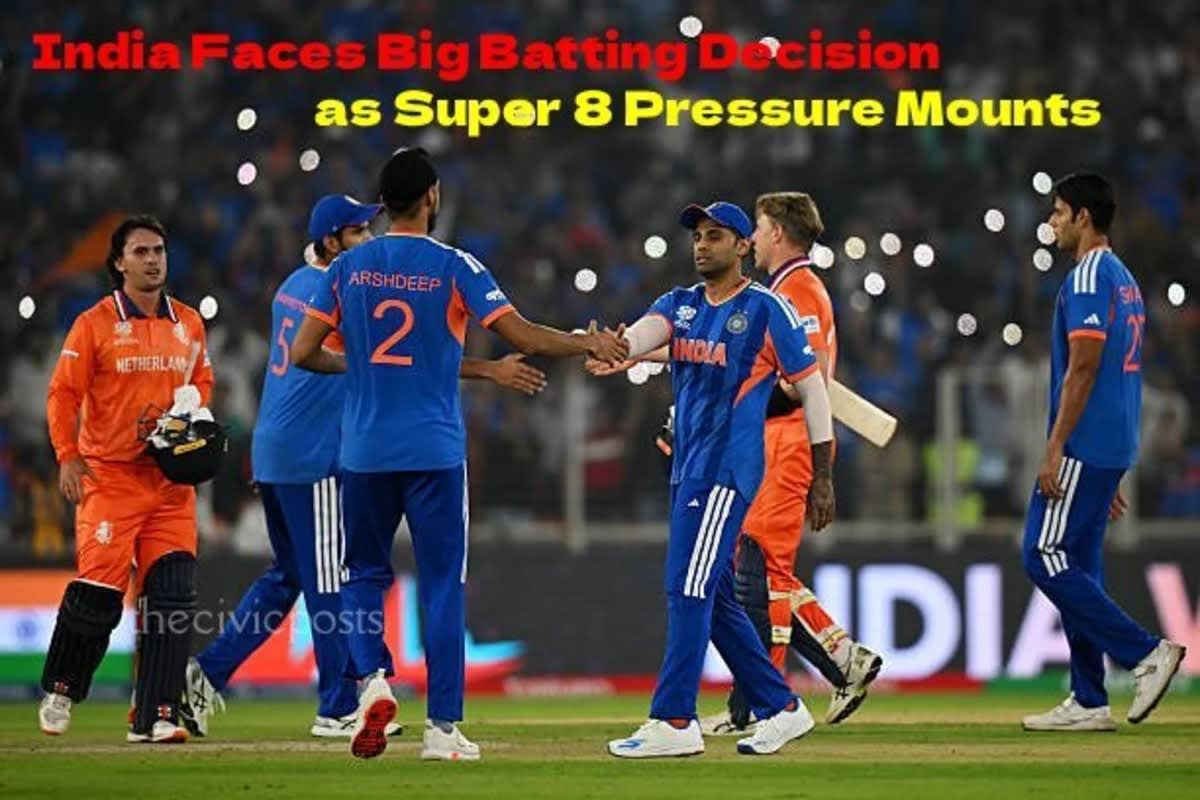
With the knockout race heating up in the ICC Men's T20 World Cup, the Indian camp finds itself at a tactical crossroads. As the team advances into the crucial Super 8 stage, discussions around the playing combination have intensified. A potential reshuffle in the batting order is being widely debated, particularly concerning whether Sanju Samson could replace Abhishek Sharma in the starting lineup. Captain Suryakumar Yadav has indicated that the management is open to making bold calls if it benefits the team’s overall balance.
India’s group-stage campaign produced positive results, yet it also exposed certain areas that require refinement. The top order, expected to provide explosive beginnings, has not consistently delivered dominant starts. Abhishek Sharma, regarded as one of India’s emerging T20 talents, came into the tournament carrying strong expectations. Known for his fearless power-hitting and aggressive approach in the powerplay, he has the ability to change the momentum of a match within a handful of deliveries. However, international tournaments often demand a different level of composure, and his recent outings have not fully reflected his potential.
This situation has naturally turned attention toward Sanju Samson. Over the years, Samson has built a reputation as a stylish yet impactful batter who thrives under pressure. His batting combines clean timing with calculated aggression, making him a versatile option in different match scenarios. Whether accelerating in the early overs or stabilizing an innings after early setbacks, he offers flexibility that can be invaluable during high-stakes contests.
Suryakumar Yadav’s leadership philosophy emphasizes adaptability. His recent remarks suggest that no position is permanently secured and that decisions will be made purely on what strengthens the team’s chances. In tournaments like the T20 World Cup, even minor adjustments can have significant consequences. The Super 8 phase is expected to feature stronger bowling attacks and tighter match situations, increasing the importance of sharp decision-making.
Yet, replacing Abhishek is not a straightforward move. Young players often require trust and backing, especially when navigating their first major global event. Abhishek’s aggressive mindset can unsettle bowlers even if he does not convert starts into substantial scores. His presence at the crease forces opposition captains to alter field placements and bowling strategies, creating opportunities for his batting partners. Dropping him prematurely might disrupt the team’s long-term planning and confidence-building approach.
On the other hand, Samson’s experience and maturity bring a different advantage. He has faced varied bowling conditions across formats and has shown he can adapt quickly. His ability to read game situations and pace an innings could be particularly valuable against disciplined bowling units in the Super 8 round. Moreover, his inclusion might add an extra layer of calmness during tense run chases or competitive first-innings totals.
The management must also consider team chemistry. Continuity in the playing XI can strengthen partnerships and understanding among players. However, internal competition is equally essential to maintain high performance standards. The current debate reflects the depth within Indian cricket, where multiple capable players are ready to step in without compromising quality.
Another critical factor is match conditions. Certain pitches may favor aggressive stroke-makers, while others demand patience and strike rotation. If India anticipates surfaces that reward attacking play during the powerplay, Samson’s inclusion could provide early momentum. Alternatively, if the team opts for stability and gradual acceleration, Abhishek might retain his place with renewed confidence.
The Super 8 stage represents a turning point in any T20 World Cup campaign. From here, every match carries added weight, and the margin for mistakes narrows significantly. For India, maintaining balance between youthful exuberance and seasoned composure will be vital. Decisions taken at this stage can influence not just immediate results but the overall trajectory of the tournament.
Ultimately, whether the team chooses continuity or change, the focus remains on collective success. Both Samson and Abhishek possess the talent to deliver match-winning performances. The choice will reflect the management’s reading of conditions, opposition strengths, and the mental readiness of the players.
As fans await the final team announcement, anticipation continues to build. The Super 8 journey promises intense competition, and India’s batting strategy could play a decisive role in shaping its quest for T20 supremacy.


