RCB’s Brand Empire Expands: IPL First to Break the $300 Million Mark
Editorial desk - JUL 29, 2026
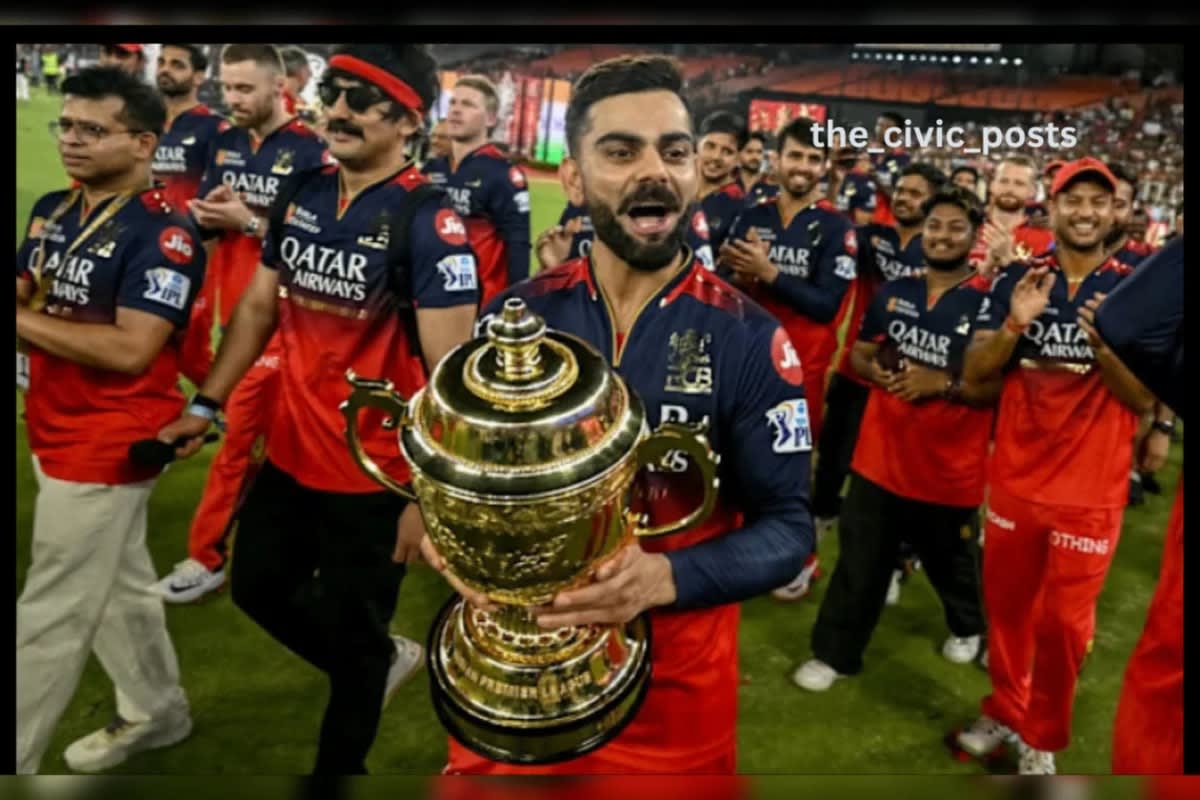
The commercial evolution of global franchise sports has reached an unprecedented milestone, marked by the transformation of T20 cricket into a multi-billion-dollar asset class. At the forefront of this financial expansion is Royal Challengers Bengaluru (RCB), which has officially become the first franchise in Indian Premier League (IPL) history to surpass the three hundred million dollar brand valuation mark.
According to the 2026 IPL Brand Valuation Study published by global investment banking firm Houlihan Lokey, RCB retained its top ranking across the ten-team league with an estimated brand valuation of three hundred and twelve million dollars (approximately twenty-six hundred crore rupees).
This reflects an impressive sixteen percent jump from its twenty-six hundred and ninety million dollar evaluation in 2025, demonstrating that a sports brand can generate global commercial momentum by combining passionate fan loyalty with robust corporate governance.
This historical financial milestone coincides with a broader expansion across the entire Indian Premier League ecosystem. For the first time since its inception, the collective business enterprise value of the IPL has breached the twenty billion dollar mark, touching twenty point six billion dollars.
The standalone brand value of the league similarly expanded by over ten percent to hit four point three billion dollars. These metrics reflect consistent double-digit growth driven by strong institutional investor confidence, expanding broadcasting revenues, rapidly rising Connected TV adoption rates, and predictable financial distribution models.
The timing of RCB’s record-breaking brand assessment follows a massive corporate ownership transaction that permanently altered sports franchise valuations in South Asia. Earlier in the year, the franchise changed hands in a landmark enterprise deal valued at one point seven eight billion dollars-the most expensive single-team transaction in IPL history.
The buying consortium featured a combination of global private equity capital and prominent Indian corporate entities, including Blackstone, Bolt Ventures, the Aditya Birla Group, and the Times of India Group.
A parallel transaction involving the Rajasthan Royals, acquired by the Mittal family and Serum Institute CEO Adar Poonawalla at a one point six five billion dollar valuation, confirmed that global institutional capital now views IPL franchises not as temporary seasonal marketing tools, but as long-term, cash-flow-generating trophy assets.
Analyses from financial valuation experts highlight that RCB’s market dominance extends far beyond short-term pitch results. While securing top-tier tournament honors provided a massive emotional boost for its global supporter base, the foundation of RCB’s value rests on an extraordinarily active digital footprint, mature commercial licensing, and deeply rooted community loyalty.
Year after year, the franchise consistently leads digital engagement metrics across major social media platforms, outpacing not just domestic sporting rivals but also several traditional football and basketball brands across European and American leagues. This digital maturity translates directly into premium sponsorship yields, long-term brand partnerships, and lucrative merchandise revenue streams.
In the broader league hierarchy, RCB’s surge to three hundred and twelve million dollars has widened its lead over rival franchise brands. Five-time champion Mumbai Indians retained second place in the brand rankings with an evaluation of two hundred and sixty-four million dollars, reflecting nearly eight percent year-on-year growth. Kolkata Knight Riders occupied third position at two hundred and forty-five million dollars, narrowly edging out four-time winner Chennai Super Kings, which stood at two hundred and forty-four million dollars.
Financial analysts noted that while Chennai Super Kings remains a massive commercial entity, its valuation growth rate has moderated slightly as the organization manages the gradual operational transition beyond the playing era of iconic figurehead MS Dhoni. This contrast highlights how succession planning, brand diversification, and digital innovation are becoming essential factors in determining long-term franchise pricing.
Commenting on the acquisition and the franchise’s future roadmap, Satyan Gajwani, co-owner of Royal Challengers Bengaluru and Chairman at Times Internet, emphasized that the depth of the team’s community connection was the primary factor driving their investment. He noted that while several teams across the league represent attractive assets, RCB’s fanbase possesses an intensity and emotional attachment that is virtually unmatched in world sports.
Emphasizing the long-term potential of cricket as a global asset class, he pointed out that while the IPL generates audience attention metrics comparable to top American leagues like the NFL, it currently operates at a fraction of their monetization capacity. As per-capita incomes rise across India and digital streaming infrastructure matures, advertising and subscription revenues are expected to rise rapidly to match that immense viewer attention.
The broader macroeconomic environment supporting the IPL's rapid valuation growth is anchored in strong structural fundamentals. The league's centralized business model-underpinned by multi-billion-dollar media rights contracts, shared central sponsorship pools, and disciplined salary cap structures-provides franchise owners with high revenue visibility and protected profit margins.
With total league revenues for the current cycle expected to exceed one point eight billion dollars from ticket sales, broadcasting rights, and corporate sponsorships combined, institutional investors view cricket franchises as effective hedges against broader economic volatility.
Looking ahead to the next media rights bidding cycle, industry observers predict that international media conglomerates and digital streaming giants will compete aggressively for broadcasting allocations, pushing league valuations to even higher levels.
Ultimately, Royal Challengers Bengaluru's breach of the three hundred million dollar brand milestone represents a watershed moment for Asian sports economics.
It establishes that Indian sporting entities have successfully evolved from localized tournament participants into globally recognized corporate brands capable of attracting premier international investment.
Driven by an unyielding digital audience, strong institutional backing, and an expanding global cricket calendar, RCB’s ascent provides a clear template for how modern sports organizations can monetize fan passion into enduring enterprise value.


