Allegations of Discrimination Against SC, ST, and BC Officers in Andhra Pradesh: Political Vendetta or Administrative Reform?
Kranthi Vegesna - FEB 24, 2026
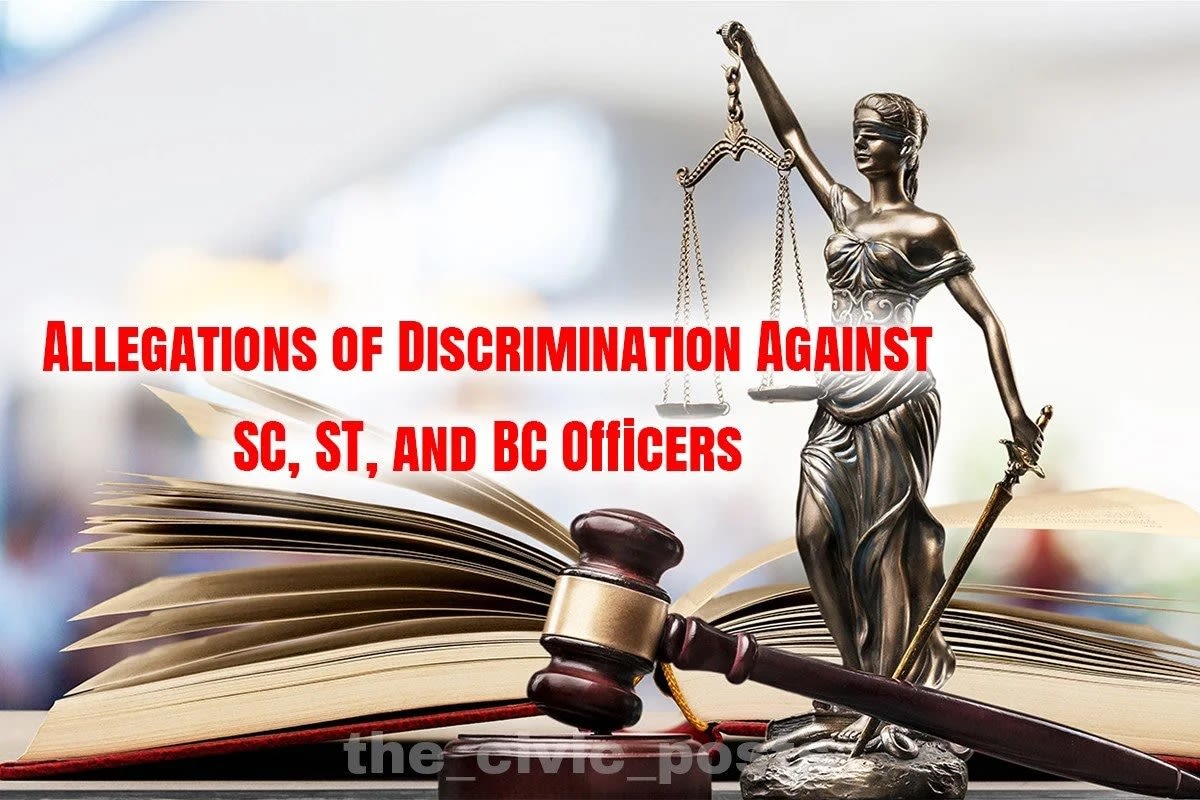
After the coalition government assumed power in Andhra Pradesh, changes within the administrative system have sparked an intense political debate. Allegations are emerging—mainly from the opposition—that senior officers belonging to SC, ST, and BC communities are facing discrimination. The government, however, rejects these claims, stating that appointments and transfers are strictly based on merit and performance.
This controversy goes beyond routine political arguments. It touches on deeper issues such as social dignity, administrative neutrality, and constitutional responsibility.
Key Allegations: “Loop Line Postings” and Targeted Transfers
The opposition, particularly the YSR Congress Party, has levelled strong accusations against the coalition government.
1. Non-priority postings
According to opposition leaders, officers from SC, ST, and BC communities who held key responsibilities under the previous government are now being placed in “loop line” postings or kept waiting without assignments. Officials who previously handled important departments such as district administration, intelligence, and CID are allegedly being sidelined.
2. Targeted transfers
Critics claim that key posts are increasingly being given to officers from specific social groups, while officers from marginalized communities are being overlooked. Social organizations argue that appointments of district collectors, SPs, and department heads no longer reflect social balance.
3. Investigations and harassment
Another allegation is that investigations are disproportionately targeting officers—especially those from SC communities—who implemented decisions of the previous government. The opposition describes this as political vendetta.
The P. V. Sunil Kumar Case: At the Center of the Controversy
A major name that has emerged in the debate is P. V. Sunil Kumar, a senior IPS officer of the Andhra Pradesh cadre who earlier served as Additional Director General of CID.
Why was he suspended?
According to the government:
Alleged indiscipline in service
Public comments on government policies on social media
Controversies related to cases registered during his tenure as CID chief
Particularly under scrutiny are cases involving the current Chief Minister N. Chandrababu Naidu in the Skill Development case, as well as the arrest of Raghu Rama Krishna Raju.
After Raju alleged custodial assault and filed complaints against several officers including Sunil Kumar, the government stated that suspension was necessary to ensure a fair investigation.
Controversy Over “Waiting” Status
After the coalition government came to power, Sunil Kumar was reportedly kept without a posting for some time. Government sources say that changes in key positions are normal during transitions of power.
However, the issue escalated after Sunil Kumar suggested on social media that he was being targeted because he is a Dalit officer. Leaders of the YSR Congress Party have echoed this claim, calling it an act of discrimination against SC officers.
Other Officers Under Scrutiny
Alongside Sunil Kumar, reports indicate action or waiting postings for several other officials who held key positions in the previous government:
P. Sitaramanjaneyulu – Former Intelligence Chief
Kollagattla Sanjay – Key role in CID
Sridhar Rao – Associated with major investigations
The government’s position is that some officers had exceeded professional boundaries and displayed political bias earlier. The opposition and certain social groups, however, view the actions as an attempt to intimidate constitutional authorities.
Response from Social Organizations
Recent BC conventions and Dalit group meetings in Amaravati have passed resolutions raising concerns about the issue. Among their major worries:
Reduced representation of their communities in policy-level positions
Fear that implementation of welfare schemes could become unbalanced
The belief that sidelining capable officers based on caste undermines dignity and morale
Associations of gazetted officers have also urged the government to maintain social balance in administrative appointments.
Government’s Stand: “Merit and Administrative Cleansing”
The government has firmly rejected all allegations.
Postings are based purely on merit and performance
Action is being taken only against officers who allegedly acted under political pressure earlier
There is no caste-based discrimination
According to government sources, the goal is to free the administrative system from political influence and restore institutional integrity.
Constitutional Responsibility and Social Balance
The Indian Constitution guarantees equality. There is no place for caste discrimination in government administration. At the same time, efficiency and neutrality in governance are equally important.
This has raised an important question: should administrative appointments focus only on merit, or should social balance also be considered?
Political Implications
The issue could become a major political factor in Andhra Pradesh. SC, ST, and BC communities form a significant portion of the state’s population, and matters linked to their dignity often influence electoral politics.
While the opposition is using the controversy to challenge the government, the ruling side insists it is carrying out administrative reforms.
The allegations of discrimination against SC, ST, and BC officers in Andhra Pradesh are not merely administrative matters. They lie at the intersection of social justice, political ethics, and constitutional responsibility.
The truth must emerge through investigations, court proceedings, and administrative transparency. One thing, however, is clear: both social balance and institutional neutrality are essential in governance.
In a democracy, public trust in government can survive only when officials feel secure, respected, and independent. This controversy is therefore not just a test for Andhra Pradesh politics but also a reflection of the health of administrative systems across the country.