Editorial

UAPA: Protecting the Nation or Testing Democracy?

Kranthi Vegesna - JUL 8, 2026

Share:
UAPA: Protecting the Nation or Testing Democracy?

In a democratic nation defined by vast socio-cultural pluralism like India, preserving national security, sovereignty, and territorial integrity remains a paramount institutional imperative. To shield these constitutional values from existential threats, governments routinely employ rigorous legislative mechanisms.

Among these legal interventions, the Unlawful Activities Prevention Act, widely known as UAPA, stands out as one of the most intensely debated frameworks in modern jurisprudence. While the foundational intent behind this statute is to fortify the republic against subversion and external malice, the intensifying allegations of institutional overreach and systemic misuse have sparked a crucial discourse on the health of democratic dissent.

The friction between state survival and civil liberties lies at the very heart of this legal paradigm, questioning whether an ultra-stringent law can coexist harmoniously with constitutional freedoms.

Conceived originally in 1967, the statute was initially designed to address secessionist movements that threatened to fracture the geographic boundaries of the newborn republic. However, as global and domestic networks of terror grew increasingly sophisticated over the subsequent decades, the state felt a compelling necessity to sharpen its statutory weapons.

Following the repeal of the Prevention of Terrorism Act in 2004, this particular framework was repositioned as the nation’s primary counter-terrorism mechanism. Landmark legislative amendments introduced in 2008, 2012, and 2019 progressively intensified its scope, transforming it into a highly formidable legal tool.

Under its current jurisdiction, actions that disrupt national sovereignty, endorse secession, manifest as overt acts of terror, or offer material support to banned organizations are classified as exceptionally grave offenses. Crucially, the law also criminalizes the active dissemination of extremist ideologies, positioning itself as a proactive shield against existential threats to public order.

The true exceptionalism of this law, however, resides in its deviation from standard criminal procedure, particularly regarding pre-trial detention and bail conditions. Under ordinary criminal jurisprudence, the presumption of innocence dictates a swift path to bail, but this statute reverses that dynamic by imposing a threshold that makes liberty nearly impossible to attain. If a court, upon a preliminary review of the case diary, finds reasonable grounds to believe the accusations are prima facie true, it is legally mandated to deny bail.

Furthermore, while standard penal procedures require investigative agencies to file a chargesheet within sixty to ninety days, this specialized framework permits detention for up to one hundred and eighty days without formal charges. This extended window frequently results in accused individuals enduring prolonged incarceration long before their actual trial even commences.

The controversy surrounding this legislation deepened significantly with the introduction of the 2019 amendments, which granted the central government the unilateral authority to designate not just collective organizations, but individual citizens as terrorists.

Critics argue that bypassing judicial scrutiny to brand an individual as an existential threat leaves tremendous room for bureaucratic malice and administrative overreach. Concurrently, empowering the National Investigation Agency to seize assets and properties across state borders without obtaining prior consent from regional state governments has drawn sharp criticism from defenders of federalism, who view it as a centralization of police power.

Coupled with sentences that range from a minimum of five years to life imprisonment or capital punishment, a single accusation under this framework possesses the absolute power to permanently derail an individual's life long before guilt is established.

The real-world application of this law has seen the incarceration of several prominent academics, human rights defenders, journalists, and student activists whose cases have captured international attention. The prolonged detentions of figures like Professor G.N. Saibaba, Sudha Bharadwaj, Umar Khalid, and the tragic custody death of octogenarian tribal rights activist Father Stan Swamy have drawn global criticism.

These instances have forced legal experts to argue that within this statutory ecosystem, the process itself transforms into the punishment. Statistical realities paint a troubling picture: despite the sweeping powers granted to investigators, the eventual conviction rate under this law hovers at a mere two to three percent.

The vast majority of the accused are eventually acquitted after years of legal battles, yet the state possesses no mechanism to restore the stolen years, fractured health, and obliterated reputations of the innocent.

Legal scholars point out that the most dangerous vulnerability of such sweeping legislation is its susceptibility to political weaponization. When a law designed to combat international terrorism is deployed against domestic critics, peaceful protestors, or investigative journalists, it creates a chilling effect that stifles the very criticism necessary for a thriving democracy.

Using an extraordinary state-security tool to suppress local political rivalries or minor public disturbances fundamentally distorts the principle of proportionality. The higher judiciary has repeatedly stepped in to correct this imbalance, asserting that merely possessing non-conformist literature, sympathizing with a radical ideology, or criticizing state policies does not equate to waging war against the nation.

Supreme Court rulings have consistently rebuked the practice of serial arrests, where an individual granted bail in one case is immediately detained under a fresh, fabricated charge.

To curb this potential for abuse, the legal architecture theoretically provides avenues for accountability, stipulating that individuals who manufacture false complaints or officers who engage in malicious prosecutions can face criminal charges.

In a significant move toward transparency, recent judicial directives have clarified that prosecuting law enforcement officers for deliberate misconduct and procedural fabrication does not require prior bureaucratic sanction from the state. This evolving jurisprudence seeks to inject a sense of caution into investigative agencies, ensuring that accountability is not a one-way street.

Ultimately, the debate boils down to whether the core issue lies in the structural necessity of the law or its execution. In an era marked by complex geopolitical vulnerabilities and hybrid warfare, the state undeniably requires robust mechanisms to dismantle terror networks.

However, the application of such absolute power must be tempered by unyielding transparency and strict judicial oversight. The law must never be wielded as an offensive weapon to target vulnerability, but rather as an objective instrument to deliver justice. In a constitutional democracy, power must bow to the rule of law, ensuring that individual identity does not dictate the nature of state response.

This statutory framework remains a classic double-edged sword; while it holds the power to defend the republic from disintegration, its uncalibrated misuse can effortlessly hollow out the civil liberties that define the nation. Striking a harmonious equilibrium between national survival and human rights is not merely a bureaucratic preference, but an existential duty for the survival of democratic governance.

More Articles

Recent Articles

Plant-Based Eating May Improve Heart Health Beyond Blood Sugar Control

Plant-Based Eating May Improve Heart Health Beyond Blood Sugar Control

The relationship between nutritional habits and long-term metabolic health is complex, and emerging clinical evidence indicates that the protective benefits of a plant-based diet a...

Kranthi Shekar - JUL 11, 2026

Advance Sales Reflect Sky-High Expectations for ‘Jana Nayagan’

Advance Sales Reflect Sky-High Expectations for ‘Jana Nayagan’

The unprecedented operational gridlock surrounding Jana Nayagan offers a fascinating, albeit chaotic, case study in how the financial mechanics of modern cinema can completely para...

Editorial desk - JUL 11, 2026

Salima Tete's Leadership Sparks Fresh Hope for Indian Women's Hockey

Salima Tete's Leadership Sparks Fresh Hope for Indian Women's Hockey

The recent success of the Indian women’s hockey team at the FIH Nations Cup in New Zealand represents far more than a simple tournament victory or a ticket back to the prestigious...

Editorial desk - JUL 11, 2026

Diamond League Debut Turns Historic for India's Sarvesh Kushare

Diamond League Debut Turns Historic for India's Sarvesh Kushare

Indian athletics reached another memorable milestone as high jumper Sarvesh Kushare announced his arrival on one of the sport's biggest stages with an impressive performance in his...

Editorial desk - JUL 11, 2026

Indian Cricket Set for Major Coaching Reset After England Tour

Indian Cricket Set for Major Coaching Reset After England Tour

The internal ecosystem of elite international sports operations is notoriously volatile, particularly when expectations run high. This structural reality has caught up with the Ind...

Editorial desk - JUL 11, 2026

Pawan Kalyan Takes a Break from Public Duties Following Shoulder Surgery

Pawan Kalyan Takes a Break from Public Duties Following Shoulder Surgery

The complex relationship between professional public service commitments and personal physiological welfare was starkly highlighted as Andhra Pradesh Deputy Chief Minister K. Pawan...

Alekhya Kota - JUL 11, 2026

Uttam Kumar Reddy Holds BRS Responsible for Kaleshwaram's Structural Issues

Uttam Kumar Reddy Holds BRS Responsible for Kaleshwaram's Structural Issues

The debate surrounding macro-infrastructure accountability in India reached a critical turning point as Telangana’s Minister for Irrigation and Civil Supplies, N. Uttam Kumar Reddy...

Alekhya Kota - JUL 11, 2026

₹1,595 Crore Korean Investment Signals Growing Global Confidence in Andhra Pradesh

₹1,595 Crore Korean Investment Signals Growing Global Confidence in Andhra Pradesh

The aggressive pursuit of foreign direct investment by sub-national governments has become a cornerstone of regional economic transformation in India. This strategy was prominently...

Alekhya Kota - JUL 11, 2026

By-Elections on Hold: Madras High Court Raises Constitutional Questions

By-Elections on Hold: Madras High Court Raises Constitutional Questions

The intersection of judicial oversight and electoral administration provides one of the most compelling battlegrounds in modern democratic governance. This reality was vividly illu...

Alekhya Kota - JUL 11, 2026

Fear Has a New Face in ‘Evil Dead Burn’

Fear Has a New Face in ‘Evil Dead Burn’

Horror films often promise terrifying experiences, but only a handful manage to leave audiences genuinely unsettled while keeping them invested from beginning to end. Evil Dead Bur...

Editorial desk - JUL 11, 2026

Varun Tej’s Unique Horror-Comedy Adventure Finally Gets a Release Date

Varun Tej’s Unique Horror-Comedy Adventure Finally Gets a Release Date

Varun Tej is all set to return to the silver screen with a completely different avatar in his upcoming film Korean Kanakaraju, a project that has steadily generated curiosity ever...

Editorial desk - JUL 11, 2026

The Night That Changed Everything for Akhil Akkineni

The Night That Changed Everything for Akhil Akkineni

For Akhil Akkineni, the success celebration of Lenin became much more than a customary event organized to mark a film's positive response. It evolved into an unforgettable moment f...

Editorial desk - JUL 11, 2026

Histamine Intolerance: What Samantha's Latest Health Discussion Reveals

Histamine Intolerance: What Samantha's Latest Health Discussion Reveals

The conversation surrounding niche wellness topics has expanded rapidly, moving from specialized functional medicine clinics directly into mainstream public discourse. A major cata...

Kranthi Shekar - JUL 10, 2026

Soft Opening Puts Dhamaal 4's Weekend Performance in Focus

Soft Opening Puts Dhamaal 4's Weekend Performance in Focus

The current state of commercial Hindi cinema at the domestic box office is experiencing a highly visible phase of initial sluggishness, a trend underscored by the opening morning t...

Editorial desk - JUL 10, 2026

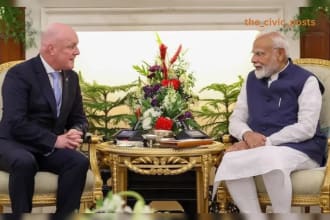
A New Chapter in India–New Zealand Relations as PM Modi Meets Christopher Luxon

A New Chapter in India–New Zealand Relations as PM Modi Meets Christopher Luxon

The multi-stop diplomatic tour undertaken by Indian Prime Minister Narendra Modi across Indonesia, Australia, and New Zealand represents a significant recalibration of New Delhi’s...

Alekhya Kota - JUL 10, 2026

Mbappé Shines Again as France Ends Morocco's Dream World Cup Run

Mbappé Shines Again as France Ends Morocco's Dream World Cup Run

The theater of international football achieves its highest form of expression when the collective aspirations of nations become inextricably bound to the individual pursuits of its...

Editorial desk - JUL 10, 2026

Harshit Rana Selection Sparks Fresh Debate Over India's Fitness Policy

Harshit Rana Selection Sparks Fresh Debate Over India's Fitness Policy

The selection policies of Indian cricket have long been a subject of intense public scrutiny, operating within an ecosystem where the path to the national side is traditionally vie...

Editorial desk - JUL 10, 2026

India Stunned Again: England Wrap Up T20I Series with Clinical Performance

India Stunned Again: England Wrap Up T20I Series with Clinical Performance

The high-flying trajectory of the Indian Men’s T20 cricket team has hit a remarkably rough patch, exposing deep technical and structural gaps in a remarkably short period. For a te...

Editorial desk - JUL 10, 2026

Telangana's Big Vision: Can Hyderabad Host the Olympics One Day?

Telangana's Big Vision: Can Hyderabad Host the Olympics One Day?

The landscape of Indian sports is undergoing a paradigm shift, and Telangana is actively positioning itself at the absolute forefront of this revolution. Telangana Chief Minister A...

Alekhya Kota - JUL 10, 2026

Smart Land Records, Stronger Farmers: Andhra Pradesh Launches New Pattadar Passbooks

Smart Land Records, Stronger Farmers: Andhra Pradesh Launches New Pattadar Passbooks

Land ownership is more than a legal document for millions of farming families-it represents security, livelihood, and the confidence to invest in agriculture. Recognising the impor...

Alekhya Kota - JUL 10, 2026

Editorial

UAPA: Protecting the Nation or Testing Democracy?

Kranthi Vegesna - JUL 8, 2026

Share:
UAPA: Protecting the Nation or Testing Democracy?

In a democratic nation defined by vast socio-cultural pluralism like India, preserving national security, sovereignty, and territorial integrity remains a paramount institutional imperative. To shield these constitutional values from existential threats, governments routinely employ rigorous legislative mechanisms.

Among these legal interventions, the Unlawful Activities Prevention Act, widely known as UAPA, stands out as one of the most intensely debated frameworks in modern jurisprudence. While the foundational intent behind this statute is to fortify the republic against subversion and external malice, the intensifying allegations of institutional overreach and systemic misuse have sparked a crucial discourse on the health of democratic dissent.

The friction between state survival and civil liberties lies at the very heart of this legal paradigm, questioning whether an ultra-stringent law can coexist harmoniously with constitutional freedoms.

Conceived originally in 1967, the statute was initially designed to address secessionist movements that threatened to fracture the geographic boundaries of the newborn republic. However, as global and domestic networks of terror grew increasingly sophisticated over the subsequent decades, the state felt a compelling necessity to sharpen its statutory weapons.

Following the repeal of the Prevention of Terrorism Act in 2004, this particular framework was repositioned as the nation’s primary counter-terrorism mechanism. Landmark legislative amendments introduced in 2008, 2012, and 2019 progressively intensified its scope, transforming it into a highly formidable legal tool.

Under its current jurisdiction, actions that disrupt national sovereignty, endorse secession, manifest as overt acts of terror, or offer material support to banned organizations are classified as exceptionally grave offenses. Crucially, the law also criminalizes the active dissemination of extremist ideologies, positioning itself as a proactive shield against existential threats to public order.

The true exceptionalism of this law, however, resides in its deviation from standard criminal procedure, particularly regarding pre-trial detention and bail conditions. Under ordinary criminal jurisprudence, the presumption of innocence dictates a swift path to bail, but this statute reverses that dynamic by imposing a threshold that makes liberty nearly impossible to attain. If a court, upon a preliminary review of the case diary, finds reasonable grounds to believe the accusations are prima facie true, it is legally mandated to deny bail.

Furthermore, while standard penal procedures require investigative agencies to file a chargesheet within sixty to ninety days, this specialized framework permits detention for up to one hundred and eighty days without formal charges. This extended window frequently results in accused individuals enduring prolonged incarceration long before their actual trial even commences.

The controversy surrounding this legislation deepened significantly with the introduction of the 2019 amendments, which granted the central government the unilateral authority to designate not just collective organizations, but individual citizens as terrorists.

Critics argue that bypassing judicial scrutiny to brand an individual as an existential threat leaves tremendous room for bureaucratic malice and administrative overreach. Concurrently, empowering the National Investigation Agency to seize assets and properties across state borders without obtaining prior consent from regional state governments has drawn sharp criticism from defenders of federalism, who view it as a centralization of police power.

Coupled with sentences that range from a minimum of five years to life imprisonment or capital punishment, a single accusation under this framework possesses the absolute power to permanently derail an individual's life long before guilt is established.

The real-world application of this law has seen the incarceration of several prominent academics, human rights defenders, journalists, and student activists whose cases have captured international attention. The prolonged detentions of figures like Professor G.N. Saibaba, Sudha Bharadwaj, Umar Khalid, and the tragic custody death of octogenarian tribal rights activist Father Stan Swamy have drawn global criticism.

These instances have forced legal experts to argue that within this statutory ecosystem, the process itself transforms into the punishment. Statistical realities paint a troubling picture: despite the sweeping powers granted to investigators, the eventual conviction rate under this law hovers at a mere two to three percent.

The vast majority of the accused are eventually acquitted after years of legal battles, yet the state possesses no mechanism to restore the stolen years, fractured health, and obliterated reputations of the innocent.

Legal scholars point out that the most dangerous vulnerability of such sweeping legislation is its susceptibility to political weaponization. When a law designed to combat international terrorism is deployed against domestic critics, peaceful protestors, or investigative journalists, it creates a chilling effect that stifles the very criticism necessary for a thriving democracy.

Using an extraordinary state-security tool to suppress local political rivalries or minor public disturbances fundamentally distorts the principle of proportionality. The higher judiciary has repeatedly stepped in to correct this imbalance, asserting that merely possessing non-conformist literature, sympathizing with a radical ideology, or criticizing state policies does not equate to waging war against the nation.

Supreme Court rulings have consistently rebuked the practice of serial arrests, where an individual granted bail in one case is immediately detained under a fresh, fabricated charge.

To curb this potential for abuse, the legal architecture theoretically provides avenues for accountability, stipulating that individuals who manufacture false complaints or officers who engage in malicious prosecutions can face criminal charges.

In a significant move toward transparency, recent judicial directives have clarified that prosecuting law enforcement officers for deliberate misconduct and procedural fabrication does not require prior bureaucratic sanction from the state. This evolving jurisprudence seeks to inject a sense of caution into investigative agencies, ensuring that accountability is not a one-way street.

Ultimately, the debate boils down to whether the core issue lies in the structural necessity of the law or its execution. In an era marked by complex geopolitical vulnerabilities and hybrid warfare, the state undeniably requires robust mechanisms to dismantle terror networks.

However, the application of such absolute power must be tempered by unyielding transparency and strict judicial oversight. The law must never be wielded as an offensive weapon to target vulnerability, but rather as an objective instrument to deliver justice. In a constitutional democracy, power must bow to the rule of law, ensuring that individual identity does not dictate the nature of state response.

This statutory framework remains a classic double-edged sword; while it holds the power to defend the republic from disintegration, its uncalibrated misuse can effortlessly hollow out the civil liberties that define the nation. Striking a harmonious equilibrium between national survival and human rights is not merely a bureaucratic preference, but an existential duty for the survival of democratic governance.

More Articles

Recent Articles

Plant-Based Eating May Improve Heart Health Beyond Blood Sugar Control

Plant-Based Eating May Improve Heart Health Beyond Blood Sugar Control

The relationship between nutritional habits and long-term metabolic health is complex, and emerging clinical evidence indicates that the protective benefits of a plant-based diet a...

Kranthi Shekar - JUL 11, 2026

Advance Sales Reflect Sky-High Expectations for ‘Jana Nayagan’

Advance Sales Reflect Sky-High Expectations for ‘Jana Nayagan’

The unprecedented operational gridlock surrounding Jana Nayagan offers a fascinating, albeit chaotic, case study in how the financial mechanics of modern cinema can completely para...

Editorial desk - JUL 11, 2026

Salima Tete's Leadership Sparks Fresh Hope for Indian Women's Hockey

Salima Tete's Leadership Sparks Fresh Hope for Indian Women's Hockey

The recent success of the Indian women’s hockey team at the FIH Nations Cup in New Zealand represents far more than a simple tournament victory or a ticket back to the prestigious...

Editorial desk - JUL 11, 2026

Diamond League Debut Turns Historic for India's Sarvesh Kushare

Diamond League Debut Turns Historic for India's Sarvesh Kushare

Indian athletics reached another memorable milestone as high jumper Sarvesh Kushare announced his arrival on one of the sport's biggest stages with an impressive performance in his...

Editorial desk - JUL 11, 2026

Indian Cricket Set for Major Coaching Reset After England Tour

Indian Cricket Set for Major Coaching Reset After England Tour

The internal ecosystem of elite international sports operations is notoriously volatile, particularly when expectations run high. This structural reality has caught up with the Ind...

Editorial desk - JUL 11, 2026

Pawan Kalyan Takes a Break from Public Duties Following Shoulder Surgery

Pawan Kalyan Takes a Break from Public Duties Following Shoulder Surgery

The complex relationship between professional public service commitments and personal physiological welfare was starkly highlighted as Andhra Pradesh Deputy Chief Minister K. Pawan...

Alekhya Kota - JUL 11, 2026

Uttam Kumar Reddy Holds BRS Responsible for Kaleshwaram's Structural Issues

Uttam Kumar Reddy Holds BRS Responsible for Kaleshwaram's Structural Issues

The debate surrounding macro-infrastructure accountability in India reached a critical turning point as Telangana’s Minister for Irrigation and Civil Supplies, N. Uttam Kumar Reddy...

Alekhya Kota - JUL 11, 2026

₹1,595 Crore Korean Investment Signals Growing Global Confidence in Andhra Pradesh

₹1,595 Crore Korean Investment Signals Growing Global Confidence in Andhra Pradesh

The aggressive pursuit of foreign direct investment by sub-national governments has become a cornerstone of regional economic transformation in India. This strategy was prominently...

Alekhya Kota - JUL 11, 2026

By-Elections on Hold: Madras High Court Raises Constitutional Questions

By-Elections on Hold: Madras High Court Raises Constitutional Questions

The intersection of judicial oversight and electoral administration provides one of the most compelling battlegrounds in modern democratic governance. This reality was vividly illu...

Alekhya Kota - JUL 11, 2026

Fear Has a New Face in ‘Evil Dead Burn’

Fear Has a New Face in ‘Evil Dead Burn’

Horror films often promise terrifying experiences, but only a handful manage to leave audiences genuinely unsettled while keeping them invested from beginning to end. Evil Dead Bur...

Editorial desk - JUL 11, 2026

Varun Tej’s Unique Horror-Comedy Adventure Finally Gets a Release Date

Varun Tej’s Unique Horror-Comedy Adventure Finally Gets a Release Date

Varun Tej is all set to return to the silver screen with a completely different avatar in his upcoming film Korean Kanakaraju, a project that has steadily generated curiosity ever...

Editorial desk - JUL 11, 2026

The Night That Changed Everything for Akhil Akkineni

The Night That Changed Everything for Akhil Akkineni

For Akhil Akkineni, the success celebration of Lenin became much more than a customary event organized to mark a film's positive response. It evolved into an unforgettable moment f...

Editorial desk - JUL 11, 2026

Histamine Intolerance: What Samantha's Latest Health Discussion Reveals

Histamine Intolerance: What Samantha's Latest Health Discussion Reveals

The conversation surrounding niche wellness topics has expanded rapidly, moving from specialized functional medicine clinics directly into mainstream public discourse. A major cata...

Kranthi Shekar - JUL 10, 2026

Soft Opening Puts Dhamaal 4's Weekend Performance in Focus

Soft Opening Puts Dhamaal 4's Weekend Performance in Focus

The current state of commercial Hindi cinema at the domestic box office is experiencing a highly visible phase of initial sluggishness, a trend underscored by the opening morning t...

Editorial desk - JUL 10, 2026

A New Chapter in India–New Zealand Relations as PM Modi Meets Christopher Luxon

A New Chapter in India–New Zealand Relations as PM Modi Meets Christopher Luxon

The multi-stop diplomatic tour undertaken by Indian Prime Minister Narendra Modi across Indonesia, Australia, and New Zealand represents a significant recalibration of New Delhi’s...

Alekhya Kota - JUL 10, 2026

Mbappé Shines Again as France Ends Morocco's Dream World Cup Run

Mbappé Shines Again as France Ends Morocco's Dream World Cup Run

The theater of international football achieves its highest form of expression when the collective aspirations of nations become inextricably bound to the individual pursuits of its...

Editorial desk - JUL 10, 2026

Harshit Rana Selection Sparks Fresh Debate Over India's Fitness Policy

Harshit Rana Selection Sparks Fresh Debate Over India's Fitness Policy

The selection policies of Indian cricket have long been a subject of intense public scrutiny, operating within an ecosystem where the path to the national side is traditionally vie...

Editorial desk - JUL 10, 2026

India Stunned Again: England Wrap Up T20I Series with Clinical Performance

India Stunned Again: England Wrap Up T20I Series with Clinical Performance

The high-flying trajectory of the Indian Men’s T20 cricket team has hit a remarkably rough patch, exposing deep technical and structural gaps in a remarkably short period. For a te...

Editorial desk - JUL 10, 2026

Telangana's Big Vision: Can Hyderabad Host the Olympics One Day?

Telangana's Big Vision: Can Hyderabad Host the Olympics One Day?

The landscape of Indian sports is undergoing a paradigm shift, and Telangana is actively positioning itself at the absolute forefront of this revolution. Telangana Chief Minister A...

Alekhya Kota - JUL 10, 2026

Smart Land Records, Stronger Farmers: Andhra Pradesh Launches New Pattadar Passbooks

Smart Land Records, Stronger Farmers: Andhra Pradesh Launches New Pattadar Passbooks

Land ownership is more than a legal document for millions of farming families-it represents security, livelihood, and the confidence to invest in agriculture. Recognising the impor...

Alekhya Kota - JUL 10, 2026