India Stunned Again: England Wrap Up T20I Series with Clinical Performance
Editorial desk - JUL 10, 2026

The high-flying trajectory of the Indian Men’s T20 cricket team has hit a remarkably rough patch, exposing deep technical and structural gaps in a remarkably short period. For a team that went three years, conquered two T20 World Cups, and went unbeaten across sixteen consecutive bilateral series, the sudden descent into back-to-back series defeats feels like a cold shower.
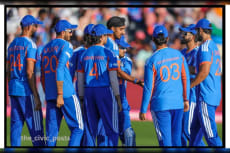
Just two weeks after suffering a shocking series loss to Ireland, the new-look Indian side under the captaincy of Shreyas Iyer faltered decisively in Bristol, surrendering the ongoing bilateral series to England. With a crushing eight-wicket defeat in the fourth T20 International, England took an unassailable lead, leaving India staring down the barrel of a potential historic whitewash if they cannot salvage the final encounter in Southampton.
The primary culprit behind this downward spiral is a batting unit that looks entirely disconnected from the demands of local English conditions. In Bristol, India could only muster a below-par total of 158 for 7 on a ground notorious for its short boundaries and high-scoring nature. England’s response was a clinical, hyper-aggressive demolition, hunting down the target with nine wickets intact and a staggering 37 deliveries to spare.
As Head Coach Gautam Gambhir watched the tactical capitulation unfold from the dugout with a grim expression, it became painfully evident that the team is struggling to learn from recurring tactical missteps.
The core of India's batting vulnerability lies in an inability or unwillingness to adapt technically to the spongy, unpredictable bounce characteristic of British pitches. In domestic subcontinental conditions or the Indian Premier League, these same batters are accustomed to dealing with short-pitched bowling by shifting their weight laterally, manufacturing room on either side of the wicket, and relying on fast hands to clear the ropes.
However, when cramped for space on surfaces that offer variable rise, this technique falls apart. Great historical practitioners of the pull shot, such as Rohit Sharma, succeeded in England because they diligently got behind the line of the ball, respecting the altered trajectory.
The current crop of young Indian batters, by contrast, has repeatedly walked straight into a blatant short-ball trap. English pacers Jofra Archer and Josh Tongue did not even need to employ sophisticated strategy; they simply targeted the ribs and helmets of the Indian top order, watching the defense crumble.
This technical deficiency was illustrated most clearly in the dismissal of young prodigy Vaibhav Sooryavanshi. For the third consecutive match, the youngster showed flashes of his immense raw potential before blindly miscueing a sharp, rising delivery from Archer. The veteran Ishan Kishan fell into an identical trap laid by Tongue, leaving the visitors reeling before the powerplay could even provide a platform.
Compounding this error was a failure to read the geometry of the Bristol ground. While the straight boundaries were invitingly short, batters like Abhishek Sharma and Tilak Varma repeatedly opted for high-risk, cross-batted horizontal swipes toward the longer square boundaries, throwing away their wickets cheaply.
The solitary shining light in this bleak batting display was the skipper himself. Shreyas Iyer played an innings of immense character and technical discipline, anchoring the collapsing structure with an unbeaten 80 runs off just 49 deliveries. Iyer looked a class apart from his peers, displaying the exact tactical flexibility the rest of the lineup lacked.
When he chose to attack, he did so cleanly in the "V," presenting a straight bat and prioritizing low-risk lofted drives down the ground. He only resorted to cross-batted shots when forced by spin or when executing deliberate, controlled upper-cuts to exploit gaps behind the wicket keeper.
Had it not been for Iyer’s lonely fightback, the team’s total would have completely dissolved, drawing uncomfortable parallels to their recent nightmare in Nottingham where the entire team collapsed for a humiliating 76 runs. The stark lack of support for the captain was reflected in the scorecard, with Shivam Dube's modest 22 being the only other individual score to cross the twenty-run threshold.
Beyond individual technical issues, India is facing a gaping structural void in their lower-order construction. The squad is feeling the absence of an elite, explosive seam-bowling all-rounder like Hardik Pandya. Without an aggressive finisher to manipulate fields in the death overs, the back end of the Indian innings was entirely stagnant.
Washington Sundar and Axar Patel are reliable containing options in the middle overs, but they lack the innovative strokeplay-the scoops, ramps, and reverse-sweeps-required to disrupt elite fast bowlers executing precise yorkers. In the final two overs of the innings, India failed to find a single boundary, allowing Sam Curran and Jofra Archer to close out the innings with standard, unpressured deliveries.
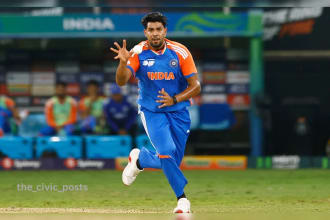
If the batting performance lacked imagination, the bowling response lacked teeth entirely. Defending a meager 158 required early wickets and immense psychological pressure. Instead, the Indian bowling unit looked toothless, allowing England to pull off their most efficient run chase of 150 or more in their T20 history. The team selection was also heavily compromised by compounding physical setbacks.
Both Harshit Rana and Varun Chakaravarthy were sidelined with hamstring injuries, a development that raises serious questions about the medical and fitness clearance protocols, given that both players had allegedly just passed fitness tests following previous injury layoffs.
Deprived of their primary weapons, the Indian attack offered zero intimidation. After a rare early breakthrough where the dangerous Jos Buttler was dismissed for just 8 runs, England’s stand-in captain Harry Brook joined forces with Phil Salt to orchestrate a merciless counter-attack.
Brook was in a state of absolute flow, smashing an unbeaten 79 off a mere 35 balls, treating both pace and spin with identical disdain. Salt played the perfect foil, compiling a deceptively quiet 59 to steer the hosts across the finish line with emphatic ease.
This successive series defeat serves as a definitive reality check for India’s transition phase in the shortest format of the game. Winning consistently in modern T20 cricket requires more than just possessing dynamic power-hitters; it demands an analytical approach capable of altering techniques based on unique geographical variables.
If the young Indian contingent wants to stop this alarming slide and avoid an embarrassing series whitewash in Southampton, they must quickly abandon their rigid approach and display the technical humility required to survive outside their comfort zone.