₹1,595 Crore Korean Investment Signals Growing Global Confidence in Andhra Pradesh
Alekhya Kota - JUL 11, 2026
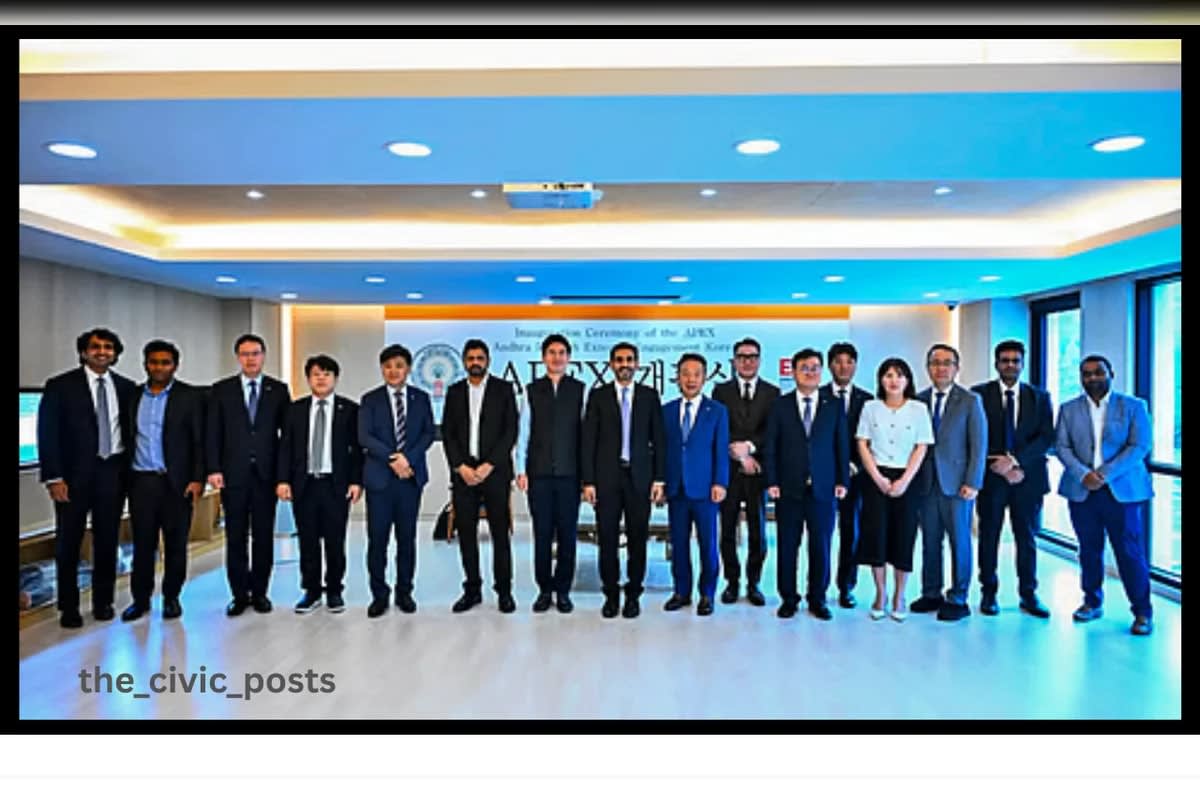
The aggressive pursuit of foreign direct investment by sub-national governments has become a cornerstone of regional economic transformation in India. This strategy was prominently displayed during the high-stakes investment promotion tour of South Korea led by Andhra Pradesh's Minister for Human Resources Development and Information Technology, Nara Lokesh.
Concluding the sixth day of his intensive diplomatic and industrial outreach in Seoul, the Minister successfully materialized a substantial financial commitment while simultaneously advancing structural negotiations across multiple frontier industries. The headline achievement of the mission was securing a massive manufacturing investment commitment from a leading South Korean electronics corporation, which serves as a major boost for the state's industrial ecosystem.
Beyond this immediate victory, the diplomatic itinerary was carefully designed to target high-value sectors, including heavy maritime infrastructure, artificial intelligence data architecture, automated electric vehicle supply chains, and specialized electronics component manufacturing, positioning the state as an attractive destination for East Asian capital.
The most tangible breakthrough of the investment tour occurred during a high-profile bilateral meeting between Minister Lokesh and Taehoo Kim, the Chairman of Shinhyup Electronics Co., Ltd. Recognizing the state's robust industrial policy framework and strategic geographic advantages, the South Korean electronics manufacturer announced a definitive plan to establish an expansive, state-of-the-art production ecosystem at Naidupeta, located within the Tirupati district. This capital-intensive project involves a direct financial outlay of 1,595 crore rupees, representing a major injection of foreign capital into the regional economy.
The planned facility will focus on the manufacturing of highly sophisticated technological components, including high-density Printed Circuit Boards, advanced Copper Clad Laminates, and broad-spectrum Electronic Manufacturing Services. These components are critical for high-growth sectors such as electric vehicle production, modern automotive manufacturing, and high-precision healthcare equipment.
Beyond the technological upgrade, the macroeconomic impact of this project is substantial, with projections indicating that the facility will generate direct, high-skilled employment for 2,170 local professionals, providing a meaningful boost to regional workforce development.
Simultaneously, the industrial pitch extended heavily into the domain of heavy maritime infrastructure and offshore engineering, areas where South Korean firms possess globally recognized expertise.
Minister Lokesh engaged in critical structural talks with Kwon Younghoon, the Global Business Director of HD Korea Shipbuilding and Offshore Engineering. Leveraging the state's natural geopolitical assets, the Minister pitched Andhra Pradesh’s vast 1,053-kilometer coastline and its network of deep-water ports as an ideal operating base for global maritime logistics. He extended a formal, comprehensive invitation to the firm to establish a world-class greenfield shipbuilding and marine engineering facility within the state.
To demonstrate administrative agility and serious political intent, state bureaucrats were immediately instructed to conduct comprehensive mapping exercises to identify and reserve coastal land packages tailored to the specific technical and logistical requirements of the engineering giant.
To solidify this potential partnership, the corporate leadership of HD Korea Shipbuilding was officially invited to visit the state capital to engage in direct executive talks with Chief Minister N. Chandrababu Naidu.
The diplomatic push also prioritized next-generation digital infrastructure and technological research, highlighted by a high-stakes meeting with Young Joe Yun, the Executive Vice President of Samsung Electronics. Utilizing the state’s ambitious regulatory roadmap, which includes a planned 10-gigawatt data center pipeline, the IT Minister pitched a comprehensive localization strategy to the electronics giant.
The state proposed that Samsung establish localized manufacturing units for advanced artificial intelligence servers and invest in a high-tech display fabrication plant within the state’s borders. Pushing the boundaries of academic and corporate collaboration, the Minister invited Samsung’s elite research and development division to establish a footprint within the newly envisioned Amaravati Quantum Valley.
The specific objective of this invitation is to foster collaborative innovation on India's ambitious 133-qubit IBM Quantum System Two initiative. To incentivize this high-value corporate migration, the administration floated the concept of a dedicated corporate township within the capital region, designed to blend industrial operational spaces with premium residential and research facilities.
In tandem with electronics and digital infrastructure, consumer electronics and home appliances formed a key pillar of the economic dialogue. The state delegation met with Cho Hanchul, the Overseas Sales Head of Cuckoo Electronics, urging the prominent home appliances brand to establish a specialized manufacturing plant in established industrial hubs like Sri City or the Tirupati electronics corridor.
The economic rationale presented for this project was twofold: the facility would act as a primary production hub to feed the rapidly expanding consumer markets of Southern India, while simultaneously exploiting the state's port logistics to serve as a low-cost export platform targeting consumer networks throughout Southeast Asia and the Middle East. This approach aligns with the state's broader goal of creating diverse manufacturing ecosystems that can seamlessly serve both domestic demands and international trade routes.
The automated mobility sector received special emphasis during an industrial roundtable organized by the Korea Auto Industries Cooperation Agency. Addressing an assembly of South Korean automotive executives, Minister Lokesh unpacked the extensive fiscal and regulatory incentives integrated into Andhra Pradesh’s recently updated Sustainable Electric Mobility Policy 4.0. To lower the entry barriers for electric vehicle component manufacturers, the Minister announced that the state government is actively constructing specialized automotive component parks.
These parks are strategically positioned near the existing Anantapur automotive cluster-which hosts major operations like Kia-and along the high-growth Sri City–Chittoor–Tirupati industrial corridor.
These dedicated zones are designed to offer plug-and-play manufacturing sheds, reducing initial capital expenditures for foreign firms, and will feature a dedicated, specialized Korea Desk to eliminate bureaucratic friction and streamline regulatory approvals for East Asian enterprises.
To reinforce this specialized ecosystem, the Minister held focused discussions with Motivelink Chief Executive Officer Kim Ki-han, advocating for an expansion of the firm’s electric vehicle component manufacturing footprint directly into the Sri City economic zone.
This was complemented by an exploratory meeting with Stephen Kim, the Founder and Chief Executive Officer of DeltaX. The discussions focused heavily on convincing the firm to build a localized Battery Energy Storage System manufacturing plant within the state.
This initiative is designed to directly support the state's aggressive transition toward green energy integration, as large-scale battery storage is critical for balancing the electrical grid as renewable energy sources scale up.
To ensure sustained momentum from this diplomatic mission, the IT Minister extended a formal invitation to Dr. Kim Taehyung, the Commissioner of Invest Korea, requesting the establishment of a permanent sub-national corporate office in either the capital city of Amaravati or the port city of Visakhapatnam. T
his institutional bridge is intended to serve as a direct pipeline for South Korean capital and corporate trade delegations, with an immediate focus on organizing a high-power executive delegation to attend the upcoming Confederation of Indian Industry Partnership Summit scheduled for late 2026.
This long-term approach highlights a shifting paradigm in state-level governance, where regional administrations operate with an independent, international economic outlook, proactively shaping foreign trade relations to secure industrial modernization and employment growth.