Editorial

Is Social Media Strengthening Democracy or Weakening Society?

Kranthi Vegesna - JUL 8, 2026
Share:
Is Social Media Strengthening Democracy or Weakening Society?

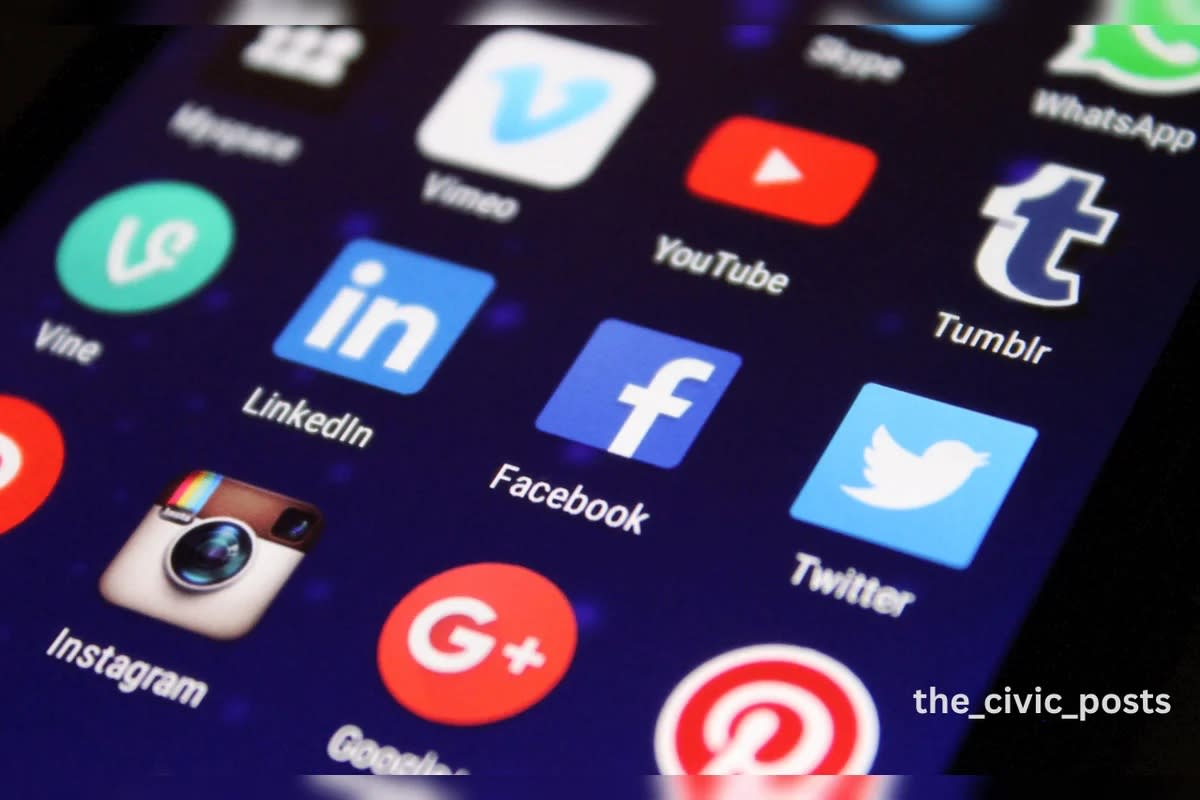
The decade spanning from 2016 to 2026 will be remembered in Indian history as the era of the great digital democratization, a period when the socio-technological fabric of the nation was fundamentally rewoven by the social media revolution. This transformation was propelled by a perfect storm of ultra-affordable smartphones, hyper-competitive data pricing, and the rapid deployment of robust 4G and 5G infrastructures. Almost overnight, a powerful digital megaphone was placed into the hands of hundreds of millions of citizens, shattering the historical monopolies of traditional media houses, institutional gatekeepers, and elite broadcasters.

The power to curate, distribute, and consume information shifted overnight from centralized newsrooms to the fingertips of the ordinary public. While this structural decentralization infused the democratic process with an unprecedented surge of grassroots participation, it simultaneously unleashed a volatile matrix of behavioral and societal complexities.

By lowering the entry barriers to public discourse, virtual networks vigorously championed the core tenets of free expression, yet they concurrently paved an unobstructed highway for its systematic exploitation.

To fully grasp the magnitude of this shift, one must analyze how digital connectivity radically transformed civic engagement and redefined public accountability. A citizen residing in a historically marginalized rural district no longer requires a mainstream journalist or a political intermediary to project localized grievances onto the national stage.

Virtual spaces have collapsed the vast physical and bureaucratic distances separating the governing apparatus from the governed, converting rigid administrative hierarchies into highly responsive networks. Where citizens once spent months navigating institutional inertia just to register a complaint, a well-placed digital tag can now prompt immediate, transparent intervention from law enforcement or district administrators. This systemic immediacy has forced public offices to operate under continuous scrutiny, driving a wave of transparency across public sectors.

Beyond individual grievances, this collective digital voice has acted as an architectural framework for monumental social justice movements. Women across varied socio-professional strata harnessed the power of algorithmic solidarity to dismantle decades of institutionalized misconduct, proving that virtual echo chambers could successfully enforce tangible, real-world accountability against highly insulated public figures.

However, the very mechanics that make these platforms an engine for democratic empowerment also expose society to a dark, unyielding underbelly. Under the absolute, often misunderstood banner of unmonitored expression, a corrosive culture of digital boundary violations has firmly taken root. The modern attention economy thrives on sensationalism, an algorithmic bias that has catalyzed a dramatic rise in targeted trolling, toxic character assassination, and coordinated cyberbullying.

Women and public figures routinely find themselves navigating a hostile virtual landscape where the boundary between legitimate criticism and visceral, organized harassment is completely obliterated. The weaponization of identity through altered media, deepfakes, and carefully engineered smear campaigns has turned individual reputation into an incredibly fragile asset.

These toxic patterns do not merely inflict deep psychological harm upon the individuals targeted; they systematically degrade the broader cultural ecosystem, transforming what should be an open forum for intellectual exchange into a theater of digital warfare.

This underlying toxicity is severely magnified by the rapid, unchecked viral distribution of unverified information. The crisis of fake news has evolved far beyond an academic debate regarding media literacy; it has escalated into an existential threat to public safety and human life. When fabricated narratives are supercharged by algorithms engineered to maximize user engagement through raw outrage, the real-world fallout is immediate, chaotic, and often fatal.

Innocent lives have been cut short by frantic mobs mobilized entirely by malicious, unverified broadcast messages, demonstrating that when digitized misinformation intersects with pre-existing tribal anxieties, the result is horrific societal destabilization.

These grim historical milestones serve as a stark reminder that while information is an inherently liberating currency, its corrupted weaponization transforms it into a highly volatile public hazard.

The escalating tension between absolute expression and the constitutional imperative for public order has manifested clearly in recent landmark legal confrontations. High-profile cases involving influential online creators have demonstrated that virtual actions carry severe, non-negotiable statutory consequences.

When online rhetoric intentionally crosses the threshold from sharp political satire into the deliberate incitement of communal friction, systemic hatred, and targeted defamation, the state has increasingly intervened through the application of stringent national security and anti-terror legislations. These legal precedents underscore the incredibly delicate and contentious border separating legitimate public dissent from statutory limitations.

Similarly, intricate legal battles involving public figures reveal how digital frameworks can be manipulated to construct elaborate institutional conspiracies against individuals, illustrating how easily emerging technologies can be weaponized when merged with systemic malice. These high-stakes battles prove that a coordinated online campaign can easily collapse careers, disrupt families, and severely compromise institutional integrity.

This fierce battle for narrative dominance is nowhere more visible than within the political theater, where modern political entities have heavily institutionalized their digital operations. Political factions now employ vast, professionally managed digital armies tasked with engineering public perception, shaping electoral sentiments, and defining policy debates.

While these operations are ostensibly designed to mobilize voters and streamline political ideologies, they frequently devolve into a form of relentless psychological warfare. The benchmark for democratic debate has drifted away from policy-driven dialectics into highly polarized campaigns characterized by mutual vilification and personal mudslinging.

By reducing complex socio-economic challenges to binary, emotionally charged soundbites, these operations fragment the electorate, kill nuances, and systematically erode the potential for healthy democratic consensus. In reaction to this escalating polarization, state law enforcement agencies have aggressively expanded their digital surveillance capabilities, monitoring virtual corridors to pre-emptively curb unlawful acts, which in turn sparks deeper, unresolved debates regarding individual privacy and authoritarian overreach.

The statutory framework governing this frontier traces its roots back to constitutional guarantees that protect the fundamental right to free expression while explicitly subjecting it to reasonable restrictions. The state retains the constitutional authority to regulate public speech to safeguard national sovereignty, maintain public order, and prevent defamation or the incitement of offenses. Legislative mechanisms like the Information Technology Act alongside updated components of the modern penal codes are constantly adapted to police the rapidly evolving digital landscape.

Under this shifting legal paradigm, the perceived anonymity of a digital profile no longer offers absolute immunity, as the judiciary increasingly holds individuals criminally and civilly liable for the permanent digital footprints they leave behind. This legal evolution reinforces the timeless philosophical truth that individual liberty cannot exist in a vacuum completely detached from social responsibility.

Ultimately, this ongoing socio-technological evolution positions digital connectivity as a classic double-edged sword. It functions simultaneously as an unprecedented engine of empowerment that amplifies the voice of the voiceless and a chaotic accelerator of societal polarization when abandoned to unchecked algorithmic greed. The ultimate trajectory of this tool does not depend on the underlying code or the technology itself, but on the collective ethical framework of the society navigating its current.

Mitigating these systemic vulnerabilities requires an immediate, widespread cultural pivot toward rigorous fact-checking, proactive digital empathy, and a collective refusal to participate in malicious digital discourse. If society is to protect the democratic essence of this digital revolution, it must universally internalize the foundational realization that true freedom of expression can only survive when it is permanently anchored to individual accountability.

More Articles

Recent Articles

Plant-Based Eating May Improve Heart Health Beyond Blood Sugar Control

Plant-Based Eating May Improve Heart Health Beyond Blood Sugar Control

The relationship between nutritional habits and long-term metabolic health is complex, and emerging clinical evidence indicates that the protective benefits of a plant-based diet a...

Kranthi Shekar - JUL 11, 2026

Advance Sales Reflect Sky-High Expectations for ‘Jana Nayagan’

Advance Sales Reflect Sky-High Expectations for ‘Jana Nayagan’

The unprecedented operational gridlock surrounding Jana Nayagan offers a fascinating, albeit chaotic, case study in how the financial mechanics of modern cinema can completely para...

Editorial desk - JUL 11, 2026

Salima Tete's Leadership Sparks Fresh Hope for Indian Women's Hockey

Salima Tete's Leadership Sparks Fresh Hope for Indian Women's Hockey

The recent success of the Indian women’s hockey team at the FIH Nations Cup in New Zealand represents far more than a simple tournament victory or a ticket back to the prestigious...

Editorial desk - JUL 11, 2026

Diamond League Debut Turns Historic for India's Sarvesh Kushare

Diamond League Debut Turns Historic for India's Sarvesh Kushare

Indian athletics reached another memorable milestone as high jumper Sarvesh Kushare announced his arrival on one of the sport's biggest stages with an impressive performance in his...

Editorial desk - JUL 11, 2026

Indian Cricket Set for Major Coaching Reset After England Tour

Indian Cricket Set for Major Coaching Reset After England Tour

The internal ecosystem of elite international sports operations is notoriously volatile, particularly when expectations run high. This structural reality has caught up with the Ind...

Editorial desk - JUL 11, 2026

Pawan Kalyan Takes a Break from Public Duties Following Shoulder Surgery

Pawan Kalyan Takes a Break from Public Duties Following Shoulder Surgery

The complex relationship between professional public service commitments and personal physiological welfare was starkly highlighted as Andhra Pradesh Deputy Chief Minister K. Pawan...

Alekhya Kota - JUL 11, 2026

Uttam Kumar Reddy Holds BRS Responsible for Kaleshwaram's Structural Issues

Uttam Kumar Reddy Holds BRS Responsible for Kaleshwaram's Structural Issues

The debate surrounding macro-infrastructure accountability in India reached a critical turning point as Telangana’s Minister for Irrigation and Civil Supplies, N. Uttam Kumar Reddy...

Alekhya Kota - JUL 11, 2026

₹1,595 Crore Korean Investment Signals Growing Global Confidence in Andhra Pradesh

₹1,595 Crore Korean Investment Signals Growing Global Confidence in Andhra Pradesh

The aggressive pursuit of foreign direct investment by sub-national governments has become a cornerstone of regional economic transformation in India. This strategy was prominently...

Alekhya Kota - JUL 11, 2026

By-Elections on Hold: Madras High Court Raises Constitutional Questions

By-Elections on Hold: Madras High Court Raises Constitutional Questions

The intersection of judicial oversight and electoral administration provides one of the most compelling battlegrounds in modern democratic governance. This reality was vividly illu...

Alekhya Kota - JUL 11, 2026

Fear Has a New Face in ‘Evil Dead Burn’

Fear Has a New Face in ‘Evil Dead Burn’

Horror films often promise terrifying experiences, but only a handful manage to leave audiences genuinely unsettled while keeping them invested from beginning to end. Evil Dead Bur...

Editorial desk - JUL 11, 2026

Varun Tej’s Unique Horror-Comedy Adventure Finally Gets a Release Date

Varun Tej’s Unique Horror-Comedy Adventure Finally Gets a Release Date

Varun Tej is all set to return to the silver screen with a completely different avatar in his upcoming film Korean Kanakaraju, a project that has steadily generated curiosity ever...

Editorial desk - JUL 11, 2026

The Night That Changed Everything for Akhil Akkineni

The Night That Changed Everything for Akhil Akkineni

For Akhil Akkineni, the success celebration of Lenin became much more than a customary event organized to mark a film's positive response. It evolved into an unforgettable moment f...

Editorial desk - JUL 11, 2026

Histamine Intolerance: What Samantha's Latest Health Discussion Reveals

Histamine Intolerance: What Samantha's Latest Health Discussion Reveals

The conversation surrounding niche wellness topics has expanded rapidly, moving from specialized functional medicine clinics directly into mainstream public discourse. A major cata...

Kranthi Shekar - JUL 10, 2026

Soft Opening Puts Dhamaal 4's Weekend Performance in Focus

Soft Opening Puts Dhamaal 4's Weekend Performance in Focus

The current state of commercial Hindi cinema at the domestic box office is experiencing a highly visible phase of initial sluggishness, a trend underscored by the opening morning t...

Editorial desk - JUL 10, 2026

A New Chapter in India–New Zealand Relations as PM Modi Meets Christopher Luxon

A New Chapter in India–New Zealand Relations as PM Modi Meets Christopher Luxon

The multi-stop diplomatic tour undertaken by Indian Prime Minister Narendra Modi across Indonesia, Australia, and New Zealand represents a significant recalibration of New Delhi’s...

Alekhya Kota - JUL 10, 2026

Mbappé Shines Again as France Ends Morocco's Dream World Cup Run

Mbappé Shines Again as France Ends Morocco's Dream World Cup Run

The theater of international football achieves its highest form of expression when the collective aspirations of nations become inextricably bound to the individual pursuits of its...

Editorial desk - JUL 10, 2026

Harshit Rana Selection Sparks Fresh Debate Over India's Fitness Policy

Harshit Rana Selection Sparks Fresh Debate Over India's Fitness Policy

The selection policies of Indian cricket have long been a subject of intense public scrutiny, operating within an ecosystem where the path to the national side is traditionally vie...

Editorial desk - JUL 10, 2026

India Stunned Again: England Wrap Up T20I Series with Clinical Performance

India Stunned Again: England Wrap Up T20I Series with Clinical Performance

The high-flying trajectory of the Indian Men’s T20 cricket team has hit a remarkably rough patch, exposing deep technical and structural gaps in a remarkably short period. For a te...

Editorial desk - JUL 10, 2026

Telangana's Big Vision: Can Hyderabad Host the Olympics One Day?

Telangana's Big Vision: Can Hyderabad Host the Olympics One Day?

The landscape of Indian sports is undergoing a paradigm shift, and Telangana is actively positioning itself at the absolute forefront of this revolution. Telangana Chief Minister A...

Alekhya Kota - JUL 10, 2026

Smart Land Records, Stronger Farmers: Andhra Pradesh Launches New Pattadar Passbooks

Smart Land Records, Stronger Farmers: Andhra Pradesh Launches New Pattadar Passbooks

Land ownership is more than a legal document for millions of farming families-it represents security, livelihood, and the confidence to invest in agriculture. Recognising the impor...

Alekhya Kota - JUL 10, 2026

Editorial

Is Social Media Strengthening Democracy or Weakening Society?

Kranthi Vegesna - JUL 8, 2026

Share:
Is Social Media Strengthening Democracy or Weakening Society?

The decade spanning from 2016 to 2026 will be remembered in Indian history as the era of the great digital democratization, a period when the socio-technological fabric of the nation was fundamentally rewoven by the social media revolution. This transformation was propelled by a perfect storm of ultra-affordable smartphones, hyper-competitive data pricing, and the rapid deployment of robust 4G and 5G infrastructures. Almost overnight, a powerful digital megaphone was placed into the hands of hundreds of millions of citizens, shattering the historical monopolies of traditional media houses, institutional gatekeepers, and elite broadcasters.

The power to curate, distribute, and consume information shifted overnight from centralized newsrooms to the fingertips of the ordinary public. While this structural decentralization infused the democratic process with an unprecedented surge of grassroots participation, it simultaneously unleashed a volatile matrix of behavioral and societal complexities.

By lowering the entry barriers to public discourse, virtual networks vigorously championed the core tenets of free expression, yet they concurrently paved an unobstructed highway for its systematic exploitation.

To fully grasp the magnitude of this shift, one must analyze how digital connectivity radically transformed civic engagement and redefined public accountability. A citizen residing in a historically marginalized rural district no longer requires a mainstream journalist or a political intermediary to project localized grievances onto the national stage.

Virtual spaces have collapsed the vast physical and bureaucratic distances separating the governing apparatus from the governed, converting rigid administrative hierarchies into highly responsive networks. Where citizens once spent months navigating institutional inertia just to register a complaint, a well-placed digital tag can now prompt immediate, transparent intervention from law enforcement or district administrators. This systemic immediacy has forced public offices to operate under continuous scrutiny, driving a wave of transparency across public sectors.

Beyond individual grievances, this collective digital voice has acted as an architectural framework for monumental social justice movements. Women across varied socio-professional strata harnessed the power of algorithmic solidarity to dismantle decades of institutionalized misconduct, proving that virtual echo chambers could successfully enforce tangible, real-world accountability against highly insulated public figures.

However, the very mechanics that make these platforms an engine for democratic empowerment also expose society to a dark, unyielding underbelly. Under the absolute, often misunderstood banner of unmonitored expression, a corrosive culture of digital boundary violations has firmly taken root. The modern attention economy thrives on sensationalism, an algorithmic bias that has catalyzed a dramatic rise in targeted trolling, toxic character assassination, and coordinated cyberbullying.

Women and public figures routinely find themselves navigating a hostile virtual landscape where the boundary between legitimate criticism and visceral, organized harassment is completely obliterated. The weaponization of identity through altered media, deepfakes, and carefully engineered smear campaigns has turned individual reputation into an incredibly fragile asset.

These toxic patterns do not merely inflict deep psychological harm upon the individuals targeted; they systematically degrade the broader cultural ecosystem, transforming what should be an open forum for intellectual exchange into a theater of digital warfare.

This underlying toxicity is severely magnified by the rapid, unchecked viral distribution of unverified information. The crisis of fake news has evolved far beyond an academic debate regarding media literacy; it has escalated into an existential threat to public safety and human life. When fabricated narratives are supercharged by algorithms engineered to maximize user engagement through raw outrage, the real-world fallout is immediate, chaotic, and often fatal.

Innocent lives have been cut short by frantic mobs mobilized entirely by malicious, unverified broadcast messages, demonstrating that when digitized misinformation intersects with pre-existing tribal anxieties, the result is horrific societal destabilization.

These grim historical milestones serve as a stark reminder that while information is an inherently liberating currency, its corrupted weaponization transforms it into a highly volatile public hazard.

The escalating tension between absolute expression and the constitutional imperative for public order has manifested clearly in recent landmark legal confrontations. High-profile cases involving influential online creators have demonstrated that virtual actions carry severe, non-negotiable statutory consequences.

When online rhetoric intentionally crosses the threshold from sharp political satire into the deliberate incitement of communal friction, systemic hatred, and targeted defamation, the state has increasingly intervened through the application of stringent national security and anti-terror legislations. These legal precedents underscore the incredibly delicate and contentious border separating legitimate public dissent from statutory limitations.

Similarly, intricate legal battles involving public figures reveal how digital frameworks can be manipulated to construct elaborate institutional conspiracies against individuals, illustrating how easily emerging technologies can be weaponized when merged with systemic malice. These high-stakes battles prove that a coordinated online campaign can easily collapse careers, disrupt families, and severely compromise institutional integrity.

This fierce battle for narrative dominance is nowhere more visible than within the political theater, where modern political entities have heavily institutionalized their digital operations. Political factions now employ vast, professionally managed digital armies tasked with engineering public perception, shaping electoral sentiments, and defining policy debates.

While these operations are ostensibly designed to mobilize voters and streamline political ideologies, they frequently devolve into a form of relentless psychological warfare. The benchmark for democratic debate has drifted away from policy-driven dialectics into highly polarized campaigns characterized by mutual vilification and personal mudslinging.

By reducing complex socio-economic challenges to binary, emotionally charged soundbites, these operations fragment the electorate, kill nuances, and systematically erode the potential for healthy democratic consensus. In reaction to this escalating polarization, state law enforcement agencies have aggressively expanded their digital surveillance capabilities, monitoring virtual corridors to pre-emptively curb unlawful acts, which in turn sparks deeper, unresolved debates regarding individual privacy and authoritarian overreach.

The statutory framework governing this frontier traces its roots back to constitutional guarantees that protect the fundamental right to free expression while explicitly subjecting it to reasonable restrictions. The state retains the constitutional authority to regulate public speech to safeguard national sovereignty, maintain public order, and prevent defamation or the incitement of offenses. Legislative mechanisms like the Information Technology Act alongside updated components of the modern penal codes are constantly adapted to police the rapidly evolving digital landscape.

Under this shifting legal paradigm, the perceived anonymity of a digital profile no longer offers absolute immunity, as the judiciary increasingly holds individuals criminally and civilly liable for the permanent digital footprints they leave behind. This legal evolution reinforces the timeless philosophical truth that individual liberty cannot exist in a vacuum completely detached from social responsibility.

Ultimately, this ongoing socio-technological evolution positions digital connectivity as a classic double-edged sword. It functions simultaneously as an unprecedented engine of empowerment that amplifies the voice of the voiceless and a chaotic accelerator of societal polarization when abandoned to unchecked algorithmic greed. The ultimate trajectory of this tool does not depend on the underlying code or the technology itself, but on the collective ethical framework of the society navigating its current.

Mitigating these systemic vulnerabilities requires an immediate, widespread cultural pivot toward rigorous fact-checking, proactive digital empathy, and a collective refusal to participate in malicious digital discourse. If society is to protect the democratic essence of this digital revolution, it must universally internalize the foundational realization that true freedom of expression can only survive when it is permanently anchored to individual accountability.

More Articles

Recent Articles

Plant-Based Eating May Improve Heart Health Beyond Blood Sugar Control

Plant-Based Eating May Improve Heart Health Beyond Blood Sugar Control

The relationship between nutritional habits and long-term metabolic health is complex, and emerging clinical evidence indicates that the protective benefits of a plant-based diet a...

Kranthi Shekar - JUL 11, 2026

Advance Sales Reflect Sky-High Expectations for ‘Jana Nayagan’

Advance Sales Reflect Sky-High Expectations for ‘Jana Nayagan’

The unprecedented operational gridlock surrounding Jana Nayagan offers a fascinating, albeit chaotic, case study in how the financial mechanics of modern cinema can completely para...

Editorial desk - JUL 11, 2026

Salima Tete's Leadership Sparks Fresh Hope for Indian Women's Hockey

Salima Tete's Leadership Sparks Fresh Hope for Indian Women's Hockey

The recent success of the Indian women’s hockey team at the FIH Nations Cup in New Zealand represents far more than a simple tournament victory or a ticket back to the prestigious...

Editorial desk - JUL 11, 2026

Diamond League Debut Turns Historic for India's Sarvesh Kushare

Diamond League Debut Turns Historic for India's Sarvesh Kushare

Indian athletics reached another memorable milestone as high jumper Sarvesh Kushare announced his arrival on one of the sport's biggest stages with an impressive performance in his...

Editorial desk - JUL 11, 2026

Indian Cricket Set for Major Coaching Reset After England Tour

Indian Cricket Set for Major Coaching Reset After England Tour

The internal ecosystem of elite international sports operations is notoriously volatile, particularly when expectations run high. This structural reality has caught up with the Ind...

Editorial desk - JUL 11, 2026

Pawan Kalyan Takes a Break from Public Duties Following Shoulder Surgery

Pawan Kalyan Takes a Break from Public Duties Following Shoulder Surgery

The complex relationship between professional public service commitments and personal physiological welfare was starkly highlighted as Andhra Pradesh Deputy Chief Minister K. Pawan...

Alekhya Kota - JUL 11, 2026

Uttam Kumar Reddy Holds BRS Responsible for Kaleshwaram's Structural Issues

Uttam Kumar Reddy Holds BRS Responsible for Kaleshwaram's Structural Issues

The debate surrounding macro-infrastructure accountability in India reached a critical turning point as Telangana’s Minister for Irrigation and Civil Supplies, N. Uttam Kumar Reddy...

Alekhya Kota - JUL 11, 2026

₹1,595 Crore Korean Investment Signals Growing Global Confidence in Andhra Pradesh

₹1,595 Crore Korean Investment Signals Growing Global Confidence in Andhra Pradesh

The aggressive pursuit of foreign direct investment by sub-national governments has become a cornerstone of regional economic transformation in India. This strategy was prominently...

Alekhya Kota - JUL 11, 2026

By-Elections on Hold: Madras High Court Raises Constitutional Questions

By-Elections on Hold: Madras High Court Raises Constitutional Questions

The intersection of judicial oversight and electoral administration provides one of the most compelling battlegrounds in modern democratic governance. This reality was vividly illu...

Alekhya Kota - JUL 11, 2026

Fear Has a New Face in ‘Evil Dead Burn’

Fear Has a New Face in ‘Evil Dead Burn’

Horror films often promise terrifying experiences, but only a handful manage to leave audiences genuinely unsettled while keeping them invested from beginning to end. Evil Dead Bur...

Editorial desk - JUL 11, 2026

Varun Tej’s Unique Horror-Comedy Adventure Finally Gets a Release Date

Varun Tej’s Unique Horror-Comedy Adventure Finally Gets a Release Date

Varun Tej is all set to return to the silver screen with a completely different avatar in his upcoming film Korean Kanakaraju, a project that has steadily generated curiosity ever...

Editorial desk - JUL 11, 2026

The Night That Changed Everything for Akhil Akkineni

The Night That Changed Everything for Akhil Akkineni

For Akhil Akkineni, the success celebration of Lenin became much more than a customary event organized to mark a film's positive response. It evolved into an unforgettable moment f...

Editorial desk - JUL 11, 2026

Histamine Intolerance: What Samantha's Latest Health Discussion Reveals

Histamine Intolerance: What Samantha's Latest Health Discussion Reveals

The conversation surrounding niche wellness topics has expanded rapidly, moving from specialized functional medicine clinics directly into mainstream public discourse. A major cata...

Kranthi Shekar - JUL 10, 2026

Soft Opening Puts Dhamaal 4's Weekend Performance in Focus

Soft Opening Puts Dhamaal 4's Weekend Performance in Focus

The current state of commercial Hindi cinema at the domestic box office is experiencing a highly visible phase of initial sluggishness, a trend underscored by the opening morning t...

Editorial desk - JUL 10, 2026

A New Chapter in India–New Zealand Relations as PM Modi Meets Christopher Luxon

A New Chapter in India–New Zealand Relations as PM Modi Meets Christopher Luxon

The multi-stop diplomatic tour undertaken by Indian Prime Minister Narendra Modi across Indonesia, Australia, and New Zealand represents a significant recalibration of New Delhi’s...

Alekhya Kota - JUL 10, 2026

Mbappé Shines Again as France Ends Morocco's Dream World Cup Run

Mbappé Shines Again as France Ends Morocco's Dream World Cup Run

The theater of international football achieves its highest form of expression when the collective aspirations of nations become inextricably bound to the individual pursuits of its...

Editorial desk - JUL 10, 2026

Harshit Rana Selection Sparks Fresh Debate Over India's Fitness Policy

Harshit Rana Selection Sparks Fresh Debate Over India's Fitness Policy

The selection policies of Indian cricket have long been a subject of intense public scrutiny, operating within an ecosystem where the path to the national side is traditionally vie...

Editorial desk - JUL 10, 2026

India Stunned Again: England Wrap Up T20I Series with Clinical Performance

India Stunned Again: England Wrap Up T20I Series with Clinical Performance

The high-flying trajectory of the Indian Men’s T20 cricket team has hit a remarkably rough patch, exposing deep technical and structural gaps in a remarkably short period. For a te...

Editorial desk - JUL 10, 2026

Telangana's Big Vision: Can Hyderabad Host the Olympics One Day?

Telangana's Big Vision: Can Hyderabad Host the Olympics One Day?

The landscape of Indian sports is undergoing a paradigm shift, and Telangana is actively positioning itself at the absolute forefront of this revolution. Telangana Chief Minister A...

Alekhya Kota - JUL 10, 2026

Smart Land Records, Stronger Farmers: Andhra Pradesh Launches New Pattadar Passbooks

Smart Land Records, Stronger Farmers: Andhra Pradesh Launches New Pattadar Passbooks

Land ownership is more than a legal document for millions of farming families-it represents security, livelihood, and the confidence to invest in agriculture. Recognising the impor...

Alekhya Kota - JUL 10, 2026