Editorial

The Anti-Defection Law: Purpose, Loopholes, Political Strategies, and the Need for Reform

Kranthi Vegesna - JUN 15, 2026

Share:
The Anti-Defection Law: Purpose, Loopholes, Political Strategies, and the Need for Reform

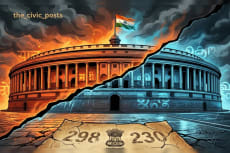
The Anti-Defection Law was introduced in India in 1985 through the 52nd Constitutional Amendment, which added the Tenth Schedule to the Constitution. The legislation was enacted to address a persistent challenge in Indian politics: the tendency of elected representatives to switch political parties for personal gain, often disregarding the mandate given to them by voters. The law was intended to strengthen democratic accountability, promote political stability, and discourage opportunistic defections.

Under the provisions of the law, a legislator elected on a party ticket can be disqualified if they voluntarily give up membership of their party or vote against the party whip. However, an important exception exists: if at least two-thirds of the members of a legislative party join another party, the move is treated as a merger and is exempt from disqualification.

Although the law was designed to protect democratic principles, its practical implementation has exposed several weaknesses. Political parties have increasingly learned how to work around its provisions, often using legal loopholes to achieve political objectives. Strategies such as engineering mass resignations, encouraging legislators to seek re-election under a different party banner, and conducting organized political operations to alter legislative majorities have become common features of contemporary politics.

States such as Karnataka and Madhya Pradesh have witnessed dramatic political shifts resulting from these tactics. In several instances, governments have fallen not because of electoral defeat but because of carefully managed defections and resignations. Such developments have raised serious questions about whether the law is effectively serving its original purpose.

The role of the Speaker has also become a major point of controversy. Since the Speaker is responsible for deciding disqualification petitions, allegations of political influence and procedural delays have frequently emerged. Decisions are often delayed for extended periods, allowing political calculations to shape outcomes and undermining confidence in the neutrality of the process.

Both national and regional political parties have used the law for strategic advantage. National parties often seek to secure or expand their hold on power, while regional parties have utilized the two-thirds merger provision to weaken rivals and strengthen their own legislative position. Over the years, parties such as Congress, TDP, and TRS/BRS have faced criticism for inducting large groups of legislators from competing parties, demonstrating how the spirit of the law can be diluted through political maneuvering.

The problem is not solely institutional; it is also rooted in the changing nature of political culture. Ideological commitments have increasingly taken a back seat to the pursuit of office, influence, and political survival. The desire for ministerial positions, internal power struggles, and concerns about government stability often create incentives for legislators to shift loyalties. As a result, defections are frequently driven by political calculations rather than policy disagreements.

Another phenomenon that has emerged in recent years is the practice commonly known as "resort politics." During periods of political uncertainty, legislators are often moved to resorts or hotels to prevent rival parties from influencing them. These episodes create the impression that elected representatives are being treated as political assets rather than public servants. Such spectacles diminish public trust and raise concerns about the health of democratic institutions.

The consequences extend far beyond party politics. Political instability often diverts attention away from governance and public welfare. Development projects are delayed, policy implementation slows down, and welfare initiatives lose momentum. Governments become preoccupied with preserving legislative numbers, while Chief Ministers and senior leaders increasingly function as crisis managers rather than administrators focused on long-term development.

These challenges highlight the urgent need for reforms to the Anti-Defection Law. Several measures deserve serious consideration. The authority to decide disqualification cases could be transferred from the Speaker to an independent adjudicatory body to ensure impartiality. Strict timelines-such as a mandatory three-month period for deciding disqualification petitions-could prevent undue delays. The two-thirds merger exemption should be reviewed or abolished to prevent its misuse. Additionally, the use of party whips could be restricted to critical matters such as confidence motions and budgetary votes, allowing legislators greater freedom on ordinary legislative issues.

At the same time, citizens have an important role to play. Strengthening democracy requires voters to remain informed, hold political parties accountable, and question practices that undermine public trust. Electoral accountability and public vigilance are essential complements to legal reform.

More than four decades after its enactment, the Anti-Defection Law remains an important safeguard for parliamentary democracy. Yet its loopholes and inconsistent implementation have prevented it from fully achieving its intended objectives. Meaningful reform will require stronger institutions, greater transparency, and a renewed commitment to political ethics. Only then can the law effectively protect the mandate of the people and strengthen democratic governance.

Democracy is strengthened not merely through elections, but through ethical politics and respect for the people's mandate.


More Articles

Recent Articles

Criticism of Policing and Justice System Ignites Fresh Political Row

Criticism of Policing and Justice System Ignites Fresh Political Row

Former minister Perni Nani criticized the functioning of the law enforcement system, alleging that the principles of justice and equality are not being applied uniformly. He expres...

Editorial desk - JUN 25, 2026

Will Sai Krishna’s Search for Justice Finally Get Answers?

Will Sai Krishna’s Search for Justice Finally Get Answers?

Questions are being raised about priorities in public discourse. While slogans and political messaging often dominate headlines, many citizens believe equal attention should be giv...

Editorial desk - JUN 25, 2026

Mirzapur: The Movie Brings a Digital Phenomenon to the Big Screen

Mirzapur: The Movie Brings a Digital Phenomenon to the Big Screen

Over the past few years, very few Indian web series have managed to create the kind of impact that Mirzapur has achieved. The crime drama transformed from a streaming success into...

Editorial desk - JUN 25, 2026

Is Ananthan Kaadu More Than Just Another Revenge Thriller?

Is Ananthan Kaadu More Than Just Another Revenge Thriller?

When evaluating cinema that attempts to bridge profound historical trauma with contemporary political intrigue, directors often face the monumental challenge of maintaining a stead...

Editorial desk - JUN 25, 2026

Why Fitness Experts Are Recommending New Kettlebell Workouts

Why Fitness Experts Are Recommending New Kettlebell Workouts

When most people pick up a kettlebell, they default straight to the classic swing. While the swing is a phenomenal, power-generating movement for the glutes and hamstrings, it is j...

Kranthi Shekar - JUN 25, 2026

South Africa Creates History with Landmark World Cup Breakthrough

South Africa Creates History with Landmark World Cup Breakthrough

South African football celebrated a memorable milestone after the national team secured a historic place in the knockout stage of the FIFA World Cup for the first time. The achieve...

Editorial desk - JUN 25, 2026

India-Ireland T20Is Rescheduled to Make Way for Women’s World Cup Spotlight

India-Ireland T20Is Rescheduled to Make Way for Women’s World Cup Spotlight

Cricket administrators have once again shown how much the sport is evolving by making a scheduling decision that places fans at the center of the game. The upcoming T20 Internation...

Editorial desk - JUN 25, 2026

Naveen Polishetty’s Viral Reel Becomes the Talk of the Industry

Naveen Polishetty’s Viral Reel Becomes the Talk of the Industry

In the world of cinema, creating excitement around a project is almost as important as making the project itself. With audiences consuming endless content every day, grabbing atten...

Editorial desk - JUN 25, 2026

Telangana’s Big Electoral Audit Begins at the Doorstep

Telangana’s Big Electoral Audit Begins at the Doorstep

The Election Commission has begun a wide-reaching voter list correction and verification drive in Telangana under the Special Intensive Revision exercise, marking an important admi...

Alekhya Kota - JUN 25, 2026

Anti-Corruption Probe Against Former Tamil Nadu Minister Draws Statewide Attention

Anti-Corruption Probe Against Former Tamil Nadu Minister Draws Statewide Attention

A fresh anti-corruption investigation involving a former senior minister in Tamil Nadu has sparked intense political and public discussion across the State. The case has gained pro...

Alekhya Kota - JUN 25, 2026

Criticisms of the Modi Government: An Overview of Key Concerns

Criticisms of the Modi Government: An Overview of Key Concerns

The year 2014 marked a major shift in Indian politics. Under the leadership of Narendra Modi, the Bharatiya Janata Party (BJP) came to power with a strong mandate, promising rapid...

Kranthi Vegesna - JUN 25, 2026

Jonnagiri Gold Project Opens New Possibilities for Andhra Pradesh’s Development

Jonnagiri Gold Project Opens New Possibilities for Andhra Pradesh’s Development

The inauguration of the Jonnagiri Gold Project in Kurnool district marks a noteworthy moment in Andhra Pradesh’s growth story. While gold mining naturally draws attention because o...

Alekhya Kota - JUN 25, 2026

Balayya’s Next Big Mission Begins: NBK112 Opens with Grand Celebrations

Balayya’s Next Big Mission Begins: NBK112 Opens with Grand Celebrations

Every once in a while, a film announcement creates excitement long before cameras begin rolling. Such projects capture attention because of the people involved, the expectations su...

Editorial desk - JUN 25, 2026

Why R. Madhavan’s ₹40 Lakh Watch Stole the Spotlight at the Padma Shri Ceremony

Why R. Madhavan’s ₹40 Lakh Watch Stole the Spotlight at the Padma Shri Ceremony

The Padma Shri ceremony is always a special occasion, bringing together individuals whose work has left a lasting impact on society. This year, actor R. Madhavan joined the list of...

Editorial desk - JUN 25, 2026

Can Nagabandham Become the Next Big Cinematic Phenomenon?

Can Nagabandham Become the Next Big Cinematic Phenomenon?

A film's success story often begins long before it reaches cinema screens. The first signs usually appear through growing industry confidence, increasing audience curiosity, and th...

Editorial desk - JUN 24, 2026

How Health Apps Are Changing the Lives of Diabetes Patients

How Health Apps Are Changing the Lives of Diabetes Patients

Diabetes is no longer viewed as a condition that can be managed only through periodic doctor visits and medication. The rise of digital technology has introduced new ways for patie...

Kranthi Shekar - JUN 24, 2026

KTR, Jagadish Reddy Stress the Importance of Voter Registration

KTR, Jagadish Reddy Stress the Importance of Voter Registration

BRS leaders K.T. Rama Rao (KTR) and G. Jagadish Reddy have emphasized that the right to vote is one of the strongest pillars of democracy and urged young citizens to actively parti...

Editorial desk - JUN 24, 2026

Why Drag Caste Into Crime? Pawan Kalyan Asks Tough Question

Why Drag Caste Into Crime? Pawan Kalyan Asks Tough Question

Pawan Kalyan has criticized attempts to connect criminal incidents with caste identities, saying responsibility for a crime belongs only to the person who committed it.

Editorial desk - JUN 24, 2026

‘Pralay’ Loading? Ranveer Singh’s Latest Appearance Sends Fans Into a Frenzy

‘Pralay’ Loading? Ranveer Singh’s Latest Appearance Sends Fans Into a Frenzy

Bollywood thrives on anticipation, and sometimes a single meeting is enough to spark conversations across the industry. That is exactly what happened when Ranveer Singh was recentl...

Editorial desk - JUN 24, 2026

The Man Who Stood Still for 90 Minutes: Congo Fan Goes Viral at World Cup

The Man Who Stood Still for 90 Minutes: Congo Fan Goes Viral at World Cup

Football has always been more than just a game. It is emotion, identity, culture, and a shared language that connects millions across the world. Every World Cup brings not only unf...

Editorial desk - JUN 24, 2026

Editorial

The Anti-Defection Law: Purpose, Loopholes, Political Strategies, and the Need for Reform

Kranthi Vegesna - JUN 15, 2026

Share:
The Anti-Defection Law: Purpose, Loopholes, Political Strategies, and the Need for Reform

The Anti-Defection Law was introduced in India in 1985 through the 52nd Constitutional Amendment, which added the Tenth Schedule to the Constitution. The legislation was enacted to address a persistent challenge in Indian politics: the tendency of elected representatives to switch political parties for personal gain, often disregarding the mandate given to them by voters. The law was intended to strengthen democratic accountability, promote political stability, and discourage opportunistic defections.

Under the provisions of the law, a legislator elected on a party ticket can be disqualified if they voluntarily give up membership of their party or vote against the party whip. However, an important exception exists: if at least two-thirds of the members of a legislative party join another party, the move is treated as a merger and is exempt from disqualification.

Although the law was designed to protect democratic principles, its practical implementation has exposed several weaknesses. Political parties have increasingly learned how to work around its provisions, often using legal loopholes to achieve political objectives. Strategies such as engineering mass resignations, encouraging legislators to seek re-election under a different party banner, and conducting organized political operations to alter legislative majorities have become common features of contemporary politics.

States such as Karnataka and Madhya Pradesh have witnessed dramatic political shifts resulting from these tactics. In several instances, governments have fallen not because of electoral defeat but because of carefully managed defections and resignations. Such developments have raised serious questions about whether the law is effectively serving its original purpose.

The role of the Speaker has also become a major point of controversy. Since the Speaker is responsible for deciding disqualification petitions, allegations of political influence and procedural delays have frequently emerged. Decisions are often delayed for extended periods, allowing political calculations to shape outcomes and undermining confidence in the neutrality of the process.

Both national and regional political parties have used the law for strategic advantage. National parties often seek to secure or expand their hold on power, while regional parties have utilized the two-thirds merger provision to weaken rivals and strengthen their own legislative position. Over the years, parties such as Congress, TDP, and TRS/BRS have faced criticism for inducting large groups of legislators from competing parties, demonstrating how the spirit of the law can be diluted through political maneuvering.

The problem is not solely institutional; it is also rooted in the changing nature of political culture. Ideological commitments have increasingly taken a back seat to the pursuit of office, influence, and political survival. The desire for ministerial positions, internal power struggles, and concerns about government stability often create incentives for legislators to shift loyalties. As a result, defections are frequently driven by political calculations rather than policy disagreements.

Another phenomenon that has emerged in recent years is the practice commonly known as "resort politics." During periods of political uncertainty, legislators are often moved to resorts or hotels to prevent rival parties from influencing them. These episodes create the impression that elected representatives are being treated as political assets rather than public servants. Such spectacles diminish public trust and raise concerns about the health of democratic institutions.

The consequences extend far beyond party politics. Political instability often diverts attention away from governance and public welfare. Development projects are delayed, policy implementation slows down, and welfare initiatives lose momentum. Governments become preoccupied with preserving legislative numbers, while Chief Ministers and senior leaders increasingly function as crisis managers rather than administrators focused on long-term development.

These challenges highlight the urgent need for reforms to the Anti-Defection Law. Several measures deserve serious consideration. The authority to decide disqualification cases could be transferred from the Speaker to an independent adjudicatory body to ensure impartiality. Strict timelines-such as a mandatory three-month period for deciding disqualification petitions-could prevent undue delays. The two-thirds merger exemption should be reviewed or abolished to prevent its misuse. Additionally, the use of party whips could be restricted to critical matters such as confidence motions and budgetary votes, allowing legislators greater freedom on ordinary legislative issues.

At the same time, citizens have an important role to play. Strengthening democracy requires voters to remain informed, hold political parties accountable, and question practices that undermine public trust. Electoral accountability and public vigilance are essential complements to legal reform.

More than four decades after its enactment, the Anti-Defection Law remains an important safeguard for parliamentary democracy. Yet its loopholes and inconsistent implementation have prevented it from fully achieving its intended objectives. Meaningful reform will require stronger institutions, greater transparency, and a renewed commitment to political ethics. Only then can the law effectively protect the mandate of the people and strengthen democratic governance.

Democracy is strengthened not merely through elections, but through ethical politics and respect for the people's mandate.

More Articles

Recent Articles

Criticism of Policing and Justice System Ignites Fresh Political Row

Criticism of Policing and Justice System Ignites Fresh Political Row

Former minister Perni Nani criticized the functioning of the law enforcement system, alleging that the principles of justice and equality are not being applied uniformly. He expres...

Editorial desk - JUN 25, 2026

Will Sai Krishna’s Search for Justice Finally Get Answers?

Will Sai Krishna’s Search for Justice Finally Get Answers?

Questions are being raised about priorities in public discourse. While slogans and political messaging often dominate headlines, many citizens believe equal attention should be giv...

Editorial desk - JUN 25, 2026

Mirzapur: The Movie Brings a Digital Phenomenon to the Big Screen

Mirzapur: The Movie Brings a Digital Phenomenon to the Big Screen

Over the past few years, very few Indian web series have managed to create the kind of impact that Mirzapur has achieved. The crime drama transformed from a streaming success into...

Editorial desk - JUN 25, 2026

Is Ananthan Kaadu More Than Just Another Revenge Thriller?

Is Ananthan Kaadu More Than Just Another Revenge Thriller?

When evaluating cinema that attempts to bridge profound historical trauma with contemporary political intrigue, directors often face the monumental challenge of maintaining a stead...

Editorial desk - JUN 25, 2026

Why Fitness Experts Are Recommending New Kettlebell Workouts

Why Fitness Experts Are Recommending New Kettlebell Workouts

When most people pick up a kettlebell, they default straight to the classic swing. While the swing is a phenomenal, power-generating movement for the glutes and hamstrings, it is j...

Kranthi Shekar - JUN 25, 2026

South Africa Creates History with Landmark World Cup Breakthrough

South Africa Creates History with Landmark World Cup Breakthrough

South African football celebrated a memorable milestone after the national team secured a historic place in the knockout stage of the FIFA World Cup for the first time. The achieve...

Editorial desk - JUN 25, 2026

India-Ireland T20Is Rescheduled to Make Way for Women’s World Cup Spotlight

India-Ireland T20Is Rescheduled to Make Way for Women’s World Cup Spotlight

Cricket administrators have once again shown how much the sport is evolving by making a scheduling decision that places fans at the center of the game. The upcoming T20 Internation...

Editorial desk - JUN 25, 2026

Naveen Polishetty’s Viral Reel Becomes the Talk of the Industry

Naveen Polishetty’s Viral Reel Becomes the Talk of the Industry

In the world of cinema, creating excitement around a project is almost as important as making the project itself. With audiences consuming endless content every day, grabbing atten...

Editorial desk - JUN 25, 2026

Telangana’s Big Electoral Audit Begins at the Doorstep

Telangana’s Big Electoral Audit Begins at the Doorstep

The Election Commission has begun a wide-reaching voter list correction and verification drive in Telangana under the Special Intensive Revision exercise, marking an important admi...

Alekhya Kota - JUN 25, 2026

Anti-Corruption Probe Against Former Tamil Nadu Minister Draws Statewide Attention

Anti-Corruption Probe Against Former Tamil Nadu Minister Draws Statewide Attention

A fresh anti-corruption investigation involving a former senior minister in Tamil Nadu has sparked intense political and public discussion across the State. The case has gained pro...

Alekhya Kota - JUN 25, 2026

Criticisms of the Modi Government: An Overview of Key Concerns

Criticisms of the Modi Government: An Overview of Key Concerns

The year 2014 marked a major shift in Indian politics. Under the leadership of Narendra Modi, the Bharatiya Janata Party (BJP) came to power with a strong mandate, promising rapid...

Kranthi Vegesna - JUN 25, 2026

Jonnagiri Gold Project Opens New Possibilities for Andhra Pradesh’s Development

Jonnagiri Gold Project Opens New Possibilities for Andhra Pradesh’s Development

The inauguration of the Jonnagiri Gold Project in Kurnool district marks a noteworthy moment in Andhra Pradesh’s growth story. While gold mining naturally draws attention because o...

Alekhya Kota - JUN 25, 2026

Balayya’s Next Big Mission Begins: NBK112 Opens with Grand Celebrations

Balayya’s Next Big Mission Begins: NBK112 Opens with Grand Celebrations

Every once in a while, a film announcement creates excitement long before cameras begin rolling. Such projects capture attention because of the people involved, the expectations su...

Editorial desk - JUN 25, 2026

Why R. Madhavan’s ₹40 Lakh Watch Stole the Spotlight at the Padma Shri Ceremony

Why R. Madhavan’s ₹40 Lakh Watch Stole the Spotlight at the Padma Shri Ceremony

The Padma Shri ceremony is always a special occasion, bringing together individuals whose work has left a lasting impact on society. This year, actor R. Madhavan joined the list of...

Editorial desk - JUN 25, 2026

Can Nagabandham Become the Next Big Cinematic Phenomenon?

Can Nagabandham Become the Next Big Cinematic Phenomenon?

A film's success story often begins long before it reaches cinema screens. The first signs usually appear through growing industry confidence, increasing audience curiosity, and th...

Editorial desk - JUN 24, 2026

How Health Apps Are Changing the Lives of Diabetes Patients

How Health Apps Are Changing the Lives of Diabetes Patients

Diabetes is no longer viewed as a condition that can be managed only through periodic doctor visits and medication. The rise of digital technology has introduced new ways for patie...

Kranthi Shekar - JUN 24, 2026

KTR, Jagadish Reddy Stress the Importance of Voter Registration

KTR, Jagadish Reddy Stress the Importance of Voter Registration

BRS leaders K.T. Rama Rao (KTR) and G. Jagadish Reddy have emphasized that the right to vote is one of the strongest pillars of democracy and urged young citizens to actively parti...

Editorial desk - JUN 24, 2026

Why Drag Caste Into Crime? Pawan Kalyan Asks Tough Question

Why Drag Caste Into Crime? Pawan Kalyan Asks Tough Question

Pawan Kalyan has criticized attempts to connect criminal incidents with caste identities, saying responsibility for a crime belongs only to the person who committed it.

Editorial desk - JUN 24, 2026

‘Pralay’ Loading? Ranveer Singh’s Latest Appearance Sends Fans Into a Frenzy

‘Pralay’ Loading? Ranveer Singh’s Latest Appearance Sends Fans Into a Frenzy

Bollywood thrives on anticipation, and sometimes a single meeting is enough to spark conversations across the industry. That is exactly what happened when Ranveer Singh was recentl...

Editorial desk - JUN 24, 2026

The Man Who Stood Still for 90 Minutes: Congo Fan Goes Viral at World Cup

The Man Who Stood Still for 90 Minutes: Congo Fan Goes Viral at World Cup

Football has always been more than just a game. It is emotion, identity, culture, and a shared language that connects millions across the world. Every World Cup brings not only unf...

Editorial desk - JUN 24, 2026