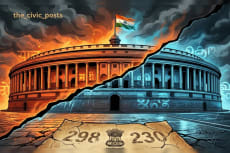
Five-State Elections 2026: From Exit Polls to Final Verdict – An Analytical Media Report
Kranthi Vegesna - APR 29, 2026

Indian democracy takes a new direction with every election. Specifically, elections occurring simultaneously across five states possess the power to influence the nation’s overall political trajectory. Against this backdrop, exit polls, voter turnout percentages, and regional political dynamics converge to paint a grand political picture.
In this report, we examine everything from the history of exit polls to current voting patterns, public response, and an analytical forecast of the results.
Exit Polls: History and Influence
The concept of exit polls originated in the United States during the 1960s. Survey expert Warren Mitofsky developed this methodology in 1967. Its primary objective is to gauge the public mood by interviewing voters immediately after they exit the polling booth to discover who they voted for.
In India, exit polls gained popularity in the 1990s. Initially launched by government media outlets like Doordarshan, they were later scaled up significantly by private media houses such as NDTV and Times Now.
Why the Intense Interest in Exit Polls?
Exit polls are not merely a game of numbers-they are an emotional and psychological phenomenon.
* Pre-result Anticipation: Before the official results are declared, the public is eager to have an estimate of the winner.
* The Media’s Role: TV channel debates, vibrant graphics, and studio discussions turn the process into a grand spectacle.
* Political Calculations: Parties use these polls to assess their strengths and weaknesses and to formulate their next strategies (especially in the event of a hung assembly).
* Public Emotion: The suspense of victory or defeat keeps the citizenry deeply engaged.
2026 Five-State Elections: The Current Scenario
The 2026 elections in these five states are no ordinary polls. They appear set to impact the future of national politics as well.
1. A Tight Contest: A fierce battle is visible primarily between two major coalitions. In some states, third-party forces are also emerging as influential players.
2. Dominance of Local Issues: Jobs, price hikes, and welfare schemes have become the central themes of the political discourse.
3. Rise of the Woman Voter: A significant increase in female voter turnout is a noteworthy trend in this cycle.
4. The Youth Factor: A massive number of first-time voters participated, representing a force capable of shifting the final results.
Bengal & Tamil Nadu: Decoding High Voter Turnout
West Bengal and Tamil Nadu recorded exceptionally high polling percentages. This sends several key signals:
* Political Awareness: Citizens have stepped out realizing the true value of their vote.
* Change vs. Continuity: High turnout typically signifies either a strong desire for a change in government or a massive wave of support for the incumbent.
* Fierce Competition: When the contest between parties is intense, voters tend to participate in larger numbers to ensure their candidate's victory.
Projections: Who is Leading?
According to exit polls, while some states show a clear majority, others indicate the possibility of a hung assembly.
> Key Note: Exit polls are not entirely infallible. On many occasions in the past, they have been proven wrong due to sample size limitations or "silent voters" who do not reveal their true preference. Therefore, exit polls should be viewed only as an indicator, not a final verdict.
> Final AnalysisThe 2026 elections in these five states could be a turning point for Indian politics. High turnout, youth participation, and the influence of women are all signs of a strengthening democracy.
Exit polls tell a story, but the real narrative is only completed once the official results are announced.
Elections are more than just a count of votes-they are a reflection of people’s hopes, frustrations, and aspirations. While the high turnout in states like Bengal and Tamil Nadu showcases civic awareness, the stiff competition in other states signals impending political shifts.
Exit polls are mere projections…
The final results remain the ultimate verdict of the people.