Another Exit Raises Questions Over AIADMK's Political Stability
Alekhya Kota - JUN 29, 2026
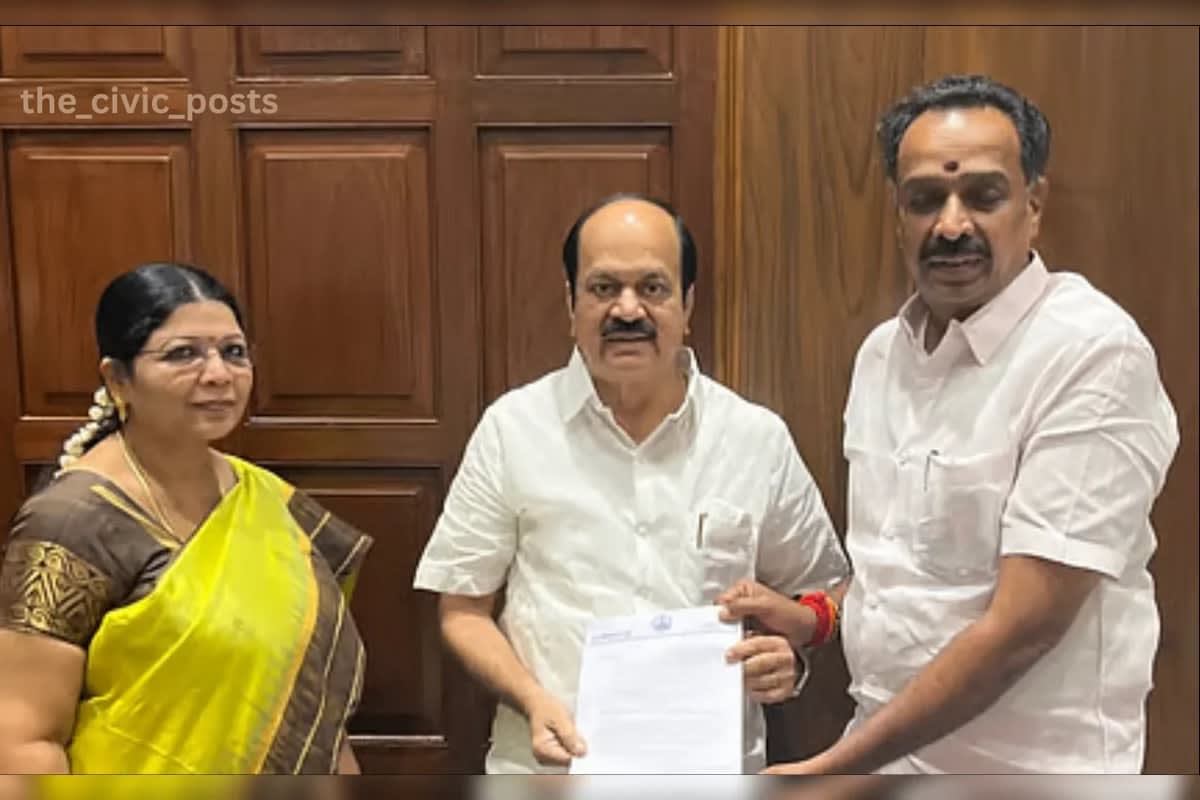
The shifting currents of regional politics in Tamil Nadu have manifested in another significant development for the opposition All India Anna Dravida Munnetra Kazhagam (AIADMK). In a move that intensifies the ongoing structural challenges within the Dravidian party, M.R. Vijayabhaskar, a prominent legislative member representing the Karur Assembly constituency, officially tendered his resignation from the Tamil Nadu Legislative Assembly.
This development marks the departure of the sixth AIADMK lawmaker to abandon their legislative post following the highly volatile 2026 Assembly elections, signaling deep ideological and operational friction within the principal opposition ranks.
The administrative execution of the resignation followed formal state protocols at the Secretariat in Chennai. Legislative Speaker J.C.D. Prabhakar formally declared the acceptance of the resignation, noting that the lawmaker had personally presented a handwritten declaration of intent in accordance with statutory guidelines.
The legislative secretariat verified that the communication perfectly mirrored the established Rules of Procedure of the Legislative Assembly, thereby rendering the Karur assembly seat officially vacant. The rapid acceptance of this resignation underscores the fluid and highly fast-paced environment defining the current state assembly layout.
The departure of the Karur lawmaker is not an isolated event but part of an escalating exodus that has weakened the AIADMK’s legislative strength. Over the course of just a few months, the party has witnessed a steady erosion of its elected representatives. Preceding this development, prominent party figures including Maragatham Kumaravel, S. Jayakumar, P. Sathyabama, and Esakki Subaya had already surrendered their assembly seats.
The political blow deepened significantly just a fortnight prior when former Health Minister and Viralimalai legislator Dr. C. Vijayabaskar also parted ways with the organization. This wave of high-profile departures has collectively altered the mathematics of the 2023-member assembly house.
A closer look at the local numbers shows the immense political stakes involved in the Karur constituency. During the closely contested 2026 state elections, M.R. Vijayabhaskar secured a narrow victory, polling 71,542 votes to outcharge his nearest competitor from the Tamilaga Vettri Kazhagam (TVK) by a slim margin of 1,821 votes, while the Dravida Munnetra Kazhagam (DMK) candidate finished a close third. The decision to step down from a hard-fought seat points to a strategic realigning of loyalties rather than simple electoral fatigue.
Political analysts indicate that the group of departing lawmakers, who initially rebelled by defying the party whip to vote in favor of Chief Minister C. Joseph Vijay’s government during a critical trust vote, are steadily paving the path to seek fresh mandates under a different political banner.
This ongoing structural transformation highlights the growing influence of the newly emerged TVK, which has successfully positioned itself as a major political hub for disgruntled leaders from traditional parties. The mass migration of seasoned leaders-many of whom served as key cabinet ministers during the previous regimes of J. Jayalalithaa and Edappadi K. Palaniswami-suggests a growing lack of confidence in the current centralized leadership structure of the AIADMK.
The loss of consecutive leaders from key regional strongholds like Karur and Pudukkottai presents a severe challenge for the party's field operations, threatening to weaken its traditional support bases ahead of upcoming local body polls and eventual byelections.
As the state prepares for a series of high-stakes byelections across the newly vacated constituencies, the political narrative in Tamil Nadu is moving toward a highly competitive three-way dynamic. For the AIADMK, the immediate challenge lies in stopping further internal rebellion, reassuring its grassroots cadre, and reorganizing its legislative strategy under Edappadi K. Palaniswami.
Conversely, for the newly formed TVK government, the integration of veteran regional administrators provides an opportunity to build a robust rural infrastructure, balancing the party’s immense cinematic popularity with real administrative experience. The coming months will reveal whether these high-profile resignations translate into a permanent restructuring of regional power or a temporary phase of post-election alignment.
The political ripples of these structural shifts are further detailed in this News9 Report on the AIADMK Political Crisis, which examines the growing friction between the traditional Dravidian parties and the newly emerging political forces in the state.