From MGNREGA to VB-G RAM G: The Politics of Renaming the Poor’s Employment Guarantee – A Deep Analysis
Kranthi Vegesna - FEB 19, 2026
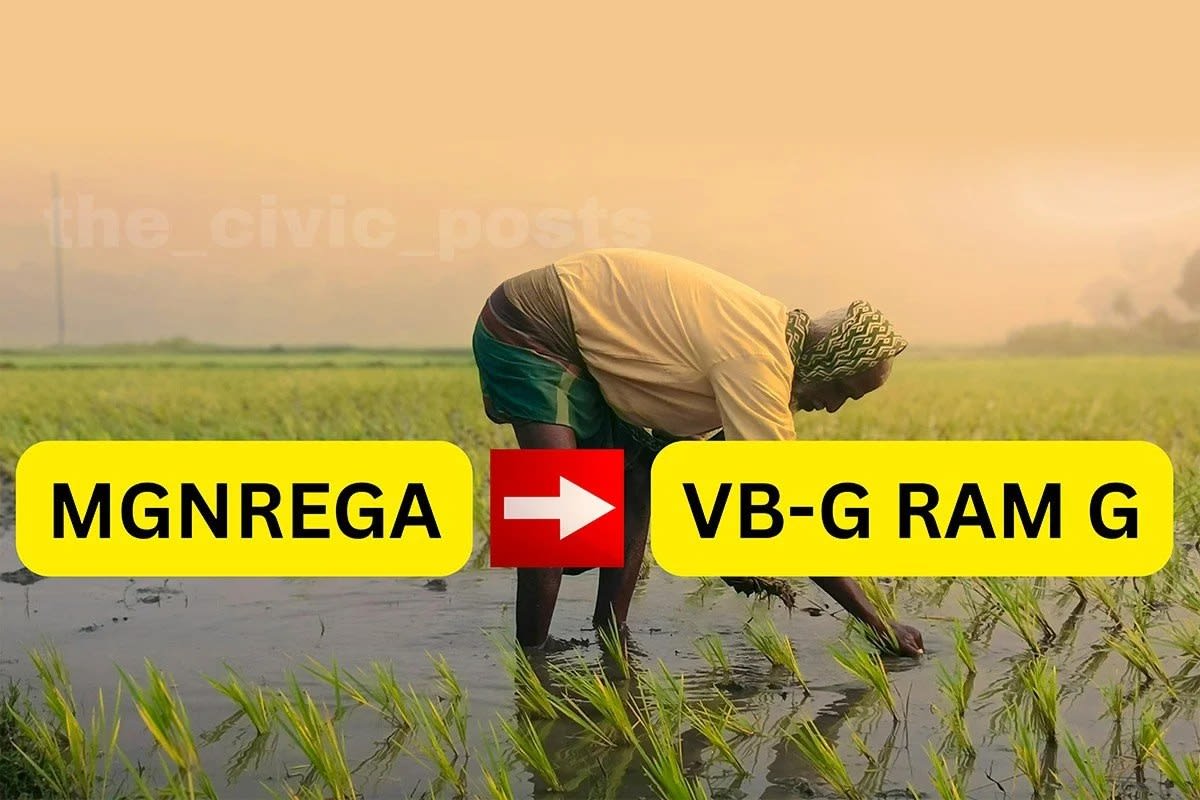
If there is one scheme in India that has directly touched the lives of the poorest and stood as the backbone of the rural economy, it is the Mahatma Gandhi National Rural Employment Guarantee Act (MGNREGA).
Today, that very scheme has been rechristened as the Viksit Bharat Guarantee for Rozgar and Ajeevika Mission (Gramin) – VB-G RAM G Bill, 2025.
This is not just a change of name. The ideas behind the change, the political intent driving it, and the policy shifts embedded within it have triggered serious debate across the country.
The Deliberate Arrival of “RAM”
The inclusion of the word “RAM” in the new name is not accidental. It is carefully crafted, politically designed, and symbolically loaded.
This becomes the first major welfare scheme after Narendra Modi came to power to prominently carry the name “Ram.” The intent is clear — to embed ideology even into the names of welfare schemes and laws.
But the core question remains:
Is the name sacred, or is the scheme’s soul more important?
Why the Employment Guarantee Scheme Matters
The strength of MGNREGA lies in its simplicity:
• Any adult above 18 years is eligible
• No education required
• No skill certification required
• No contractors
• No middlemen
• If a person asks for work, the state is legally bound to provide it
This legal guarantee is what makes the scheme extraordinary.
For millions of India’s poorest citizens, MGNREGA is the last line of survival, not a privilege.
A True “Guarantee” Because the Centre Paid Fully
One of the most crucial features of MGNREGA was that it was fully funded by the Central Government.
The logic was simple:
Regardless of a state’s financial health, the poor should never be denied work or wages.
That is why MGNREGA was a genuine “guarantee,” not just a promise on paper.
The Scheme That Saved Lives During COVID
During the COVID lockdown:
• Factories shut down
• Jobs disappeared overnight
• Migrant workers were left stranded
At that moment, MGNREGA acted as a lifeline.
Even though daily wages were modest, the work ensured:
• Food on the table
• Survival of families
• Dignity in extreme crisis
This is not political rhetoric — it is a historical fact.
Changes in the New Bill: Are They Really Pro-Poor?
The government highlights one key point repeatedly:
• Workdays have been increased from 100 to 125 days
On the surface, this sounds progressive.
But the real shift lies elsewhere.
Wage Burden Shifted to States
Under the new framework:
• 60% of wages will be paid by the Centre
• 40% must be paid by state governments
This is where the danger lies.
States that are already:
• Struggling to pay employee salaries
• Burdened by heavy debt
How will they consistently fund 40% wages for the rural poor?
This change risks weakening the very foundation of the scheme.
Centralised Decisions, Local Problems Ignored
Another major change is that all work projects will now be decided by the Centre.
This means:
• Local village needs may be ignored
• Ground-level problems may be sidelined
• Decisions will be taken from Delhi, not villages
Is this not against the spirit of rural democracy?
Can employment schemes succeed without local participation?
A Direct Assault on the Poor
Taken together, these changes do not strengthen the scheme.
They slowly dismantle it.
• Wage security weakens
• Work availability shrinks
• Payment delays increase
• Responsibility is pushed onto states
Calling this a direct attack on the poor is not an exaggeration.
What the Poor Are Asking For
The demands of rural workers are simple and reasonable:
• Increase daily wages
• Raise workdays from 100 to 200 days
• Restore full central responsibility
These are not luxury demands.
They are the bare minimum for a dignified life.
Then Why the Silence?
Despite decisions that deeply affect livelihoods, public resistance appears muted.
• Fuel prices cross ₹100
• The rupee weakens
• Essential commodities become costlier
Yet people seem silent.
But this is not silence — it is a volcano simmering beneath the surface.
In a Democracy, the Last Word Belongs to the Voter
Governments come to power through votes.
When that power is used against the very people who granted it, history does not forgive easily.
Ruling responsibly means taking decisions that serve the people, not merely renaming schemes.
Names alone do not improve lives. Policies do.
If not, VB-G RAM G will not stand as a development mission, but as a silent assault on the rights of the poor.
People will speak.
If not today, then tomorrow.
And one day, this silence will turn into a vote.


