News

India-US Trade Relations Steady After Tariff Verdict: Donald Trump Signals No Shift in Bilateral Deal

Kranthi Shekar - FEB 21, 2026
Share:
India-US Trade Relations Steady After Tariff Verdict: Donald Trump Signals No Shift in Bilateral Deal

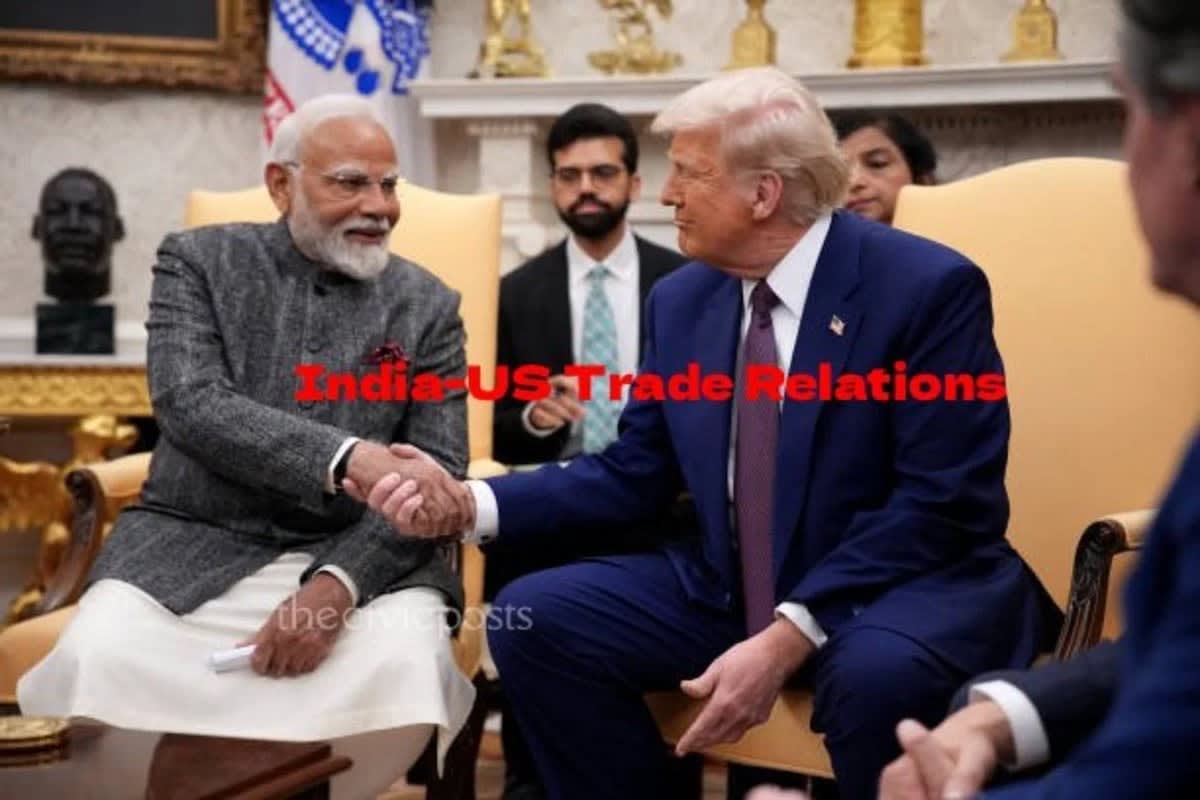
Trade relations between India and the United States are not expected to face immediate disruption following a major legal development in Washington. After a ruling by the US Supreme Court that limited the executive branch’s ability to impose sweeping tariffs under emergency authority, former President Donald Trump indicated that the existing trade understanding with India remains unchanged.

The statement comes at a time when international markets are carefully assessing how the court’s verdict might reshape American trade policy more broadly. While the judgment carries implications for the use of unilateral tariff powers, Trump’s remarks suggest that previously negotiated bilateral arrangements will continue under their agreed structure.

A Legal Turning Point in US Trade Authority

The Supreme Court’s ruling addressed the scope of executive authority in applying large-scale tariff measures. At the heart of the case was the interpretation of emergency economic provisions that had been used to justify broad tariff actions. The court concluded that such measures require clearer legislative backing and cannot rely solely on expansive readings of executive power.

This decision is being interpreted as a recalibration of institutional balance. For years, tariffs have served as instruments of economic leverage — used to renegotiate trade terms, correct perceived imbalances, and influence geopolitical behavior. By tightening the legal boundaries around how tariffs can be introduced, the court has effectively signaled that trade policy must align more closely with Congressional oversight.

However, the verdict does not automatically dismantle trade agreements that were separately negotiated or mutually structured between governments. That distinction appears central to Trump’s reassurance regarding India.

Trump Emphasizes Continuity in Bilateral Trade Framework

Addressing reporters after the judgment, Trump conveyed that the legal setback does not alter the terms of the India-US trade arrangement. He maintained that the framework governing tariff commitments between the two countries remains operational.

According to his remarks, the tariff structure embedded within the bilateral understanding reflects negotiated outcomes rather than unilateral emergency measures. In his view, the Supreme Court’s ruling pertains to a specific mechanism of tariff imposition and does not undo agreements that fall outside that scope.

His messaging appeared directed not only at domestic audiences but also at businesses and policymakers in India who may be concerned about potential instability in trade flows.

Why the India-US Trade Equation Matters

The economic relationship between the two countries has grown significantly over the past decade. The United States is among India’s largest export destinations, while American companies maintain deep investments across Indian sectors such as technology services, pharmaceuticals, renewable energy, manufacturing, and defense collaboration.

Bilateral trade spans goods and services, with Indian exports ranging from information technology and generic medicines to textiles and engineering products. Meanwhile, the US exports energy resources, advanced machinery, agricultural commodities, and high-value defense equipment to India.

Tariffs have periodically emerged as areas of negotiation. Discussions have centered on market access, duty structures, and regulatory standards. While friction has surfaced at times, both governments have consistently framed the partnership as strategic and long-term.

In this context, clarity regarding the continuity of tariff terms becomes critical. Even minor uncertainty can influence supply chains, pricing strategies, and investor confidence.

What the Court’s Decision Could Mean for Future Policy

Although the India-US trade framework may remain intact for now, the broader implications of the Supreme Court’s ruling could shape future negotiations. By reinforcing Congressional authority in trade matters, the judgment may slow the pace at which sweeping tariff policies are enacted.

This could lead to more structured debate within the legislative branch before major tariff actions are implemented. For international partners, such procedural shifts may offer greater predictability but could also extend timelines for trade policy adjustments.

Economists note that institutional clarity often stabilizes markets over the long term, even if short-term uncertainty arises from legal reinterpretations.

Market Sentiment and Business Response

From a business standpoint, the immediate takeaway is stability in existing trade flows between India and the United States. Exporters who rely heavily on American demand - particularly in pharmaceuticals, software services, and textiles - are likely to monitor policy signals closely.

Currency markets and equity investors tend to react quickly to changes in tariff frameworks because duties influence pricing competitiveness. However, Trump’s assurance that the bilateral arrangement stands unaffected may help contain volatility.

Trade observers caution that future policy directions will depend not only on legal interpretations but also on political developments within Washington. Legislative debates on trade protectionism versus open market strategies continue to shape the American economic narrative.

Strategic Dimensions Beyond Tariffs

The India-US partnership extends well beyond tariff discussions. Defense cooperation, semiconductor supply chain diversification, clean energy investments, and digital trade rules form integral components of the broader relationship.

In recent years, both nations have emphasized collaboration in emerging technologies and supply chain resilience. Such strategic priorities often reinforce economic ties, reducing the likelihood that temporary legal developments will fundamentally alter the trajectory of cooperation.

The court ruling, therefore, may be more about domestic constitutional boundaries than about bilateral trade disruption.

Political Significance in the United States

The Supreme Court’s verdict also feeds into an ongoing debate within the United States about executive authority and economic nationalism. Supporters of strong tariff policies argue that they protect domestic industries and rebalance trade deficits. Critics contend that broad tariff measures can increase costs for consumers and strain alliances.

By narrowing the scope of unilateral executive action, the judiciary has added a new dimension to this debate. Future administrations may need to pursue tariff adjustments through more collaborative legislative channels.

For international partners like India, this could mean that trade negotiations increasingly involve multi-layered engagement with both the executive branch and Congress.

The Road Ahead

For now, the immediate message is continuity. The bilateral trade arrangement between India and the United States appears insulated from the direct consequences of the Supreme Court’s decision. Businesses and policymakers are likely to focus on sustaining momentum in economic engagement rather than revisiting settled terms.

However, as legal interpretations reshape the mechanics of tariff implementation in Washington, the broader landscape of global trade governance may evolve. Countries engaged in significant trade with the United States will continue to track how authority over tariff decisions is exercised.

The India-US economic partnership has demonstrated resilience through past negotiations and policy shifts. Whether under executive initiatives or legislative frameworks, trade dialogue between the two democracies is expected to continue as a central pillar of their strategic relationship.

In the coming months, attention will likely turn to how Congress responds to the court’s guidance and whether new legislative measures emerge to redefine tariff authority. Until then, the bilateral trade channel between India and the United States remains steady, signaling continuity amid institutional recalibration.

More Articles

Recent Articles

Headline: KTR’s Fiery Speech on Musi River Echoes in Assembly, Sparks Fresh Debate

Headline: KTR’s Fiery Speech on Musi River Echoes in Assembly, Sparks Fresh Debate

Kranthi Shekar - MAR 21, 2026

Dhoni’s Final Bow in Yellow? IPL 2026 Could Mark a Historic Transition for CSK Icon

Dhoni’s Final Bow in Yellow? IPL 2026 Could Mark a Historic Transition for CSK Icon

Kranthi Shekar - MAR 21, 2026

Shah Rukh Khan Unveils New Cricket Ground for Knight Riders, Calls It a ‘New Chapter’

Shah Rukh Khan Unveils New Cricket Ground for Knight Riders, Calls It a ‘New Chapter’

Kranthi Shekar - MAR 21, 2026

Dhurandhar: The Revenge Triggers Theatre Frenzy in Telugu States Amid Screen Crunch

Dhurandhar: The Revenge Triggers Theatre Frenzy in Telugu States Amid Screen Crunch

Kranthi Shekar - MAR 21, 2026

Mid-Air Surprise: Air India Flight AI185 Turns Back After 8 Hours, Passengers Left Stunned

Mid-Air Surprise: Air India Flight AI185 Turns Back After 8 Hours, Passengers Left Stunned

Kranthi Shekar - MAR 21, 2026

US Grants Limited Iran Oil Access to Steady Markets Amid Rising Global Energy Concerns

US Grants Limited Iran Oil Access to Steady Markets Amid Rising Global Energy Concerns

Kranthi Shekar - MAR 21, 2026

Fake vs. Adulterated: Is Your Trust Being Sold for a Profit?

Fake vs. Adulterated: Is Your Trust Being Sold for a Profit?

Kranthi Vegesna - MAR 21, 2026

Rajamouli’s Strong Words on Dhurandhar 2 Set the Industry Buzzing with Excitement

Rajamouli’s Strong Words on Dhurandhar 2 Set the Industry Buzzing with Excitement

Kranthi Shekar - MAR 21, 2026

Teenage Fitness for Girls: Sweat, Smile & Stay Strong

Teenage Fitness for Girls: Sweat, Smile & Stay Strong

Kranthi Shekar - MAR 20, 2026

Ultimate Telugu OTT Watchlist This Week: New Movies & Web Series to Stream Now

Ultimate Telugu OTT Watchlist This Week: New Movies & Web Series to Stream Now

Kranthi Shekar - MAR 20, 2026

Can Sunrisers Hyderabad Deliver Big Scores Without a Superstar?

Can Sunrisers Hyderabad Deliver Big Scores Without a Superstar?

Kranthi Shekar - MAR 20, 2026

Sanju Samson’s Exit Leaves Rajasthan Royals Facing a Major Void

Sanju Samson’s Exit Leaves Rajasthan Royals Facing a Major Void

Kranthi Shekar - MAR 20, 2026

“Telangana Budget 2026–27: Bhatti Prioritises Welfare Alongside Urban and Village Growth”

“Telangana Budget 2026–27: Bhatti Prioritises Welfare Alongside Urban and Village Growth”

Kranthi Shekar - MAR 20, 2026

“IRGC Spokesman Ali Mohammad Naini Killed in Joint U.S.-Israel Strike”

“IRGC Spokesman Ali Mohammad Naini Killed in Joint U.S.-Israel Strike”

Kranthi Shekar - MAR 20, 2026

Kavitha Gears Up for New Political Entry with Party Launch After Sri Rama Navami

Kavitha Gears Up for New Political Entry with Party Launch After Sri Rama Navami

Kranthi Shekar - MAR 20, 2026

Gas Supply Crunch in Telangana Puts Pressure on Households and Small Businesses

Gas Supply Crunch in Telangana Puts Pressure on Households and Small Businesses

Kranthi Shekar - MAR 20, 2026

Unseasonal Rains Damage Crops Across Andhra Pradesh, Farmers Face Losses

Unseasonal Rains Damage Crops Across Andhra Pradesh, Farmers Face Losses

Kranthi Shekar - MAR 20, 2026

AP Govt Unveils Mega Hiring Plan: 10,000+ Jobs to Be Filled in 2026

AP Govt Unveils Mega Hiring Plan: 10,000+ Jobs to Be Filled in 2026

Kranthi Shekar - MAR 20, 2026

“Government Speeds Up Polavaram Aid Distribution in Latest Phase”

“Government Speeds Up Polavaram Aid Distribution in Latest Phase”

Kranthi Shekar - MAR 20, 2026

“Gaddar Film Awards 2026 Honour Excellence Across Telugu Cinema”

“Gaddar Film Awards 2026 Honour Excellence Across Telugu Cinema”

Kranthi Shekar - MAR 20, 2026

News

India-US Trade Relations Steady After Tariff Verdict: Donald Trump Signals No Shift in Bilateral Deal

Kranthi Shekar - FEB 21, 2026

Share:
India-US Trade Relations Steady After Tariff Verdict: Donald Trump Signals No Shift in Bilateral Deal

Trade relations between India and the United States are not expected to face immediate disruption following a major legal development in Washington. After a ruling by the US Supreme Court that limited the executive branch’s ability to impose sweeping tariffs under emergency authority, former President Donald Trump indicated that the existing trade understanding with India remains unchanged.

The statement comes at a time when international markets are carefully assessing how the court’s verdict might reshape American trade policy more broadly. While the judgment carries implications for the use of unilateral tariff powers, Trump’s remarks suggest that previously negotiated bilateral arrangements will continue under their agreed structure.

A Legal Turning Point in US Trade Authority

The Supreme Court’s ruling addressed the scope of executive authority in applying large-scale tariff measures. At the heart of the case was the interpretation of emergency economic provisions that had been used to justify broad tariff actions. The court concluded that such measures require clearer legislative backing and cannot rely solely on expansive readings of executive power.

This decision is being interpreted as a recalibration of institutional balance. For years, tariffs have served as instruments of economic leverage — used to renegotiate trade terms, correct perceived imbalances, and influence geopolitical behavior. By tightening the legal boundaries around how tariffs can be introduced, the court has effectively signaled that trade policy must align more closely with Congressional oversight.

However, the verdict does not automatically dismantle trade agreements that were separately negotiated or mutually structured between governments. That distinction appears central to Trump’s reassurance regarding India.

Trump Emphasizes Continuity in Bilateral Trade Framework

Addressing reporters after the judgment, Trump conveyed that the legal setback does not alter the terms of the India-US trade arrangement. He maintained that the framework governing tariff commitments between the two countries remains operational.

According to his remarks, the tariff structure embedded within the bilateral understanding reflects negotiated outcomes rather than unilateral emergency measures. In his view, the Supreme Court’s ruling pertains to a specific mechanism of tariff imposition and does not undo agreements that fall outside that scope.

His messaging appeared directed not only at domestic audiences but also at businesses and policymakers in India who may be concerned about potential instability in trade flows.

Why the India-US Trade Equation Matters

The economic relationship between the two countries has grown significantly over the past decade. The United States is among India’s largest export destinations, while American companies maintain deep investments across Indian sectors such as technology services, pharmaceuticals, renewable energy, manufacturing, and defense collaboration.

Bilateral trade spans goods and services, with Indian exports ranging from information technology and generic medicines to textiles and engineering products. Meanwhile, the US exports energy resources, advanced machinery, agricultural commodities, and high-value defense equipment to India.

Tariffs have periodically emerged as areas of negotiation. Discussions have centered on market access, duty structures, and regulatory standards. While friction has surfaced at times, both governments have consistently framed the partnership as strategic and long-term.

In this context, clarity regarding the continuity of tariff terms becomes critical. Even minor uncertainty can influence supply chains, pricing strategies, and investor confidence.

What the Court’s Decision Could Mean for Future Policy

Although the India-US trade framework may remain intact for now, the broader implications of the Supreme Court’s ruling could shape future negotiations. By reinforcing Congressional authority in trade matters, the judgment may slow the pace at which sweeping tariff policies are enacted.

This could lead to more structured debate within the legislative branch before major tariff actions are implemented. For international partners, such procedural shifts may offer greater predictability but could also extend timelines for trade policy adjustments.

Economists note that institutional clarity often stabilizes markets over the long term, even if short-term uncertainty arises from legal reinterpretations.

Market Sentiment and Business Response

From a business standpoint, the immediate takeaway is stability in existing trade flows between India and the United States. Exporters who rely heavily on American demand - particularly in pharmaceuticals, software services, and textiles - are likely to monitor policy signals closely.

Currency markets and equity investors tend to react quickly to changes in tariff frameworks because duties influence pricing competitiveness. However, Trump’s assurance that the bilateral arrangement stands unaffected may help contain volatility.

Trade observers caution that future policy directions will depend not only on legal interpretations but also on political developments within Washington. Legislative debates on trade protectionism versus open market strategies continue to shape the American economic narrative.

Strategic Dimensions Beyond Tariffs

The India-US partnership extends well beyond tariff discussions. Defense cooperation, semiconductor supply chain diversification, clean energy investments, and digital trade rules form integral components of the broader relationship.

In recent years, both nations have emphasized collaboration in emerging technologies and supply chain resilience. Such strategic priorities often reinforce economic ties, reducing the likelihood that temporary legal developments will fundamentally alter the trajectory of cooperation.

The court ruling, therefore, may be more about domestic constitutional boundaries than about bilateral trade disruption.

Political Significance in the United States

The Supreme Court’s verdict also feeds into an ongoing debate within the United States about executive authority and economic nationalism. Supporters of strong tariff policies argue that they protect domestic industries and rebalance trade deficits. Critics contend that broad tariff measures can increase costs for consumers and strain alliances.

By narrowing the scope of unilateral executive action, the judiciary has added a new dimension to this debate. Future administrations may need to pursue tariff adjustments through more collaborative legislative channels.

For international partners like India, this could mean that trade negotiations increasingly involve multi-layered engagement with both the executive branch and Congress.

The Road Ahead

For now, the immediate message is continuity. The bilateral trade arrangement between India and the United States appears insulated from the direct consequences of the Supreme Court’s decision. Businesses and policymakers are likely to focus on sustaining momentum in economic engagement rather than revisiting settled terms.

However, as legal interpretations reshape the mechanics of tariff implementation in Washington, the broader landscape of global trade governance may evolve. Countries engaged in significant trade with the United States will continue to track how authority over tariff decisions is exercised.

The India-US economic partnership has demonstrated resilience through past negotiations and policy shifts. Whether under executive initiatives or legislative frameworks, trade dialogue between the two democracies is expected to continue as a central pillar of their strategic relationship.

In the coming months, attention will likely turn to how Congress responds to the court’s guidance and whether new legislative measures emerge to redefine tariff authority. Until then, the bilateral trade channel between India and the United States remains steady, signaling continuity amid institutional recalibration.

More Articles

Recent Articles

Headline: KTR’s Fiery Speech on Musi River Echoes in Assembly, Sparks Fresh Debate

Headline: KTR’s Fiery Speech on Musi River Echoes in Assembly, Sparks Fresh Debate

Kranthi Shekar - MAR 21, 2026

Dhoni’s Final Bow in Yellow? IPL 2026 Could Mark a Historic Transition for CSK Icon

Dhoni’s Final Bow in Yellow? IPL 2026 Could Mark a Historic Transition for CSK Icon

Kranthi Shekar - MAR 21, 2026

Shah Rukh Khan Unveils New Cricket Ground for Knight Riders, Calls It a ‘New Chapter’

Shah Rukh Khan Unveils New Cricket Ground for Knight Riders, Calls It a ‘New Chapter’

Kranthi Shekar - MAR 21, 2026

Dhurandhar: The Revenge Triggers Theatre Frenzy in Telugu States Amid Screen Crunch

Dhurandhar: The Revenge Triggers Theatre Frenzy in Telugu States Amid Screen Crunch

Kranthi Shekar - MAR 21, 2026

Mid-Air Surprise: Air India Flight AI185 Turns Back After 8 Hours, Passengers Left Stunned

Mid-Air Surprise: Air India Flight AI185 Turns Back After 8 Hours, Passengers Left Stunned

Kranthi Shekar - MAR 21, 2026

US Grants Limited Iran Oil Access to Steady Markets Amid Rising Global Energy Concerns

US Grants Limited Iran Oil Access to Steady Markets Amid Rising Global Energy Concerns

Kranthi Shekar - MAR 21, 2026

Fake vs. Adulterated: Is Your Trust Being Sold for a Profit?

Fake vs. Adulterated: Is Your Trust Being Sold for a Profit?

Kranthi Vegesna - MAR 21, 2026

Rajamouli’s Strong Words on Dhurandhar 2 Set the Industry Buzzing with Excitement

Rajamouli’s Strong Words on Dhurandhar 2 Set the Industry Buzzing with Excitement

Kranthi Shekar - MAR 21, 2026

Teenage Fitness for Girls: Sweat, Smile & Stay Strong

Teenage Fitness for Girls: Sweat, Smile & Stay Strong

Kranthi Shekar - MAR 20, 2026

Ultimate Telugu OTT Watchlist This Week: New Movies & Web Series to Stream Now

Ultimate Telugu OTT Watchlist This Week: New Movies & Web Series to Stream Now

Kranthi Shekar - MAR 20, 2026

Can Sunrisers Hyderabad Deliver Big Scores Without a Superstar?

Can Sunrisers Hyderabad Deliver Big Scores Without a Superstar?

Kranthi Shekar - MAR 20, 2026

Sanju Samson’s Exit Leaves Rajasthan Royals Facing a Major Void

Sanju Samson’s Exit Leaves Rajasthan Royals Facing a Major Void

Kranthi Shekar - MAR 20, 2026

“Telangana Budget 2026–27: Bhatti Prioritises Welfare Alongside Urban and Village Growth”

“Telangana Budget 2026–27: Bhatti Prioritises Welfare Alongside Urban and Village Growth”

Kranthi Shekar - MAR 20, 2026

“IRGC Spokesman Ali Mohammad Naini Killed in Joint U.S.-Israel Strike”

“IRGC Spokesman Ali Mohammad Naini Killed in Joint U.S.-Israel Strike”

Kranthi Shekar - MAR 20, 2026

Kavitha Gears Up for New Political Entry with Party Launch After Sri Rama Navami

Kavitha Gears Up for New Political Entry with Party Launch After Sri Rama Navami

Kranthi Shekar - MAR 20, 2026

Gas Supply Crunch in Telangana Puts Pressure on Households and Small Businesses

Gas Supply Crunch in Telangana Puts Pressure on Households and Small Businesses

Kranthi Shekar - MAR 20, 2026

Unseasonal Rains Damage Crops Across Andhra Pradesh, Farmers Face Losses

Unseasonal Rains Damage Crops Across Andhra Pradesh, Farmers Face Losses

Kranthi Shekar - MAR 20, 2026

AP Govt Unveils Mega Hiring Plan: 10,000+ Jobs to Be Filled in 2026

AP Govt Unveils Mega Hiring Plan: 10,000+ Jobs to Be Filled in 2026

Kranthi Shekar - MAR 20, 2026

“Government Speeds Up Polavaram Aid Distribution in Latest Phase”

“Government Speeds Up Polavaram Aid Distribution in Latest Phase”

Kranthi Shekar - MAR 20, 2026

“Gaddar Film Awards 2026 Honour Excellence Across Telugu Cinema”

“Gaddar Film Awards 2026 Honour Excellence Across Telugu Cinema”

Kranthi Shekar - MAR 20, 2026