Oligarchy: The Indigo Crisis and Key Forms of Corruption in the Indian Economy
Kranthi Vegesna - FEB 19, 2026
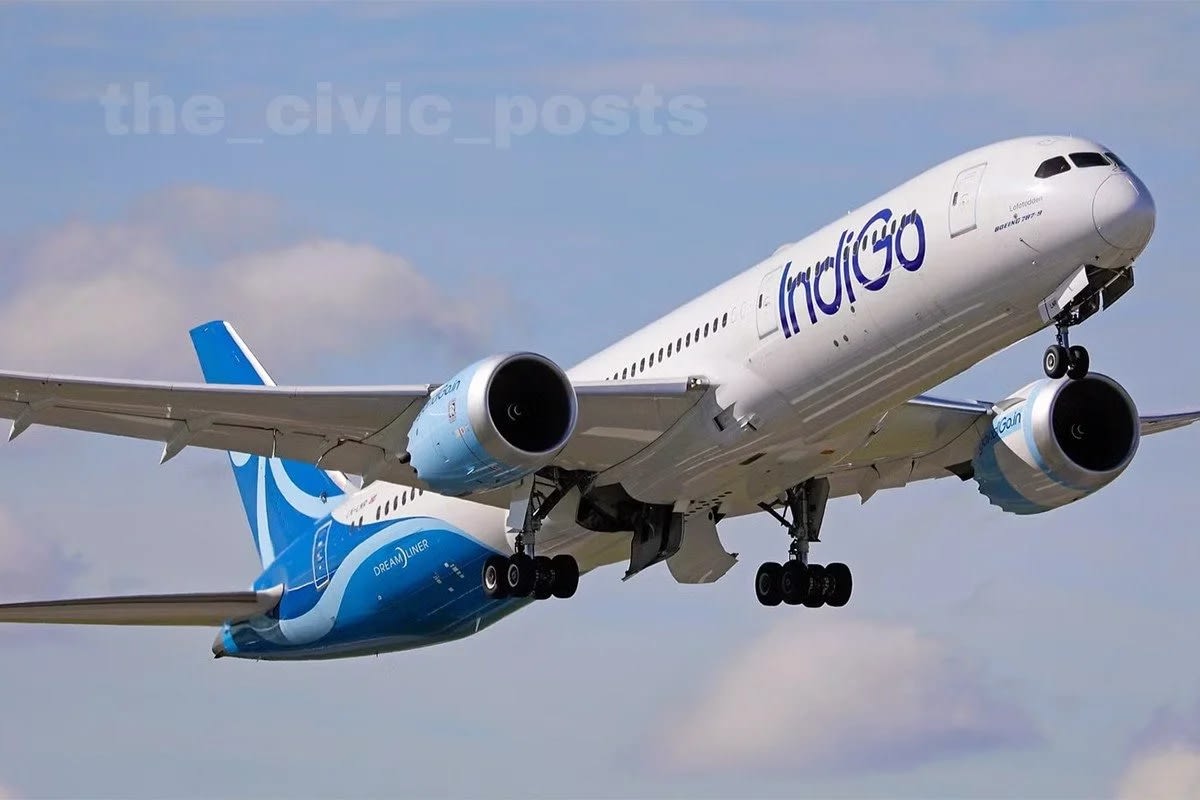
India’s aviation sector has suddenly been engulfed in a major crisis. IndiGo Airlines, recognized as the country’s largest airline, cancelled more than 2,000 flights in December 2025. Passengers were thrown into chaos at major airports such as Delhi, Bengaluru, and Mumbai. Airfares skyrocketed—on the Hyderabad–Delhi route, a single ticket touched ₹70,000.
This is not merely a problem of one airline; it reflects the deeper reality of oligarchy and crony capitalism (political–corporate nexus) in the Indian economy. Experts argue that after 2014, India has shifted from crony capitalism to a more entrenched oligarchic structure. This article uses the Indigo crisis as a focal point to discuss corruption, media silence, consolidation in telecom and aviation, and rule changes tailored to benefit corporate giants like the Ambanis.
Congress Era vs Post-2014: The Death of Investigative Journalism
In post-independence India, especially during the Congress era (1947–2014), corruption existed but was frequently exposed. Massive scandals like the 2G Spectrum Scam and Coalgate came to light because investigative journalism was active. Media houses such as TV9 and Eenadu, and journalists like Subramanian Swamy and A.T. Katiyalam, relentlessly questioned governments. When the 2G scam broke in 2010, it triggered nationwide debate and ultimately Supreme Court intervention.
After 2014, the situation changed drastically. Under Prime Minister Narendra Modi’s tenure, critics argue that the media has largely been “sold out.” According to Reporters Without Borders (RSF), India’s rank in the Press Freedom Index slipped from around 140 to 150 after 2014. Corruption cases that once dominated headlines now sink into silence. Even when major scandals surface, mainstream media—often labeled “godi media”—tends to side with the government.
The Adani Group controversy in 2023, despite its scale, was reframed by large sections of the media as an issue of “patriotism.” This is a defining feature of oligarchy: control over the media.
As a result, corruption has become systemic. Economists like Pranab Bardhan argue that India is deeply mired in crony capitalism, where business elites collude with politicians to exploit public resources. While India’s GDP grew from $2 trillion in 2014 to $3.5 trillion, inequality widened sharply. According to The Economist, India ranked 7th in the 2021 Crony Capitalism Index, with crony wealth accounting for 8% of GDP.
The Rafale Deal: ‘Offset’ Benefits for the Ambanis
A classic example of alleged corruption is the 2016 Rafale deal—the purchase of 36 Rafale fighter jets from France’s Dassault for ₹59,000 crore. The deal included a 50% offset clause, requiring Dassault to invest around ₹30,000 crore in India.
Instead of partnering with a public-sector giant like HAL (Hindustan Aeronautics Limited)—as was planned under the UPA for a 126-jet deal—Dassault chose Anil Ambani’s Reliance Defence, a debt-ridden company. The Congress party, led by Rahul Gandhi, accused the government of favoritism, famously raising the slogan “Prime Minister Chor.”
Dassault CEO Éric Trappier stated in 2019 that the Indian government suggested Anil Ambani’s name. The Dassault–Reliance joint venture was formed in 2017 but dissolved by 2023 due to mounting debt. Critics cite this as a textbook case of oligarchy: diverting public money to family-linked corporates, shielded under the pretext of “national security.”
Telecom Sector: From 10+ Companies to a Duopoly
In 2014, India’s telecom market had 13 competing companies—Aircel, Reliance Communications, Tata Docomo, and others. After Reliance Jio entered in 2016 with aggressive free-data offers, a brutal price war led to massive consolidation.
Today, the market is dominated by Jio (41.9%), Airtel (33%), and Vodafone Idea, effectively a triopoly, with Jio and Airtel together controlling nearly 75%. In October 2025 alone, Jio added 2 million subscribers, pushing its base to 484.7 million.
With fewer alternatives, prices rose. Jio’s Adjusted Gross Revenue (AGR) increased by 10.5%, while consumers had little choice. Analysts describe this as monopoly finance capital in action. New Right of Way (RoW) rules effective January 1, 2025, further favor Jio and Airtel.
Aviation Sector: Indigo’s 64% Dominance and a Duopoly
The aviation sector tells a similar story. In 2014, multiple airlines like Jet Airways and Kingfisher operated. Today, IndiGo controls 64% of the market, while Air India (26%), owned by the Tata Group, is the only serious competitor. The rest—SpiceJet and Akasa—together hold barely 10%.
IndiGo operates 434 aircraft and posted a profit of ₹7,258 crore in FY25. This duopoly has hurt passengers. During the December 2025 Indigo crisis, airfares surged up to 10 times. India also has among the highest Aviation Turbine Fuel (ATF) taxes in Asia, accounting for nearly 45% of ticket prices. IndiGo reportedly enjoys monopoly power on 60% of routes.
The Indigo Crisis: A ‘Too Big to Fail’ Risk
The crisis erupted in December 2025, when IndiGo failed to adjust to new Flight Duty Time Limitation (FDTL) rules, leading to the cancellation of over 1,000 flights. On December 8 alone, 251 flights were cancelled, wiping out $4.3 billion in market value.
The DGCA issued a show-cause notice, and the Supreme Court rejected IndiGo’s plea. Critics now call IndiGo a systemic risk—“too big to fail.” Public anger is directed at the board of directors, with one question echoing loudly: What were they doing?
Because of IndiGo’s dominance, rival airlines raised fares, further burdening passengers. Air India capped economy fares temporarily, but this was only a short-term relief.
Rules Changed for the Ambanis: Regulatory Favoritism
Mukesh Ambani’s Reliance Group has benefited from regulatory changes in telecom and potentially aviation. In 2025, 5G spectrum sharing rules were altered in ways that favor Jio. Ambani lobbied for satellite spectrum allocation instead of auctions, leading to conflict with Elon Musk.
There are also rumors of “Jio Airlines”, suggesting regulatory changes may soon enable Jio’s entry into aviation. Jio’s positions on net neutrality rules are also seen as pushing the market toward further consolidation. Changing regulations to suit favored corporates is a core instrument of oligarchy.
Ordinary People Pay the Price
The Indigo crisis is not an isolated incident—it is a warning signal of India’s growing oligarchic economy. Corruption, media silence, and corporate dominance mean ordinary citizens pay the price through higher costs and fewer choices.
The liberalization of the 1990s promoted competition, but crony capitalism now undermines true market freedom. Unless the government restores genuine competition and media independence, such crises will recur—and once again, only the people will suffer.