News

Parliament’s Budget Session Ends First Phase Amid High Drama, Protests and Political Fireworks

Kranthi Shekar - FEB 16, 2026
Share:
Parliament’s Budget Session Ends First Phase Amid High Drama, Protests and Political Fireworks

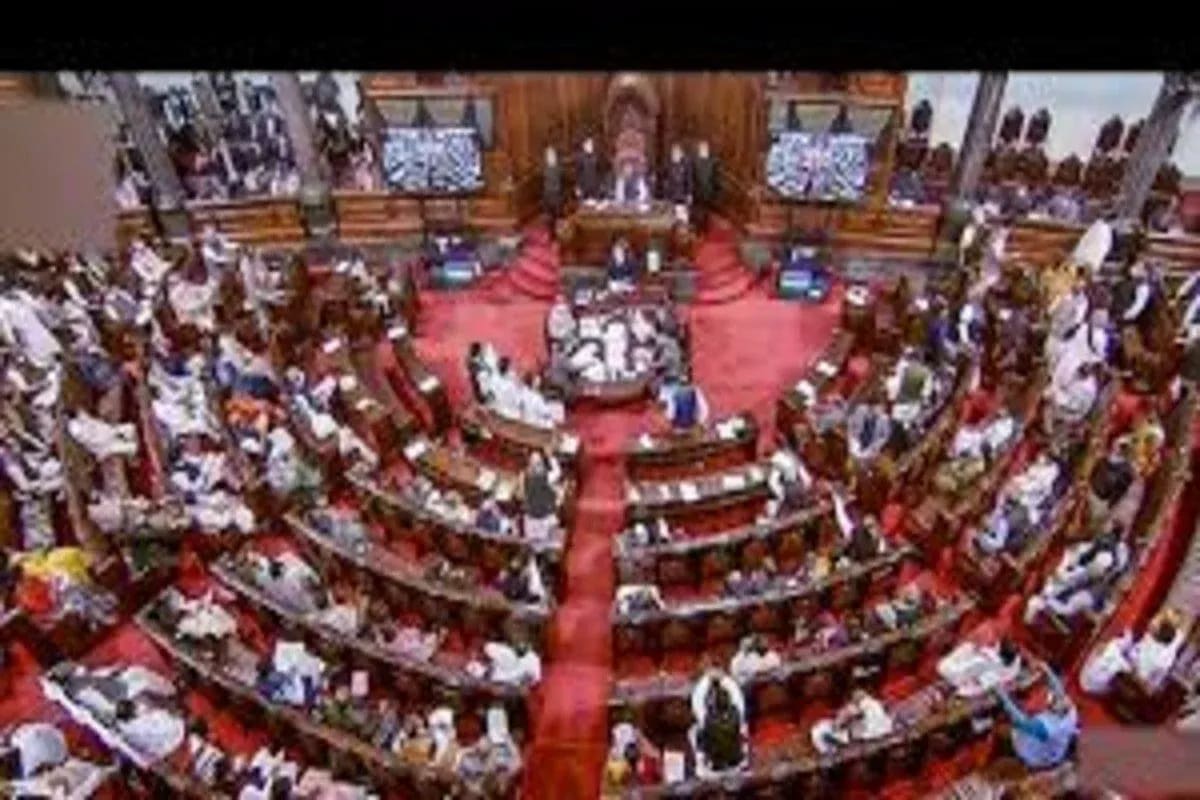
The first phase of the Parliament Budget Session 2026 concluded on February 13, but instead of ending on a calm and constructive note, it wrapped up amid loud protests, sharp political exchanges, and repeated disruptions in both Houses. The final day reflected the overall mood of the session, where major issues like the Union Budget, governance debates, and national concerns were repeatedly overshadowed by sloganeering and confrontation between the ruling party and the Opposition.

From the moment proceedings began, it was clear that the day would not be smooth. Opposition MPs entered the Houses with a strong protest mode, raising slogans and demanding immediate discussions on issues they felt were being ignored. Their primary argument was that Parliament should not simply run as a formality, but must be used as a platform where the government answers uncomfortable questions and responds to public concerns. The ruling party, on the other hand, accused the Opposition of deliberately blocking parliamentary work and turning the House into a battleground.

This clash of intentions quickly turned into chaos, forcing repeated adjournments, particularly in the Lok Sabha. The Speaker’s repeated appeals for order and cooperation did little to settle the atmosphere, as Opposition leaders continued their protest stance, claiming they had no option left but to raise their voice inside the House.

The Budget Session is usually considered one of the most important periods in Parliament’s calendar. It is during this time that the government presents its financial roadmap, outlines its development plans, and defends its economic policies. It is also the time when the Opposition gets the chance to question spending priorities, criticize policy directions, and demand accountability. But the first phase of the 2026 session witnessed frequent interruptions, reducing the possibility of long and meaningful debate.

Throughout the session, the Opposition repeatedly tried to corner the government on economic issues such as inflation, unemployment, rising household expenses, and the pressure faced by the middle class. Several members argued that while the government may speak about growth and development, ordinary citizens are struggling with the rising cost of essentials. They also raised concerns about employment opportunities for youth and demanded clarity on how the budget would translate into real benefits on the ground.

The government, however, defended its budgetary direction and insisted that the economic plan was focused on long-term stability, infrastructure building, and strengthening India’s global standing. Ministers argued that the country was moving forward with a clear vision and that the budget was designed to accelerate progress in sectors such as manufacturing, technology, and development projects.

Yet, instead of the discussion staying within economic policy boundaries, political confrontation continued to dominate the floor. Both sides accused each other of avoiding responsibility. The ruling alliance claimed it was ready to debate but was not being allowed to function due to the Opposition’s constant disruption. Opposition parties responded by saying the government was trying to escape discussions by pushing proceedings without proper dialogue.

As a result, the atmosphere in Parliament often resembled an election battlefield rather than a legislative platform. MPs exchanged harsh remarks, shouted across benches, and at times turned the House into a scene of disorder. For citizens watching from outside, it became another example of how political rivalry can stall the smooth functioning of democracy.

While the Lok Sabha faced more frequent disruptions, the Rajya Sabha also witnessed its share of tension. Debates there were comparatively steadier, but even the Upper House could not completely escape the wave of political aggression. Several MPs used the platform to raise national and regional issues, and discussions repeatedly shifted into blame games.

The last day of the first phase was especially significant because it marked the closing of the initial round of budget discussions. Both Houses were adjourned for a scheduled recess, and the session will resume in March. The break is meant to allow parliamentary committees to examine budget allocations and demands of various ministries in detail. Once the second phase begins, the government is expected to push for the passage of crucial bills and complete the budget approval process.

Even though the session ended with disruption, it carried political significance. Many observers believe that the Budget Session has become a stage not only for policy debate but also for political messaging. Parties use it to send signals to the public, energize their supporters, and highlight their stance on major issues. In that sense, the first phase of the Budget Session was not short of drama.

The ruling party projected confidence, claiming that it had presented a forward-looking budget and remained focused on governance despite Opposition tactics. Government leaders stated that their priorities were clear and that the budget was a roadmap for economic strength and national development. They also highlighted that the government remained committed to legislative responsibilities, even when repeated disruptions tried to slow down parliamentary progress.

On the other side, the Opposition insisted that their protests were justified and necessary. They claimed that Parliament is not just a place to pass bills, but a space where the government must face questioning. Opposition MPs argued that the people’s concerns were not being taken seriously, and therefore they had no choice but to raise issues forcefully. They described the session as disappointing and accused the government of avoiding transparency.

As the first phase ended, a larger question remained unanswered: how productive was the session in terms of actual governance? While some legislative work did take place, many discussions were disrupted, and public expectations of strong debate were not fully met. The repeated adjournments meant valuable time was lost, and the chances for deeper policy discussions were reduced.

However, the Budget Session is far from over. The second phase, which begins in March, is expected to be even more intense. The government will likely push for faster completion of budget-related approvals, while the Opposition is expected to continue its aggressive approach. The coming phase will be crucial because it is during this period that the budget gets finalized, and key bills are taken up for passage.

With political tensions rising across the country, Parliament’s next sitting could once again become a battleground. At the same time, it also offers an opportunity. If both sides decide to focus on meaningful debate, the second phase could still become productive and address the concerns of the people.

For now, the first phase of the Budget Session ends with a mixed picture - a blend of policy discussion, political confrontation, and parliamentary disorder. While the budget and governance agenda remains central, the tone of the session shows that Indian politics is heading into a period where debates will be sharper, opposition will be louder, and every parliamentary sitting will carry major political weight.

As the Houses head into recess, the nation waits to see whether the next phase will bring constructive dialogue or continue the same pattern of protest-driven politics.

More Articles

Recent Articles

Israel Targets Senior Iranian Leader Ali Larijani in Strike, Raising Fears of Wider Middle East Conflict

Israel Targets Senior Iranian Leader Ali Larijani in Strike, Raising Fears of Wider Middle East Conflict

Kranthi Shekar - MAR 17, 2026

Large LPG Cargo Reaches India with Safe Arrival of ‘Nanda Devi’ Tanker

Large LPG Cargo Reaches India with Safe Arrival of ‘Nanda Devi’ Tanker

Kranthi Shekar - MAR 17, 2026

Rajya Sabha Elections 2026: NDA Dominates in Bihar and Odisha as Haryana Vote Sparks Political Debate

Rajya Sabha Elections 2026: NDA Dominates in Bihar and Odisha as Haryana Vote Sparks Political Debate

Kranthi Shekar - MAR 17, 2026

Strikes and Counterstrikes Intensify in Iran–Israel Conflict

Strikes and Counterstrikes Intensify in Iran–Israel Conflict

Kranthi Shekar - MAR 17, 2026

BRS to Question Government on ‘Six Guarantees’ During Assembly Session

BRS to Question Government on ‘Six Guarantees’ During Assembly Session

Kranthi Shekar - MAR 17, 2026

Lok Sabha Clears Path for Eight Suspended MPs to Rejoin House Proceedings

Lok Sabha Clears Path for Eight Suspended MPs to Rejoin House Proceedings

Kranthi Shekar - MAR 17, 2026

‘Vrusha Karma’ Sparks Huge Curiosity: Naga Chaitanya’s Ambitious Period Film Gains Momentum

‘Vrusha Karma’ Sparks Huge Curiosity: Naga Chaitanya’s Ambitious Period Film Gains Momentum

Kranthi Shekar - MAR 17, 2026

Revanth Reddy Unveils Allu Cinemas, Strengthening Kokapet’s Urban Expansion

Revanth Reddy Unveils Allu Cinemas, Strengthening Kokapet’s Urban Expansion

Kranthi Shekar - MAR 17, 2026

Kerala Assembly Elections 2026: BJP Bets on Heavyweights in First Candidate List

Kerala Assembly Elections 2026: BJP Bets on Heavyweights in First Candidate List

Kranthi Shekar - MAR 17, 2026

The Hard Court King-Jannik Sinner Rewrites History at Indian Wells

The Hard Court King-Jannik Sinner Rewrites History at Indian Wells

Kranthi Shekar - MAR 17, 2026

The Shifting Tides of IPL 2026: Homecoming, Coaching Coups, and Contractual Crossfire

The Shifting Tides of IPL 2026: Homecoming, Coaching Coups, and Contractual Crossfire

Kranthi Shekar - MAR 17, 2026

The End of an Era: Sarfaraz Ahmed Bids Farewell to International Cricket

The End of an Era: Sarfaraz Ahmed Bids Farewell to International Cricket

Kranthi Shekar - MAR 17, 2026

Global Stage Remembers Kota Srinivasa Rao During the 98th Academy Awards Memorial Segment

Global Stage Remembers Kota Srinivasa Rao During the 98th Academy Awards Memorial Segment

Kranthi Shekar - MAR 17, 2026

North America Premieres Create Strong Early Buzz for Ustaad Bhagat Singh

North America Premieres Create Strong Early Buzz for Ustaad Bhagat Singh

Kranthi Shekar - MAR 17, 2026

No Special Ticket Rates Announced for Ustaad Bhagat Singh in Nizam Territory

No Special Ticket Rates Announced for Ustaad Bhagat Singh in Nizam Territory

Kranthi Shekar - MAR 17, 2026

Hidden Wounds of History: Why Confronting the Past is the Only Path to True Harmony

Hidden Wounds of History: Why Confronting the Past is the Only Path to True Harmony

Kranthi Vegesna - MAR 17, 2026

AI Detecting Crimes Before They Happen

AI Detecting Crimes Before They Happen

Prakash Ranganathan - MAR 16, 2026

Suriya’s Upcoming Film Vishwanath and Sons Teaser Sparks Curiosity Among Fans

Suriya’s Upcoming Film Vishwanath and Sons Teaser Sparks Curiosity Among Fans

Kranthi Shekar - MAR 16, 2026

Statue of Potti Sreeramulu Unveiled in Amaravati by N. Chandrababu Naidu

Statue of Potti Sreeramulu Unveiled in Amaravati by N. Chandrababu Naidu

Kranthi Shekar - MAR 16, 2026

Seven Years After Vivekananda Reddy’s Murder, Daughter Continues to Seek Justice

Seven Years After Vivekananda Reddy’s Murder, Daughter Continues to Seek Justice

Kranthi Shekar - MAR 16, 2026

News

Parliament’s Budget Session Ends First Phase Amid High Drama, Protests and Political Fireworks

Kranthi Shekar - FEB 16, 2026

Share:
Parliament’s Budget Session Ends First Phase Amid High Drama, Protests and Political Fireworks

The first phase of the Parliament Budget Session 2026 concluded on February 13, but instead of ending on a calm and constructive note, it wrapped up amid loud protests, sharp political exchanges, and repeated disruptions in both Houses. The final day reflected the overall mood of the session, where major issues like the Union Budget, governance debates, and national concerns were repeatedly overshadowed by sloganeering and confrontation between the ruling party and the Opposition.

From the moment proceedings began, it was clear that the day would not be smooth. Opposition MPs entered the Houses with a strong protest mode, raising slogans and demanding immediate discussions on issues they felt were being ignored. Their primary argument was that Parliament should not simply run as a formality, but must be used as a platform where the government answers uncomfortable questions and responds to public concerns. The ruling party, on the other hand, accused the Opposition of deliberately blocking parliamentary work and turning the House into a battleground.

This clash of intentions quickly turned into chaos, forcing repeated adjournments, particularly in the Lok Sabha. The Speaker’s repeated appeals for order and cooperation did little to settle the atmosphere, as Opposition leaders continued their protest stance, claiming they had no option left but to raise their voice inside the House.

The Budget Session is usually considered one of the most important periods in Parliament’s calendar. It is during this time that the government presents its financial roadmap, outlines its development plans, and defends its economic policies. It is also the time when the Opposition gets the chance to question spending priorities, criticize policy directions, and demand accountability. But the first phase of the 2026 session witnessed frequent interruptions, reducing the possibility of long and meaningful debate.

Throughout the session, the Opposition repeatedly tried to corner the government on economic issues such as inflation, unemployment, rising household expenses, and the pressure faced by the middle class. Several members argued that while the government may speak about growth and development, ordinary citizens are struggling with the rising cost of essentials. They also raised concerns about employment opportunities for youth and demanded clarity on how the budget would translate into real benefits on the ground.

The government, however, defended its budgetary direction and insisted that the economic plan was focused on long-term stability, infrastructure building, and strengthening India’s global standing. Ministers argued that the country was moving forward with a clear vision and that the budget was designed to accelerate progress in sectors such as manufacturing, technology, and development projects.

Yet, instead of the discussion staying within economic policy boundaries, political confrontation continued to dominate the floor. Both sides accused each other of avoiding responsibility. The ruling alliance claimed it was ready to debate but was not being allowed to function due to the Opposition’s constant disruption. Opposition parties responded by saying the government was trying to escape discussions by pushing proceedings without proper dialogue.

As a result, the atmosphere in Parliament often resembled an election battlefield rather than a legislative platform. MPs exchanged harsh remarks, shouted across benches, and at times turned the House into a scene of disorder. For citizens watching from outside, it became another example of how political rivalry can stall the smooth functioning of democracy.

While the Lok Sabha faced more frequent disruptions, the Rajya Sabha also witnessed its share of tension. Debates there were comparatively steadier, but even the Upper House could not completely escape the wave of political aggression. Several MPs used the platform to raise national and regional issues, and discussions repeatedly shifted into blame games.

The last day of the first phase was especially significant because it marked the closing of the initial round of budget discussions. Both Houses were adjourned for a scheduled recess, and the session will resume in March. The break is meant to allow parliamentary committees to examine budget allocations and demands of various ministries in detail. Once the second phase begins, the government is expected to push for the passage of crucial bills and complete the budget approval process.

Even though the session ended with disruption, it carried political significance. Many observers believe that the Budget Session has become a stage not only for policy debate but also for political messaging. Parties use it to send signals to the public, energize their supporters, and highlight their stance on major issues. In that sense, the first phase of the Budget Session was not short of drama.

The ruling party projected confidence, claiming that it had presented a forward-looking budget and remained focused on governance despite Opposition tactics. Government leaders stated that their priorities were clear and that the budget was a roadmap for economic strength and national development. They also highlighted that the government remained committed to legislative responsibilities, even when repeated disruptions tried to slow down parliamentary progress.

On the other side, the Opposition insisted that their protests were justified and necessary. They claimed that Parliament is not just a place to pass bills, but a space where the government must face questioning. Opposition MPs argued that the people’s concerns were not being taken seriously, and therefore they had no choice but to raise issues forcefully. They described the session as disappointing and accused the government of avoiding transparency.

As the first phase ended, a larger question remained unanswered: how productive was the session in terms of actual governance? While some legislative work did take place, many discussions were disrupted, and public expectations of strong debate were not fully met. The repeated adjournments meant valuable time was lost, and the chances for deeper policy discussions were reduced.

However, the Budget Session is far from over. The second phase, which begins in March, is expected to be even more intense. The government will likely push for faster completion of budget-related approvals, while the Opposition is expected to continue its aggressive approach. The coming phase will be crucial because it is during this period that the budget gets finalized, and key bills are taken up for passage.

With political tensions rising across the country, Parliament’s next sitting could once again become a battleground. At the same time, it also offers an opportunity. If both sides decide to focus on meaningful debate, the second phase could still become productive and address the concerns of the people.

For now, the first phase of the Budget Session ends with a mixed picture - a blend of policy discussion, political confrontation, and parliamentary disorder. While the budget and governance agenda remains central, the tone of the session shows that Indian politics is heading into a period where debates will be sharper, opposition will be louder, and every parliamentary sitting will carry major political weight.

As the Houses head into recess, the nation waits to see whether the next phase will bring constructive dialogue or continue the same pattern of protest-driven politics.
More Articles

Recent Articles

Israel Targets Senior Iranian Leader Ali Larijani in Strike, Raising Fears of Wider Middle East Conflict

Israel Targets Senior Iranian Leader Ali Larijani in Strike, Raising Fears of Wider Middle East Conflict

Kranthi Shekar - MAR 17, 2026

Large LPG Cargo Reaches India with Safe Arrival of ‘Nanda Devi’ Tanker

Large LPG Cargo Reaches India with Safe Arrival of ‘Nanda Devi’ Tanker

Kranthi Shekar - MAR 17, 2026

Rajya Sabha Elections 2026: NDA Dominates in Bihar and Odisha as Haryana Vote Sparks Political Debate

Rajya Sabha Elections 2026: NDA Dominates in Bihar and Odisha as Haryana Vote Sparks Political Debate

Kranthi Shekar - MAR 17, 2026

Strikes and Counterstrikes Intensify in Iran–Israel Conflict

Strikes and Counterstrikes Intensify in Iran–Israel Conflict

Kranthi Shekar - MAR 17, 2026

BRS to Question Government on ‘Six Guarantees’ During Assembly Session

BRS to Question Government on ‘Six Guarantees’ During Assembly Session

Kranthi Shekar - MAR 17, 2026

Lok Sabha Clears Path for Eight Suspended MPs to Rejoin House Proceedings

Lok Sabha Clears Path for Eight Suspended MPs to Rejoin House Proceedings

Kranthi Shekar - MAR 17, 2026

‘Vrusha Karma’ Sparks Huge Curiosity: Naga Chaitanya’s Ambitious Period Film Gains Momentum

‘Vrusha Karma’ Sparks Huge Curiosity: Naga Chaitanya’s Ambitious Period Film Gains Momentum

Kranthi Shekar - MAR 17, 2026

Revanth Reddy Unveils Allu Cinemas, Strengthening Kokapet’s Urban Expansion

Revanth Reddy Unveils Allu Cinemas, Strengthening Kokapet’s Urban Expansion

Kranthi Shekar - MAR 17, 2026

Kerala Assembly Elections 2026: BJP Bets on Heavyweights in First Candidate List

Kerala Assembly Elections 2026: BJP Bets on Heavyweights in First Candidate List

Kranthi Shekar - MAR 17, 2026

The Hard Court King-Jannik Sinner Rewrites History at Indian Wells

The Hard Court King-Jannik Sinner Rewrites History at Indian Wells

Kranthi Shekar - MAR 17, 2026

The Shifting Tides of IPL 2026: Homecoming, Coaching Coups, and Contractual Crossfire

The Shifting Tides of IPL 2026: Homecoming, Coaching Coups, and Contractual Crossfire

Kranthi Shekar - MAR 17, 2026

The End of an Era: Sarfaraz Ahmed Bids Farewell to International Cricket

The End of an Era: Sarfaraz Ahmed Bids Farewell to International Cricket

Kranthi Shekar - MAR 17, 2026

Global Stage Remembers Kota Srinivasa Rao During the 98th Academy Awards Memorial Segment

Global Stage Remembers Kota Srinivasa Rao During the 98th Academy Awards Memorial Segment

Kranthi Shekar - MAR 17, 2026

North America Premieres Create Strong Early Buzz for Ustaad Bhagat Singh

North America Premieres Create Strong Early Buzz for Ustaad Bhagat Singh

Kranthi Shekar - MAR 17, 2026

No Special Ticket Rates Announced for Ustaad Bhagat Singh in Nizam Territory

No Special Ticket Rates Announced for Ustaad Bhagat Singh in Nizam Territory

Kranthi Shekar - MAR 17, 2026

Hidden Wounds of History: Why Confronting the Past is the Only Path to True Harmony

Hidden Wounds of History: Why Confronting the Past is the Only Path to True Harmony

Kranthi Vegesna - MAR 17, 2026

AI Detecting Crimes Before They Happen

AI Detecting Crimes Before They Happen

Prakash Ranganathan - MAR 16, 2026

Suriya’s Upcoming Film Vishwanath and Sons Teaser Sparks Curiosity Among Fans

Suriya’s Upcoming Film Vishwanath and Sons Teaser Sparks Curiosity Among Fans

Kranthi Shekar - MAR 16, 2026

Statue of Potti Sreeramulu Unveiled in Amaravati by N. Chandrababu Naidu

Statue of Potti Sreeramulu Unveiled in Amaravati by N. Chandrababu Naidu

Kranthi Shekar - MAR 16, 2026

Seven Years After Vivekananda Reddy’s Murder, Daughter Continues to Seek Justice

Seven Years After Vivekananda Reddy’s Murder, Daughter Continues to Seek Justice

Kranthi Shekar - MAR 16, 2026