Regional Volatility Rising: India Faces Challenges from Turmoil in Nepal, Sri Lanka, and Bangladesh
AKI - MAR 4, 2026
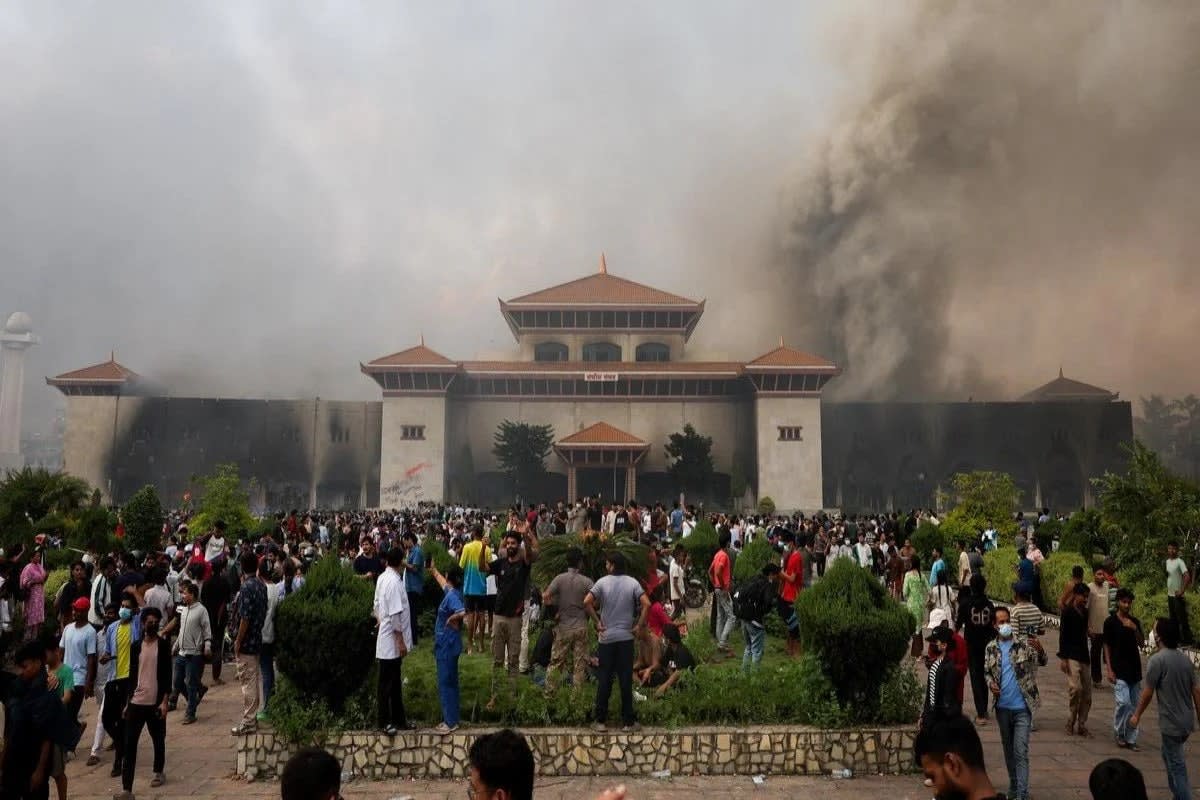
India’s unique geography binds it closely with its neighbours, creating both intimate connections and complex challenges. Today, political and economic instability in Nepal, Sri Lanka, and Bangladesh threatens to disrupt this delicate equilibrium. From migration and security concerns to trade, diplomacy, and regional cooperation, India is navigating a neighbourhood where crises across multiple fronts increasingly converge at its borders.
Migration and Internal Pressures
Millions of Nepali workers migrate legally to India under the 1950 Treaty of Peace and Friendship, yet growing instability fuels rising migration, pressuring India’s labour markets and infrastructure. Sri Lanka’s long-standing refugee outflows, initially driven by its civil war in the 1980s, surged again after its 2022 economic collapse. Meanwhile, decades-long illegal immigration from Bangladesh into Assam and West Bengal continues to spark social tensions and political flashpoints, demanding careful governance and resource management by India.
Security and Border Vulnerabilities
Nepal’s porous border, challenged by governance lapses during political turmoil, remains a conduit for smugglers and extremist groups-a perennial concern for Indian security agencies. Sri Lanka’s strategic maritime routes near India’s southern coast present vulnerabilities to smuggling and intelligence operations, while Bangladesh’s occasional seepage of radical elements intensifies fears of extremist infiltration into India’s northeast. Instability across these neighbours thus directly heightens India’s internal security risks.
Economic Ripple Effects
Frequent political stalemates in Nepal repeatedly delay key connectivity and infrastructure projects, impeding India’s "Act East Policy" to integrate northeast India with broader Asian markets. Sri Lanka’s 2022 economic collapse disrupted maritime trade passing through Colombo, a regional transshipment hub handling millions of containers annually, raising concerns over potential Chinese dominance at ports like Hambantota. In Bangladesh, political unrest threatens energy-sharing grids and vital trade corridors, collectively impacting India’s ambitions for regional economic collaboration.
Diplomatic Challenges and Shifting Alliances
Frequent government changes and rising Chinese influence in Nepal undermine India’s traditional sway, with politically motivated anti-India rhetoric complicating diplomacy. Sri Lanka’s tilt towards China, underlined by leases of strategic assets such as Hambantota Port, heightens New Delhi’s strategic anxieties. Bangladesh, despite strong economic ties with India, diversifies its global partnerships towards Turkey, Gulf countries, and beyond, challenging India’s regional influence and forcing continuous diplomatic recalibration.
Undoing Regional Consolidation
India once championed regional unity through SAARC, but current instability in Nepal, Sri Lanka, and Bangladesh undermines that vision. Political volatility slows regional initiatives; Sri Lanka’s crisis limits its participation, while Bangladesh’s hedging further erodes collective cohesion. This fragmentation stymies South Asian cooperation efforts and reverses decades of progress toward turning the region into an interconnected growth hub.
The combined turmoil in Nepal, Sri Lanka, and Bangladesh encircles India with a ring of instability affecting migration, trade, security, and diplomacy. These challenges underscore that local crises can rapidly become national vulnerabilities for New Delhi. Navigating this complex landscape demands a nuanced approach-balancing firmness with empathy, and cooperation with robust security-to transform South Asia from a zone of vulnerability into one of shared opportunity and resilience.