Russia–Ukraine, Operation Epic Fury, and the Slow Decline of the United Nations
wait
AKI - MAR 11, 2026
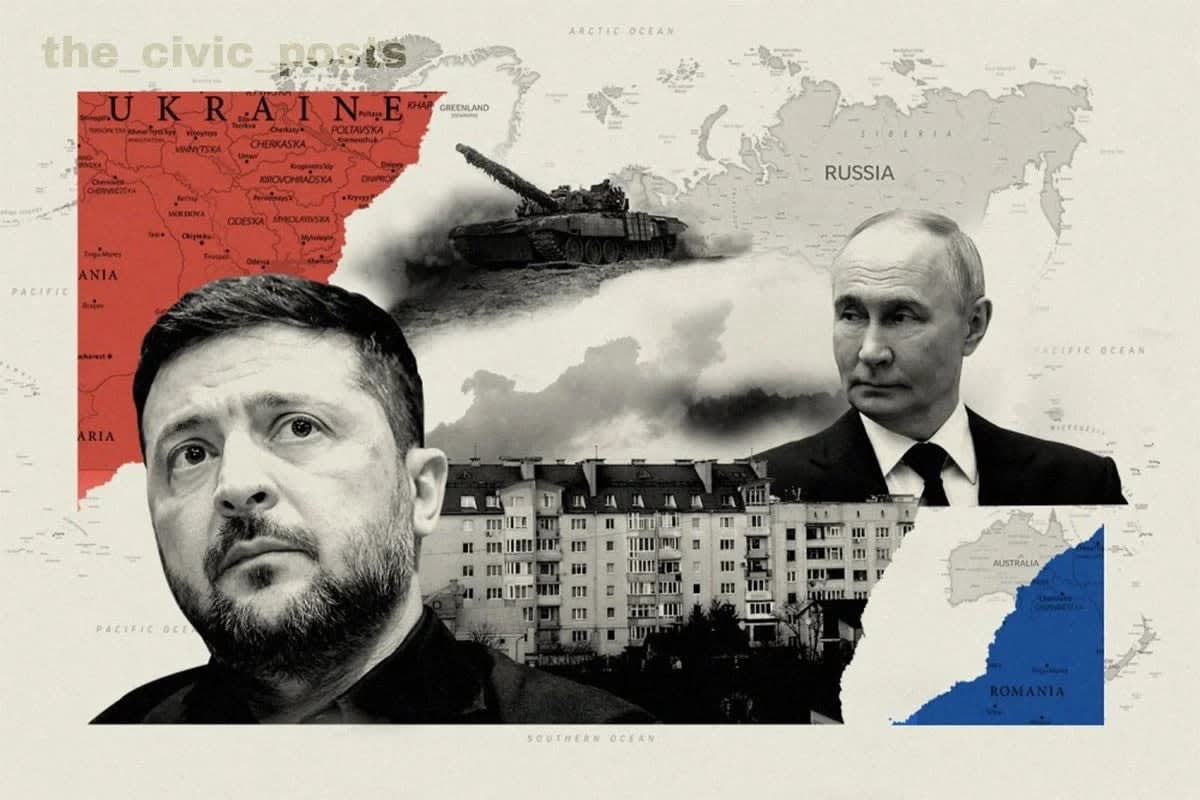
In the quiet hallways of the United Nations headquarters in New York, the air feels heavier than it did in 1945. For decades, the UN has served as the primary stage for many of the world’s most significant diplomatic dramas. Yet as we move through 2026, a growing sense of déjà vu is unsettling historians and policymakers alike. The organization’s recurring difficulty in enforcing accountability has increasingly been cited as a structural vulnerability, illustrated by a series of widely debated crises: the prolonged diplomatic paralysis during the Syrian civil war, humanitarian emergencies across parts of the Sahel, and persistent international disputes over state-sponsored militancy in South Asia. These episodes have contributed to a perception among some observers that the institution is often a bystander to the very crises it was built to prevent.
Against this backdrop, the reported outbreak of “Operation Epic Fury”-described in several policy discussions as joint U.S.–Israeli strikes on Iranian military infrastructure in February 2026-and the continuing stalemate in the Russia–Ukraine war have revived a central strategic question: Is the United Nations gradually losing its central role in global conflict management?
Historical Roots: From 1919 to the Victor’s Peace
To understand the present debate, it is useful to look back to 1920 and the birth of the League of Nations. Emerging from the trauma of World War I, the League represented the first major attempt to institutionalize the idea of collective security. Closely associated with U.S. President Woodrow Wilson’s vision, the organization was nevertheless weakened by the United States’ decision not to join, reflecting the isolationist sentiment of the era. Lacking both a standing military capability and binding enforcement tools, the League relied largely on the moral authority and voluntary cooperation of its members. This system proved workable in limited disputes but faltered when confronted with major-power aggression in the 1930s, including Japan’s expansion into Manchuria and Italy’s invasion of Abyssinia.
The United Nations was created in 1945 partly to correct these weaknesses, but its structure reflected a pragmatic power arrangement. The five principal Allied victors of World War II-the United States, the Soviet Union (now Russia), the United Kingdom, France, and China-became permanent members of the Security Council (UNSC). Through the veto authority embedded in the UN Charter, these states were granted decisive influence over the Council’s actions. For more than eight decades, this system-often described by scholars as a form of “victor’s peace”-has shaped international diplomacy by ensuring that enforcement actions cannot proceed against the core interests of these permanent members.
Current Developments: A House Divided
The durability of this structure historically depended on at least a minimal level of consensus among the major powers. Today that consensus appears increasingly fragile. Strategic rivalry between the United States, Russia, and China-intensified by the Russia–Ukraine conflict-has frequently translated into Security Council paralysis.
At the same time, several analysts argue that new security dynamics are emerging outside the UN framework. In situations where Security Council authorization appears unlikely, the United States and its NATO (North Atlantic Treaty Organization) allies, along with partners such as Israel, have sometimes relied on coalition-based or unilateral action. If reports surrounding Operation Epic Fury are accurate, such actions may illustrate a broader trend in which states pursue strategic objectives beyond traditional UN mechanisms.
Interpretations and Debates: Reform or Irrelevance?
The debate among policymakers is therefore no longer limited to whether the UN requires reform; it increasingly centers on whether the organization’s practical influence in managing global crises is gradually diminishing. Some commentators have described the institution metaphorically as a “diplomatic ghost ship”-a body whose structure remains intact even as its ability to steer global events is questioned. In parallel, policy discussions have surfaced around alternative governance concepts, including the idea of a donor-driven “Board of Peace,” reportedly explored in early 2026 as a supplementary international forum operating alongside existing institutions. Proposals associated with this idea suggest a membership model requiring substantial financial commitments, a framework critics argue could challenge the UN’s founding principle of sovereign equality.
Debate about the UN’s future generally falls into two broad perspectives:
• The Reformists: Advocates suggest expanding the Security Council to include rising powers such as India, Germany, or Brazil, thereby restoring legitimacy and better reflecting contemporary geopolitical realities.
• The Realists: Others maintain that the UN was never intended to function as a global government, but rather as a diplomatic pressure valve designed to keep nuclear powers communicating-even during periods of intense rivalry.
Broader Implications: The Twilight of Multilateralism
The implications extend far beyond the borders of Iran or Ukraine. If the UN’s role as the central forum for conflict mediation continues to weaken, some analysts warn that international security may gradually shift toward systems dominated by coalitions of powerful states rather than universal institutions. Within this context, proposals resembling the “Board of Peace” model raise broader questions about the future architecture of global governance, particularly if participation becomes closely tied to financial contribution.
When peace begins to resemble a commodity accessible primarily to those who can fund it, the foundational promise of the 1945 UN Charter-to protect “succeeding generations from the scourge of war”- may appear increasingly distant from geopolitical reality. History suggests that international institutions rarely disappear suddenly; more often, their influence erodes gradually through a succession of unresolved crises and unenforced resolutions.