Tirupati Laddu Row Rekindles: Naidu Calls It a “Deliberate Conspiracy”, YSRCP Hits Back Hard
Kranthi Shekar - FEB 17, 2026

The long-running Tirupati laddu controversy has once again returned to the centre of Andhra Pradesh politics, triggering heated accusations, counter-attacks, and intense public debate. What began as concerns over the quality of ghee used in preparing the world-famous Tirupati laddus has now transformed into a full-blown political storm, with Chief Minister N. Chandrababu Naidu taking an aggressive stand against the previous YSR Congress Party government and calling the entire episode a “deliberate conspiracy”.
Naidu’s latest remarks have reignited public attention, not just because Tirupati is a globally respected spiritual destination, but because the laddu is not just a sweet item-it is a sacred prasadam for millions of devotees. Any doubt raised about its purity instantly becomes an emotional and religious issue, making the controversy far more sensitive than regular political disputes.
In his strong-worded criticism, Chandrababu Naidu accused the YSRCP of deliberately creating confusion, damaging the faith of devotees, and trying to hide lapses committed during their administration. According to him, this was not an accidental issue caused by negligence but a planned effort to mislead the public. Naidu argued that what happened during the earlier government’s tenure was not merely a supply or procurement problem, but something deeper and more intentional, meant to weaken the trust of devotees in the temple system and to manipulate public opinion for political benefit.
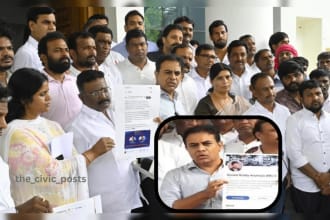
Naidu’s statement instantly sparked outrage among opposition leaders, especially from the YSR Congress Party, who called his accusations reckless and politically motivated. They claimed Naidu was trying to sensationalise a matter linked to religious sentiments and use it as a weapon to discredit the previous government. The YSRCP alleged that the Chief Minister was attempting to distract the public from pressing governance issues by keeping an emotional and faith-based controversy alive.
The laddu issue, which had already generated significant tension in earlier months, once again became a top discussion point across Andhra Pradesh. Supporters of both parties flooded social media with arguments, while temple devotees expressed concern that political rivalry was dragging a sacred religious matter into public controversy.
At the heart of the issue lies the question of the quality of ghee supplied for laddu preparation. Allegations had surfaced that during the previous government’s period, ghee of inferior quality may have entered the supply chain. The matter became highly controversial because the Tirupati laddu is not a normal food product. It is prasadam, and its preparation is closely linked to religious faith, tradition, and purity.
For the general public, even the suggestion of adulteration is deeply disturbing. For political parties, it has become an opportunity to attack each other with maximum impact. Naidu’s camp maintains that the previous administration allowed questionable suppliers and poor-quality materials into the process, and that such negligence was unacceptable for a religious institution of this magnitude.
Naidu further argued that when concerns were raised, instead of acting transparently, the earlier government and its leaders allegedly tried to downplay the issue and suppress questions. In his view, this was evidence that something was being intentionally hidden. His statement painted the controversy not as a minor procedural lapse but as a serious issue that deserved strict accountability.
The YSRCP, however, has completely denied the accusations. The party insists that Naidu is exaggerating and distorting the facts to create fear and anger among devotees. They argue that the laddu issue has been politicised beyond reason and that Naidu’s language has contributed to unnecessary panic. YSRCP leaders also stated that the temple’s reputation and the sentiments of millions were being harmed due to political propaganda.
They further demanded that Naidu stop making statements that could weaken faith in the temple system. According to them, a Chief Minister has a responsibility to protect the sanctity of religious institutions, not fuel speculation.
The controversy gained further intensity because of the involvement of investigation reports and official discussions. Political leaders on both sides began referring to inquiry findings to support their own narratives. While the ruling side highlighted suspicions and lapses, the opposition leaned on investigation conclusions that did not fully validate the most extreme claims being circulated.
This is where the dispute becomes even more complex. For many devotees, the question is not only about what an investigation says but also about the doubt created in the first place. Once suspicion enters public consciousness, it is difficult to erase it completely, even with official clarifications. And that is exactly why the issue continues to remain emotionally charged.
Naidu’s political strategy in raising the issue again appears clear: he wants to project himself as a leader who protects Hindu traditions, temple purity, and religious faith. Tirupati is not only a spiritual symbol but also a cultural pride for Andhra Pradesh. By taking a tough stand, Naidu is positioning himself as the defender of temple integrity, sending a message that his government will not tolerate any compromise when it comes to sacred matters.
This narrative also helps the ruling side connect strongly with devotees and religious-minded voters. In Andhra Pradesh politics, temple-related issues carry massive weight, and any party seen as disrespectful or careless about religious sentiments risks public backlash. Naidu seems to be using this controversy to strengthen the perception that his administration is more disciplined and transparent than the previous one.
On the other hand, YSRCP sees this entire episode as a political trap. They argue that the laddu controversy is being kept alive deliberately to damage the party’s image. According to them, Naidu is trying to paint the previous government as anti-temple and careless about traditions, even though they claim they never compromised the sanctity of Tirumala.
YSRCP leaders insist that if there were any supply irregularities, they were not intentional and that the temple administration has systems in place to ensure prasadam quality. They accuse Naidu of making the issue bigger than it actually is, simply to create a lasting negative impression against the opposition.
Naidu’s political strategy in raising the issue again appears clear: he wants to project himself as a leader who protects Hindu traditions, temple purity, and religious faith. Tirupati is not only a spiritual symbol but also a cultural pride for Andhra Pradesh. By taking a tough stand, Naidu is positioning himself as the defender of temple integrity, sending a message that his government will not tolerate any compromise when it comes to sacred matters.
This narrative also helps the ruling side connect strongly with devotees and religious-minded voters. In Andhra Pradesh politics, temple-related issues carry massive weight, and any party seen as disrespectful or careless about religious sentiments risks public backlash. Naidu seems to be using this controversy to strengthen the perception that his administration is more disciplined and transparent than the previous one.
On the other hand, YSRCP sees this entire episode as a political trap. They argue that the laddu controversy is being kept alive deliberately to damage the party’s image. According to them, Naidu is trying to paint the previous government as anti-temple and careless about traditions, even though they claim they never compromised the sanctity of Tirumala.
YSRCP leaders insist that if there were any supply irregularities, they were not intentional and that the temple administration has systems in place to ensure prasadam quality. They accuse Naidu of making the issue bigger than it actually is, simply to create a lasting negative impression against the opposition.
In a broader sense, this controversy reflects how religion and politics are deeply intertwined in Andhra Pradesh. Leaders understand that temple issues can influence voters emotionally, and therefore such controversies become powerful political tools. The laddu row is a clear example of how a topic linked to faith can quickly transform into a political battlefield.
As the controversy continues, it is likely that both sides will keep escalating their rhetoric. Naidu may continue pressing the issue to strengthen his narrative of protecting temple sanctity, while YSRCP will keep defending itself and accusing the ruling side of political manipulation.
However, beyond politics, the real responsibility lies in ensuring transparency and restoring public trust. The Tirupati laddu is not just a symbol of tradition, it is a symbol of devotion for millions. Any doubts about its purity, whether proven or not, create emotional distress among devotees. That is why clear communication, strict quality checks, and accountability in procurement and preparation systems are essential.
Ultimately, while political parties may benefit from public attention and debate, the real priority should be protecting the faith of devotees. The Tirupati laddu is sacred, and it should never become a weapon in political warfare. If Andhra Pradesh’s leaders truly respect the sentiments of the people, they must ensure the issue is handled with dignity, responsibility, and transparency-without turning devotion into a political battlefield.