What a US Government Shutdown Means for India and the World
AKI - MAR 4, 2026
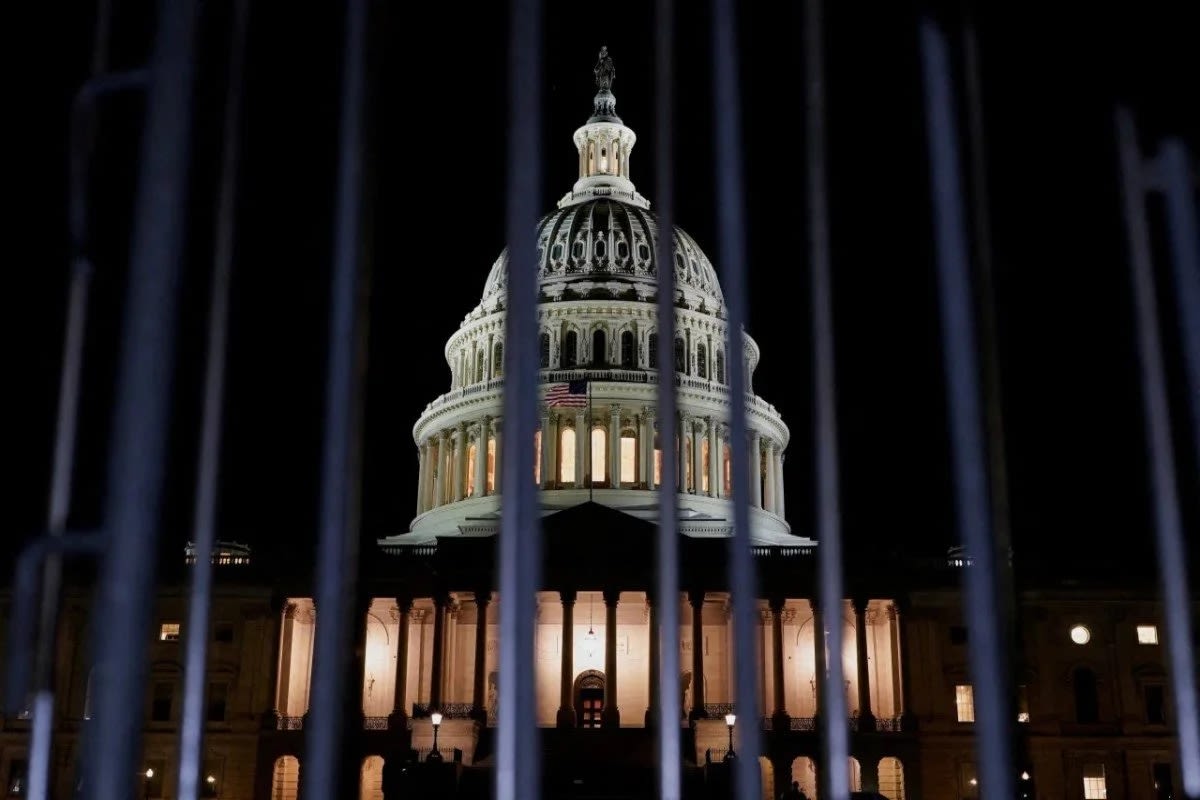
At first glance, a U.S. government shutdown sounds cataclysmic-like a nation grinding to a halt, with offices shuttered, services cut off, and chaos spilling onto the streets. In reality, it is not that apocalyptic, but it is still disruptive. The United States, the world’s largest economy, has faced this peculiar political crisis almost every few years. While it may seem extraordinary to outsiders, shutdowns are part of America’s internal political tussles, triggered when lawmakers fail to agree on how federal funds should be spent.
What a Shutdown Really Means
In simple terms, a shutdown occurs when the U.S. Congress fails to pass a federal budget or temporary spending bill. Without this, government departments run out of legal authority to spend money. Think of it as a company where employees cannot be paid until the management signs off on expenses. Essential services like defence, air traffic control, and emergency medical care continue, but museums, parks, passport offices, and many administrative functions remain closed. Millions of government employees either stop working or continue without pay until funding is restored.
India’s Closest Equivalent
India has never seen a shutdown of this kind, but the nearest comparison is a parliamentary deadlock, where disagreements between ruling and opposition parties stall the passage of budgets or key bills. For instance, extended disruptions in Parliament sessions delay decision-making and economic reforms. However, unlike in the U.S., the Indian system ensures essential government functioning continues, meaning services are rarely halted in the same way.
The Longest Shutdown and Political Polarization
Since 1976, the U.S. has experienced 20 shutdowns, ranging from a few days to over a month. The most severe came in 2018–2019, lasting 35 days, when a clash over border wall funding between President Donald Trump and Democrats froze federal operations. Polarization was so intense that hundreds of thousands of federal workers went without pay, and many turned to food banks-community-run charities that distribute free groceries to people in need. The health system also faced strain: research trials were delayed, routine safety inspections of food and drugs slowed down, and health agencies cut back non-urgent operations. The current shutdown reflects similar divisions, this time over spending priorities and debt ceilings, and experts warn it could stretch for weeks.
Impact on Americans and Indians Abroad
For Americans, shutdowns mean delayed paychecks for millions of workers and suspension of services like parks, museums, and passport offices. Immigration services slow down, hitting H-1B visa holders and their families with uncertainty in renewals and green card processing. Indian students-who make up one of the largest foreign student groups in the U.S.-may face delays in getting visas, social security numbers, or research grants processed. Parents visiting their children in the U.S. could also encounter slower visa approvals or difficulties with government paperwork like Medicare-linked health services if emergencies arise. For tourists and business travellers from India, delays in visa issuance can disrupt planned trips.
Trade and Global Ripples
The effects extend far beyond U.S. borders. For India, the U.S. is a key trading partner, exporting everything from aircraft parts to medical equipment and defence technology. A prolonged shutdown can delay regulatory approvals and shipment clearances, slowing trade flows. Globally, it also unsettles stock markets and investor confidence, since the U.S. dollar underpins much of world trade. Europe and Asia often see market tremors when Washington stalls, with India’s IT sector-heavily dependent on U.S. contracts-especially sensitive to such uncertainty.
Politics or Real Crisis?
Despite its daunting name, a shutdown does not mean American streets go dark or power grids collapse. Essential services-military, emergency medical care, and air traffic control-continue to function. Yet, each shutdown highlights how political brinkmanship can shake both domestic life and global confidence. For India and other nations closely tied to the U.S., the concern is not that America stops working altogether, but that prolonged uncertainty weakens the stability of the very system others depend on.
In the end, a shutdown is both a domestic drama and a global signal. While America debates budgets, the world watches nervously-because when Washington stalls, the ripple effects are felt from Wall Street to New Delhi.