Why India Keeps Tariffs High: The Clash with U.S. Trade Demands
AKI - MAR 4, 2026
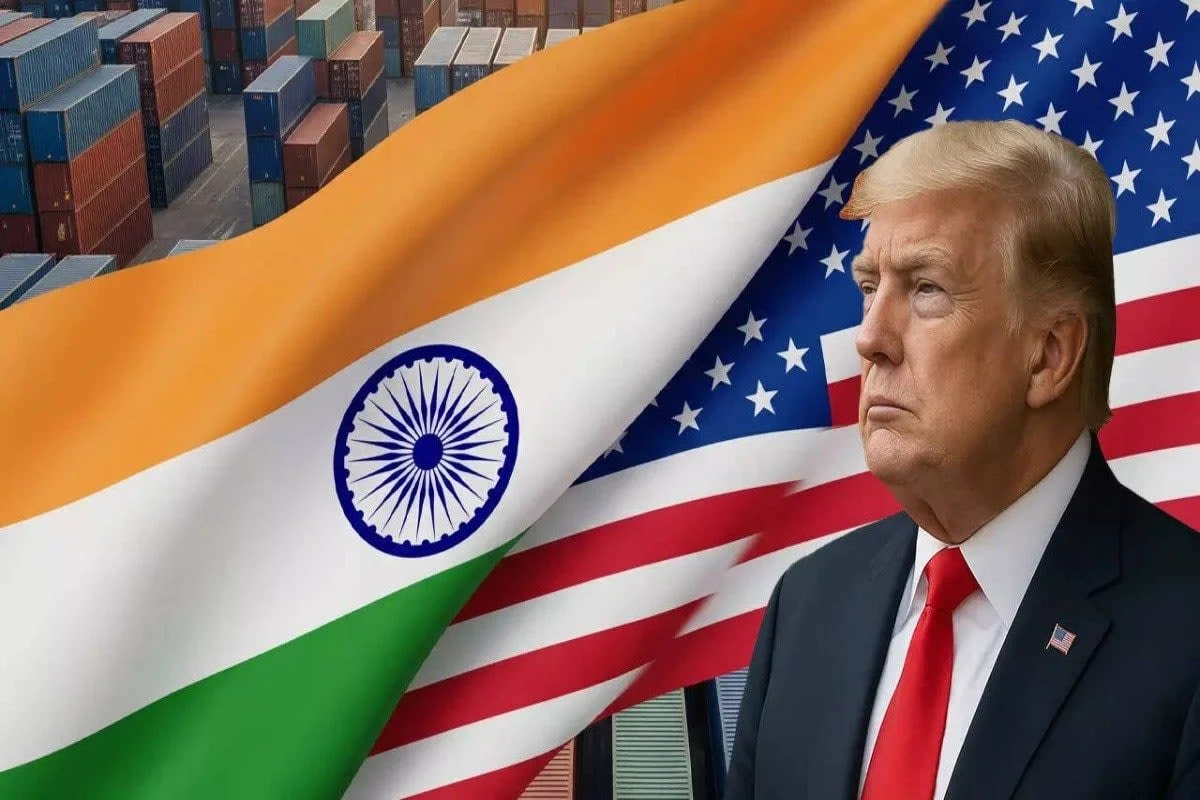
From 2020 to 2025, trade tensions between India and the United States steadily escalated into a tariff conflict. Washington accused New Delhi of keeping taxes and rules stacked against American exporters, while India argued that its tariffs were both legal under WTO rules and necessary to protect its farmers and industries. By 2025, the U.S. responded with sweeping 50% duties on most Indian goods, opening a new chapter in one of the world’s most important trade relationships.
Tiers of Trade Taxes
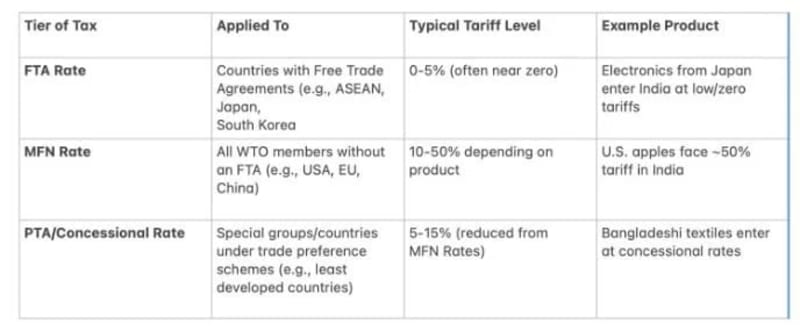
Not all countries face the same taxes when they sell to India. Close partners with Free Trade Agreements (like Japan and ASEAN) often pay close to zero duties, giving them a head start. Others, including the United States, fall under the “Most Favored Nation” bracket, where tariffs run from 10% to 50% depending on the product. That difference alone means an ASEAN apple might enter almost duty-free, while an American apple gets slapped with a 50% charge.
Tier of Tax Applied To Typical Tariff Level Example Product
FTA Rate Countries with Free Trade Agreements (e.g., ASEAN, Japan, South Korea) 0–5% (often near zero) Electronics from Japan enter India at low/zero tariffs
MFN Rate All WTO members without an FTA (e.g., USA, EU, China) 10–50% depending on product U.S. apples face ~50% tariff in India
PTA/Concessional Rate Special groups/countries under trade preference schemes (e.g., Least Developed Countries) 5–15% (reduced from MFN rates) Bangladeshi textiles enter at concessional rates
India’s Top Trade Partners: FTA vs. Non-FTA
Curiously, India’s biggest trade partners-the U.S., the European Union, and China-aren’t part of any trade pact with it. Instead, India gives special treatment to smaller Asian partners like Japan, South Korea, and ASEAN. That means America sells more to India overall, but it does so at a disadvantage compared to these neighbors, who enjoy tariff cuts and smoother market access.
Why the U.S. and India Differ on Tariffs
The U.S. is a manufacturing powerhouse: automated factories, vast capital, and global supply chains allow American companies to churn out goods faster and cheaper. India, by contrast, still depends heavily on manual labor and smaller production units. That’s why India shields its farmers and small industries with tariffs-it cannot compete head-to-head on price alone.
Think of it like two friends: one wealthy, with a steady income, who can easily afford to buy gifts. The other earns modestly and has to budget carefully. If the richer friend expects equal favors in return, the balance becomes unrealistic. India sees itself in that second role, trying to protect livelihoods while still keeping the friendship alive.
Swipe/scroll sideways to view images
Why No U.S.–India FTA
For years, negotiators have circled the same table without landing a deal. Washington wants its farm and tech goods to flow into India with minimal barriers. New Delhi pushes back, fearing that cheap American imports could devastate millions of small farmers and local producers. Add in disputes over digital trade rules, tariffs on manufactured goods, and intellectual property rights, and the talks stall. Both sides agree on the value of a partnership-but neither is ready to make the compromises that a full Free Trade Agreement would demand.
The U.S. sees bias. India sees survival. In truth, India’s tariff walls aren’t aimed at America alone-they’re part of a broader strategy to protect farmers, workers, and fragile industries. By leaving Washington outside its circle of free-trade partners, however, India does put U.S. exporters at a disadvantage.
In 2025, the dispute is less about geopolitics and more about reciprocity. Washington wants equal access, while New Delhi insists on defending its farmers and small producers. Some progress has been made-sectoral exemptions now allow billions in Indian exports of pharmaceuticals and electronics to flow more freely-but these “mini-deals” fall far short of a comprehensive agreement.
The question is whether two unequal partners can find middle ground. Until India lowers its barriers or the U.S. accepts phased, sector-by-sector deals, the trade friendship will remain warm in words but strained in practice. A full Free Trade Agreement still looks distant.