Remembering Qamar Ahmed: A Lifetime Dedicated to Cricket
Editorial desk - JUN 27, 2026
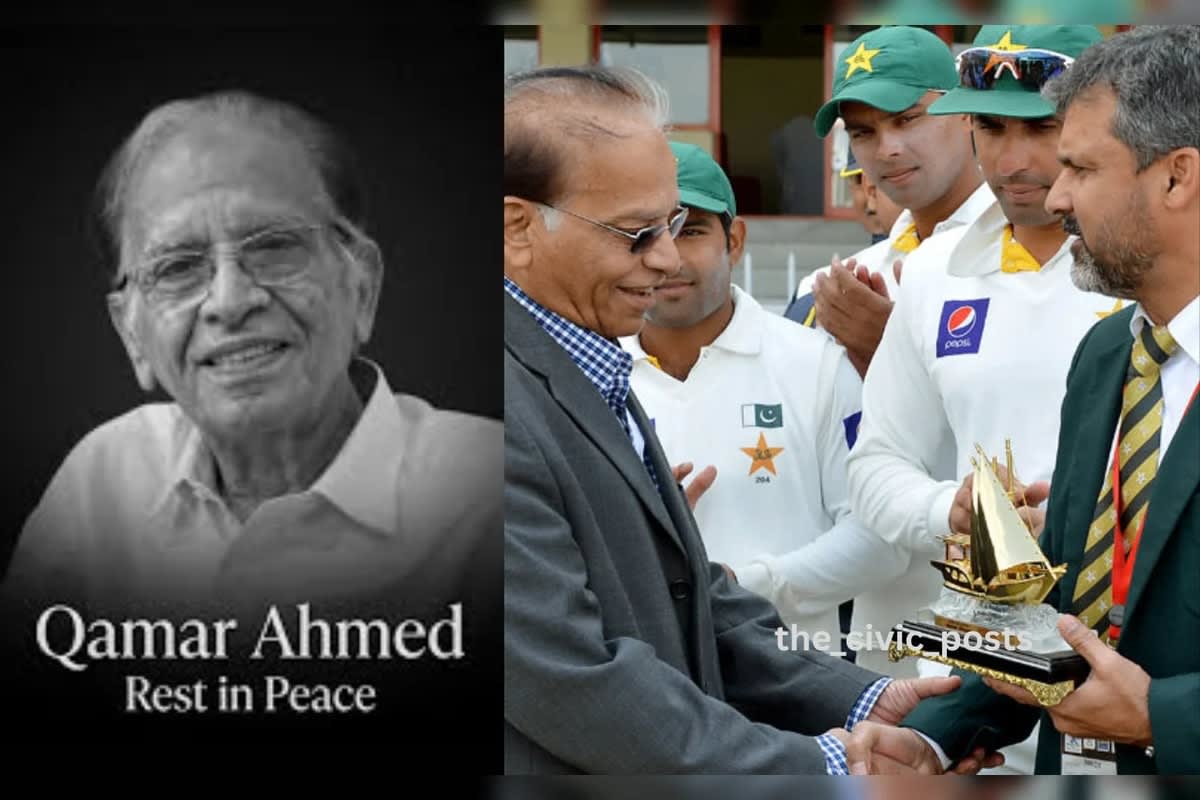
The landscape of modern sports journalism was built on the shoulders of individuals who relied not on social media algorithms or instant digital metrics, but on the power of the written word, sharp observation, and deep relationships. The formal retirement of Qamar Ahmed-frequently heralded as one of the most distinctive and enduring voices in cricket journalism-marks the conclusion of an extraordinary era.
Over a career spanning more than four decades, Ahmed became a permanent fixture in media boxes worldwide, reporting from virtually every corner of the cricketing globe. His departure from the press box is not simply the retirement of an individual writer; it is a farewell to a classical form of sports documentation that valued nuance, human connection, and a lifelong devotion to the game.
Qamar Ahmed’s deep understanding of cricket was rooted in his personal experience as a competitor. Long before he ever picked up a journalist’s notebook, he was an active player, developing a tactical appreciation for the game's subtleties on the domestic circuits of Pakistan.
As a left-arm spinner, Ahmed played first-class cricket during the 1950s and 1960s, a formative period that allowed him to share locker rooms and competitive spaces with some of the founding legends of Pakistani cricket. This firsthand experience on the pitch provided him with an invaluable asset when he transitioned into media: he did not view the game merely as an external spectator, but as an insider who understood the physical, psychological, and strategic pressures facing the players.
When he transitioned to full-time journalism, Ahmed chose to base himself in the United Kingdom, a move that allowed him to act as an essential bridge between Eastern and Western cricket cultures. Working as a freelance correspondent, his reports found a home in some of the most respected publications across the globe, including The Times, The Telegraph, The Guardian, and prominent South Asian outlets like Dawn. His analytical writing style was defined by absolute clarity, historical perspective, and a refusal to indulge in the sensationalism that began to dominate sports media toward the turn of the century.
To understand the scale of Qamar Ahmed’s career is to look at the sheer evolution of international cricket itself. When he first began filing match reports, Test cricket remained the undisputed pinnacle of the sport. Matches were covered by journalists who traveled together by train or ship, typed out their copy on manual typewriters, and transmitted their stories back to foreign editors via telegraph or early telex machines.
Ahmed was a constant observer through every major structural shift the sport underwent: the birth and commercial explosion of One-Day Internationals, the emergence of day-night fixtures, the introduction of colorful clothing, and eventually, the fast-paced revolution of Twenty20 cricket and global franchise leagues.
Throughout this massive commercialization, Ahmed remained fiercely loyal to the foundational traditions of the game. While he adapted to changing technologies and shifting editorial demands, his core approach to match analysis never wavered. He focused heavily on the technical battles between batsman and bowler, the strategic employment of field placements, and the psychological fortitude required to survive a grueling five-day Test match. This adherence to classical principles earned him the deep respect of multiple generations of players, who recognized him as a writer of integrity who evaluated their performances with fairness rather than looking for cheap headlines.
In an era before specialized public relations teams, media managers, and closed-door training sessions isolated athletes from the press, sports journalism thrived on direct interaction. Qamar Ahmed was a master of cultivating organic, lifelong relationships across the international cricket community. His status as a former player, combined with his gentlemanly demeanor, granted him access to inner circles that modern journalists can rarely access. Ahmed was on a first-name basis with legendary icons ranging from Sir Garfield Sobers, Imran Khan, and Sir Viv Richards to Sunil Gavaskar and Sachin Tendulkar.
These relationships were built entirely on a foundation of mutual trust. Players knew they could speak to Ahmed candidly without the fear that their private reflections would be sensationalized or stripped of context for transactional clickbait. This high level of trust allowed Ahmed to infuse his reporting with deep, behind-the-scenes insights, offering readers a highly authentic understanding of team dynamics, locker-room morale, and the human elements behind historic victories and defeats.
The sheer volume of Ahmed's career milestones is staggering. He covered hundreds of Test matches and hundreds of One-Day Internationals, spanning multiple ICC World Cups. His passport became a testament to his nomadic life as a cricket romantic, tracking the sport from the traditional, historic grounds of Lord's and the Melbourne Cricket Ground to emerging frontiers in the United Arab Emirates, the Caribbean, and various outposts across the African continent.
His presence in the press box was so continuous that he became as much a part of the touring experience as the teams themselves. For young journalists entering the media center for the first time, Ahmed functioned as an approachable mentor and a living archive. He was always willing to share historical context, clarify a technical detail, or recount a colorful anecdote from a match played decades earlier. His retirement represents the departure of an essential institutional memory bank, leaving behind a void that cannot be easily filled by data-driven algorithms or modern infographics.
As Qamar Ahmed steps away from active sports reporting, his farewell prompts a reflection on the changing values of sports media. Today's fast-paced digital environment frequently prioritizes speed over accuracy, hot-takes over measured analysis, and controversy over sporting merit. Ahmed’s life's work stands as a powerful reminder that sports writing can be a dignified, analytical art form rooted in respect for the game and those who play it.
His retirement marks a closing chapter on the golden age of print journalism, where the traveler with a typewriter served as the sole window through which millions of fans experienced the drama of an overseas tour. While the platforms through which we consume cricket will continue to evolve, the standards of integrity, technical appreciation, and global fellowship that Qamar Ahmed championed will remain the ideal benchmark for sports storytelling. The global cricket community owes a profound debt to this quiet, enduring voice who mapped the contours of the game with absolute devotion.