Telangana's 16-Bank Alliance Strengthens Financial Protection for Public Servants
Alekhya Kota - JUN 26, 2026

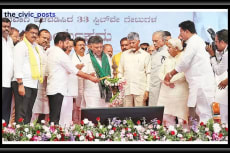
The Government of Telangana has established a landmark social security measure by entering into official agreements with 16 banking institutions. This statewide initiative introduces an extensive, premium-free accident and life insurance framework tailored exclusively for state public servants, administrative staff, and retired personnel. Spearheaded by Chief Minister A. Revanth Reddy and Deputy Chief Minister Mallu Bhatti Vikramarka, the formal signing of these Memorandums of Understanding (MoUs) signals a major evolution in how employee welfare is managed at the state level.
By utilizing existing banking partnerships that manage institutional salary and pension disbursements, the state government has designed a protective financial umbrella that covers serving employees, temporary staff, and senior citizens without placing any financial burden on the beneficiaries themselves.
The core philosophy of this newly launched initiative centers on total state-backed protection. Unlike conventional corporate or public group insurance schemes that deduct monthly premiums from an individual’s earnings, this program is entirely free for the workforce. The financial liabilities and institutional arrangements are directly handled between the state apparatus and the 16 participating commercial banks.
The policy framework distinguishes between different types of risk, providing layered compensation packages based on the nature of the event. Serving government personnel and pensioners are granted standard financial protection ranging from ₹1.20 crore to ₹1.50 crore. This extensive package covers accidental deaths and total permanent disabilities, ensuring that an unexpected tragedy does not pull a family into immediate financial ruin.
Recognizing the risks associated with modern transit and official travel, the policy also includes a dedicated air accident insurance tier. In the event of a fatal aviation mishap, the bank-backed compensation elevates significantly, ranging between ₹2 crore and ₹3 crore. A defining feature of this policy is its universal application across the state’s workforce hierarchy.
The security net extends past regular, permanent government officers to include contract workers, outsourced staff, and temporary employees who often find themselves excluded from legacy state welfare benefits. This inclusive approach ensures that every layer of the state's administrative machinery is protected, regardless of employment status.
A major bottleneck of historical insurance programs has been the bureaucratic delay associated with verifying claims and transferring capital to grieving families. The Telangana administration has bypassed this logistical challenge by directly integrating the insurance coverage with the employees' official salary and pension accounts.
Because the 16 selected banks already host the individual transactional accounts of the state's workforce, the tracking, registration, and identification of beneficiaries occur automatically. The State Project Management Unit, working alongside the Finance Department, has created an integrated corporate clearance model.
Should an unfortunate event occur, the nominee or immediate family members can claim the designated financial compensation directly through the bank handling the deceased individual's salary account. This approach eliminates unnecessary intermediaries, reduces administrative paperwork, and provides rapid relief during critical emergencies, giving families immediate support when they need it most.
During the formal launch ceremony, Chief Minister Revanth Reddy highlighted the sociological obligations of an employer, stating that a progressive government must actively stand by the individuals who dedicate their lives to executing public policy. The introduction of this universal insurance model yields several distinct advantages for the state's administrative ecosystem.
For mid-level, contract, or outsourced workers, securing a commercial life insurance policy with a valuation exceeding ₹1 crore requires substantial monthly premium payments. By transforming this asset into a free, automated job benefit, the government effectively supplements the real income of its lowest-earning employees, shielding them from predatory private insurance markets.
Furthermore, a secure workforce is inherently a more productive one. With a guaranteed financial cushion established for their households, government employees can execute their administrative tasks with peace of mind.
In tandem with launching this welfare safety net, the Chief Minister urged state workers to dedicate an extra hour of focused effort daily to plug existing tax leakages, curb evasion, and bolster state revenue collections. The government intends to redirect the resulting financial gains directly into expanding further employee-centric welfare amenities.
By keeping pensioners fully integrated into the insurance network post-retirement, the state acknowledges the lifelong contributions of its retired workforce. This long-term security measure offers peace of mind to elderly individuals, ensuring that their families are protected against sudden financial shocks during their golden years.
The finalization of these MoUs with 16 major banks highlights Telangana's commitment to modernization and social equity. While earlier regimes frequently faced internal financial constraints that delayed salary payments and retirement benefits, the current administration has streamlined its cash flows.
Ensuring that employee remuneration is credited reliably on the first day of every month, alongside establishing this zero-cost insurance infrastructure, marks a positive transition in public sector human resource management. The state has effectively used its collective bargaining power, derived from managing massive salary accounts, to negotiate terms that benefit the common worker rather than the financial institutions.
Ultimately, this initiative positions the state government not just as a standard administrative employer, but as an active guardian of its workforce. By using the collective bargaining power of state deposits to negotiate premium-free, high-value insurance policies from commercial banks, Telangana has demonstrated how financial infrastructure can be utilized for deep social welfare.
This historic initiative sets a powerful baseline for employee security, proving that public service can be human-centric, economically stable, and highly protective. It creates a blueprint for other states to follow, showing that protecting public servants does not require complex deductions or bureaucratic hurdles, but simply a willingness to innovate within the existing financial framework.