Why Fitness Experts Are Recommending New Kettlebell Workouts
Kranthi Shekar - JUN 25, 2026
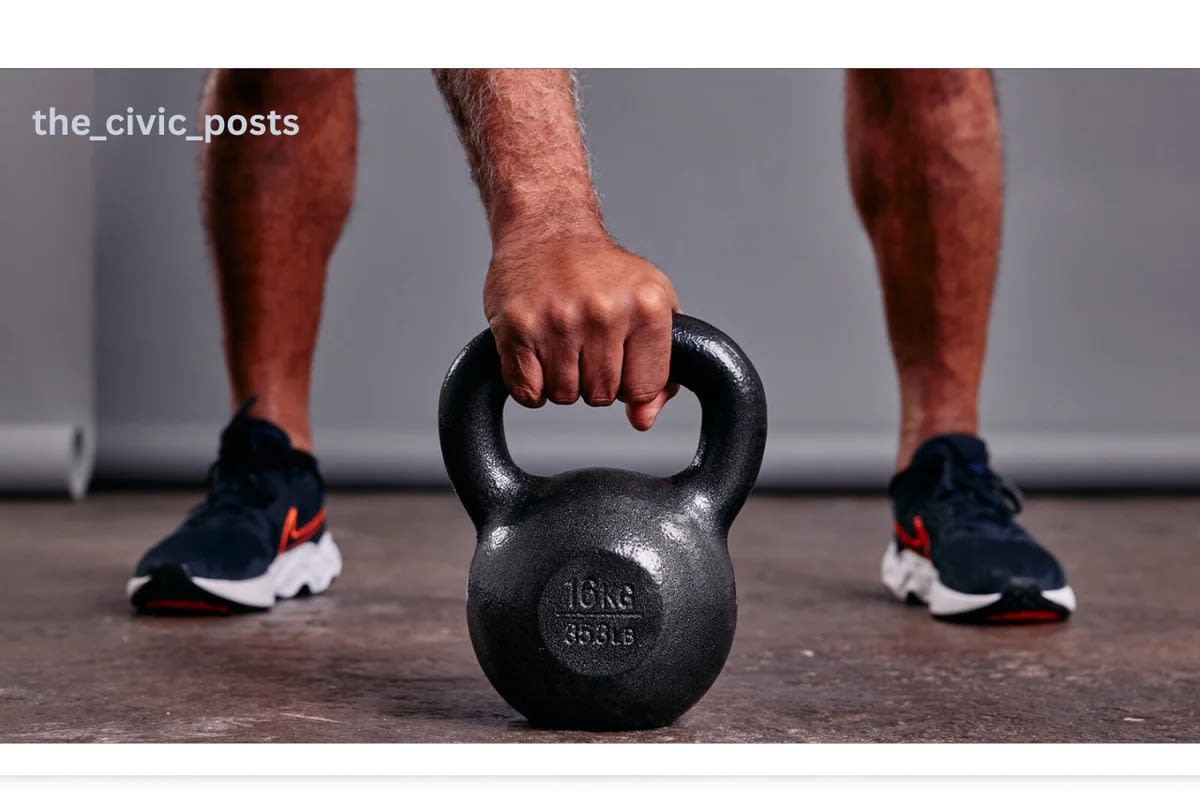
When most people pick up a kettlebell, they default straight to the classic swing. While the swing is a phenomenal, power-generating movement for the glutes and hamstrings, it is just the tip of the iceberg.
Branching out into lesser-known variations can transform a repetitive training routine into a highly effective, functional, full-body workout. By introducing unique planes of motion, destabilizing forces, and challenging grip angles, unconventional exercises build foundational strength, raw power, and deep joint stability.
One of the most effective ways to challenge your body is through the bottoms-up kettlebell carry. This is a massive test of grip strength and upper-body stability. Instead of holding the kettlebell by the handle with the heavy bell hanging below your hand, you flip it completely upside down.
The large, heavy spherical base balances precariously directly above your fist. When the weight is flipped upside down, its center of gravity shifts drastically. To keep it from tipping over, your nervous system fires heavily across your forearm, biceps, and shoulder complex. It forces your rotator cuff muscles to lock down and stabilize the shoulder joint. If your wrist bends or your shoulder slips out of a packed, neutral position, the bell will instantly flop over. It acts as a self-correcting exercise because bad form simply isn't an option.
To perform it, clean a light kettlebell up to your chest, but ensure it lands upside down in your hand. Your wrist must be perfectly straight and vertical, your elbow tucked tightly toward your ribs, and your fist at roughly chest height. Squeeze the handle tightly, thinking about crushing the steel with your fingers. Keep your shoulder blades pulled down and back in a packed shoulder position. Walk forward slowly with short, deliberate steps, maintaining absolute vertical alignment with your forearm. Aim for 3 sets of 30 to 50 feet per arm.
Another powerful tool for the core is the around-the-world pass, sometimes called an orbital rotation. The around-the-world pass looks simple from the outside, but it is an outstanding dynamic core stabilization movement. It requires you to pass the kettlebell smoothly from hand to hand in a continuous circle around your waist. As the heavy bell orbits your body, its weight constantly pulls you off balance. When the bell is in front of you, your lower back must fire to prevent you from bending forward. As it swings behind you, your lower abs and deep core must lock down to prevent your spine from arching.
This movement builds anti-rotation strength, teaching your core to resist external forces and stabilize your spine while your extremities are in motion. To execute this move, stand tall with your feet placed shoulder-width apart, holding the kettlebell by the handle in front of your thighs with one hand. Keeping your torso perfectly upright and stiff, swing the bell around your hip toward your back. Reach behind your lower back with your empty hand to smoothly take over the handle, continuing the circle around to the front. Keep your hips locked in place and do not let your torso twist or sway side-to-side with the momentum of the bell. Perform 10 to 12 rotations in one direction, then immediately reverse the direction for another 10 to 12 reps.
For lower body and lateral core strength, you can integrate the kettlebell suitcase deadlift. Most lifters are familiar with traditional barbell deadlifts, but standard deadlifts lock you into a fixed, symmetrical plane of motion. The suitcase deadlift places a single kettlebell right outside one of your feet, mimicking how you would pick up a heavy suitcase or grocery bag from the ground. Because the heavy weight is entirely on one side of your body, it threatens to pull your torso into a lateral tilt. To counter this asymmetry, your obliques, quadratus lumborum (a deep lower back muscle), and glute medius on the opposite side must contract intensely to keep your spine straight.
This builds immense lateral spinal stability and unilateral hip strength, correcting strength imbalances between your left and right sides. To do this, place a kettlebell on the floor right alongside the outside of your right foot. Stand with your feet hip-width apart and your shoulders square. Hinge at your hips by pushing your glutes back and bending your knees slightly until your right hand reaches the handle. Grip the handle tightly while keeping your left arm extended out to the side or tightly fisted to build tension.
Drive hard through both feet to stand up completely straight. Focus on keeping your shoulders and hips perfectly level, as if you were picking up weight with both hands. Hinge back down under control until the bell rests lightly on the floor. Perform 8 to 10 reps on one side, then switch the bell to the left foot.
Finally, you can address upper body mobility with the half-kneeling kettlebell halo. The halo is a multi-planar mobility and stability drill that targets the shoulder girdle and the deep muscular structures of your core. Performing it from a half-kneeling position increases the difficulty by taking your lower legs out of the equation. Circling a weight closely around your head requires a blend of shoulder flexibility and stability.
By dropping down into a half-kneeling setup with one knee down and one foot forward, you narrow your base of support. This forces your glutes, pelvic floor, and deep abdominal wall to lock into place to prevent you from tipping over while your shoulders guide the bell through its circular path. Drop down into a half-kneeling position with your right knee on the floor and your left foot flat in front of you, keeping both knees bent at 90-degree angles. Hold a kettlebell upside down by the vertical horns of the handle close to your chest.
Begin moving the bell in a tight circle around your head. Bring the base of the kettlebell upside down behind your neck, clear your opposite shoulder, and return to the starting position at your chest. Keep your elbows tucked reasonably close to your body throughout the circle and do not let them flare excessively. Complete 6 to 8 rotations in one direction, switch your kneeling legs, and perform 6 to 8 rotations in the opposite direction.
Instead of using these as random add-ons, you can combine them into a comprehensive strength and stability circuit. This layout ensures you target every major muscle group while challenging your balance, core, and grip.
Start with the suitcase deadlift for 3 sets of 8 to 10 reps per side to engage your glutes, hamstrings, and obliques. Move immediately into the bottoms-up carry for 3 sets of 40 feet per side to challenge your grip strength and rotator cuff. Next, perform the around-the-world pass for 3 sets of 12 reps per direction to build anti-rotation core stability.
Finish the circuit with the half-kneeling halo for 3 sets of 8 reps per direction to improve shoulder mobility and pelvic stability. Rest for 60 to 90 seconds between exercises and run through the entire circuit three times for an efficient, joints-first training session that builds real-world resilience.