Is Ananthan Kaadu More Than Just Another Revenge Thriller?
Editorial desk - JUN 25, 2026
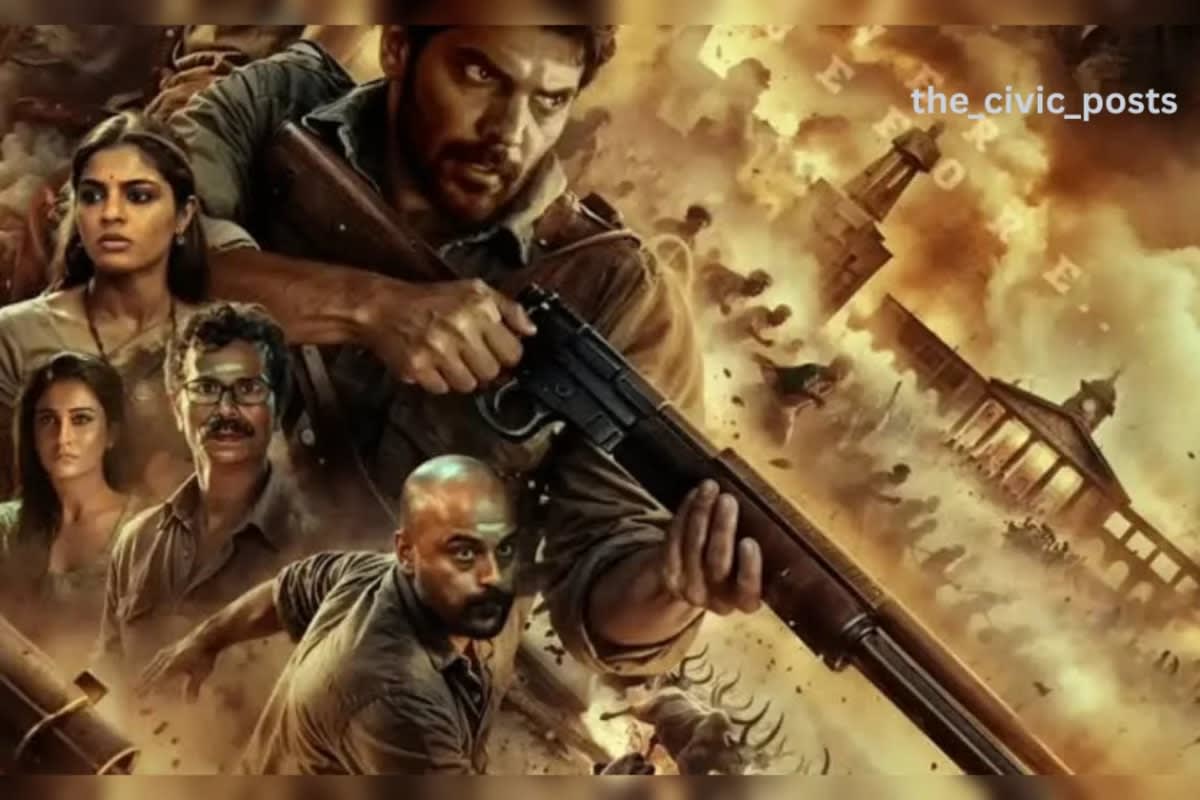
When evaluating cinema that attempts to bridge profound historical trauma with contemporary political intrigue, directors often face the monumental challenge of maintaining a steady narrative compass. Jiyen Krishnakumar's cinematic venture aims for this ambitious narrative intersection. The film attempts to weave together the deep, lingering scars of international conflict with the gritty realities of regional power struggles and systemic exploitation.
However, what begins as a gripping exploration of survival and identity eventually fragments into an overly complex maze of narrative branches. By trying to cover an immense amount of thematic ground all at once, the production loses its central focus, turning what could have been a sharp, impactful political drama into a disorganized story overwhelmed by its own excessive structural layers.
The narrative foundation is established against a heavy historical backdrop, initially taking the audience back to the harrowing realities of the 1989 Sri Lankan civil war. In these early sequences, the film pulls no punches in depicting the brutal realities of war, highlighting the immense suffering, displacement, and systemic violence experienced by civilians and rebel factions alike.
It is within this chaotic landscape that we are introduced to Vetri, a resilient rebel fighter who experiences devastating personal loss when his entire family is killed during a military ambush. Forced to flee the bloodshed of his homeland, Vetri escapes across the ocean to seek refuge in the coastal state of Kerala, adopting a hidden identity to survive in an entirely unfamiliar environment.
Upon his arrival in India, Vetri's path crosses with an eccentric and tight-knit local group led by an aging figure named Krishnan Kutty. On the surface, this group operates a seemingly harmless traveling music troupe, traveling from venue to venue to entertain crowds.
In reality, this musical endeavor serves as a highly organized front for their true profession: operating as a covert cell of mercenaries who carry out high-stakes operations for the state’s powerful Chief Minister, KK Menon. Recognizing Vetri’s combat skills and desperate need for anonymity, Krishnan Kutty takes the refugee under his wing, integrating him into their secretive lifestyle.
The main plot begins to move forward when the Chief Minister commands the group to execute one final, highly sensitive assignment. Despite initial hesitation and internal conflicts within the crew regarding the dangerous nature of the job, the mercenaries accept the mission, relying on Vetri's tactical expertise to help carry it out. Predictably, the operation does not go according to plan, triggering an immediate chain reaction of betrayal, political retaliation, and chaotic violence that threatens to destroy everyone involved.
From a structural standpoint, the film exhibits a sharp divide in narrative tension and atmospheric control. The introductory segments are arguably the most compelling, utilizing a non-linear framework that shifts from a shocking, high-stakes incident involving a severed limb at a wedding in Goa, back to the dark, tense battlegrounds of wartime Sri Lanka. During these initial phases, the storytelling remains focused, successfully engaging the audience through a mix of visceral tension and genuine emotional stakes.
The problems begin to emerge once the setting settles firmly into the domestic political landscape of Kerala. As the story transitions into familiar territory involving political scheming and backstabbing, the uniqueness of the premise begins to fade. Instead of exploring the deep psychological scars of war or the complex mechanics of state-level corruption, the script begins to rely heavily on standard tropes regarding brotherly bonds within criminal syndicates.
The primary flaw dragging down the production is an inability to exercise narrative restraint. Rather than fine-tuning the central conflict between the mercenaries, the vengeful refugee, and the corrupt politicians, the screenplay continuously introduces secondary elements that add very little value to the core story. The film attempts to juggle at least three major subplots simultaneously, before arbitrarily tossing in an unnecessary romantic angle and an overly dramatic, tragic backstory for a minor character.
This lack of narrative focus is perfectly illustrated by a jarring sequence featuring an unexpected item song where guest actors perform a highly stylized dance routine within the context of the movie. While the creative team may have intended for these multi-layered diversions to provide greater world-building or thematic depth, the actual result is a severely bloated narrative that suffocates the primary storyline, making it incredibly difficult for the film to regain its momentum.
Visually and tonally, the creative choices made throughout the project have sparked significant debate. The depiction of violence leans heavily into graphic, borderline exhibitionist territory, with prolonged sequences of torture, military ambushes, and physical mutilation that feel intentionally designed to shock the viewer rather than serve a clear narrative purpose.
This intense visual approach is unfortunately amplified by an overwhelming musical score. The background music frequently forces emotional cues onto the audience with excessive volume, rather than allowing the actors' performances or the tension of the scene to naturally create an atmosphere.
Despite the structural issues plaguing the script, the ensemble cast delivers remarkably committed performances across the board. The lead actor steps into the role of the traumatized yet lethal rebel commander with intense physical commitment and genuine emotional vulnerability, handling both the demanding action sequences and the quieter moments of grief with equal skill. The supporting cast members, embodying the calculating Chief Minister, the seasoned mercenary leader, and various secondary figures, bring a high level of professionalism and gravitas to their respective roles.
Their performances frequently elevate the dialogue, keeping the audience invested in the characters' fates even when the overarching plot becomes increasingly tangled and hard to follow.
Ultimately, the project serves as a clear reminder of the dangers of over-ambitious storytelling in commercial cinema. The film possessed all the necessary components to become a standout political thriller: a compelling historical connection, a unique cultural crossover between refugee survival and local mercenary operations, and a talented cast capable of handling heavy dramatic material.
By refusing to trim away non-essential subplots, comedic diversions, and unnecessary musical breaks, the final product compromises its own artistic potential. It stands as a watchable but ultimately frustrated theatrical experience that tries to achieve far too much, ultimately getting buried under the weight of its own structural excess.