From Disappearance to Murder Case: The Andhra Pradesh Incident Gripping Public Attention
Alekhya Kota - JUN 20, 2026
The unfolding investigation into the mysterious disappearance of Gade Sai Krishna, an individual officially classified as a rowdy-sheeter, has rapidly escalated into a highly sensitive legal and political crisis in Andhra Pradesh. The situation took an incredibly serious turn on a Friday when law enforcement authorities formally initiated a major criminal case against a suspended high-ranking officer, Circle Inspector SSV Nagaraju.
Rather than treating the matter merely as a standard missing person inquiry, the Krishna Lanka police station officially filed charges that carry profound institutional implications. The legal action includes accusations under multiple stringent sections of the newly implemented Bharatiya Nyaya Sanhita, shifting the primary focus of the entire operation into a fully realized homicide investigation.
The specific legal provisions invoked against the suspended Circle Inspector paint a grim picture of the allegations currently under the microscope. The police applied Section 103(1), which explicitly deals with the severe punishment mandated for the crime of murder. Alongside this primary charge, the authorities also included Section 127(4) and Section 127(6). These specific components of the legal code address crimes involving the wrongful confinement of an individual for an extended duration exceeding ten days, as well as the deliberate act of holding someone in secret, unauthorized custody.
The gravity of these combined charges underscores the growing suspicion that state actors may have stepped far outside the boundaries of the law, turning an official law enforcement facility into a site of unauthorized and highly dangerous detention.
To ensure a meticulous and objective examination of the circumstances, a specialized administrative structure was quickly established. The Assistant Commissioner of Police for the Mahila Police Station, Daivaprasad, was formally designated as the primary investigating officer leading the charge. Recognizing that a thorough investigation requires immediate fieldwork, the Assistant Commissioner personally visited the residential home of the missing individual.
During this visit, the officer conducted extensive interviews and formally recorded detailed statements from Sai Krishna’s mother, Gade Vijayalakshmi, as well as other immediate family members who have been living under immense distress. Simultaneously, the technical side of the investigation was kicked into high gear with the arrival of a specialized three-member forensic examination team. This forensic unit immediately began a exhaustive sweep of the Krishna Lanka police station, meticulously gathering physical and scientific evidence that could shed light on exactly what transpired within those walls before the individual's trace was completely lost.
The depth of the investigation extended beyond localized station staff, reaching deeper into the upper echelons of the regional law enforcement hierarchy. In a highly significant developmental step, a senior administrative figure, Additional Deputy Commissioner of Police K. Latha Kumari, who oversees the Commissioner’s Task Force, was officially called in for extensive questioning.
This session took place directly at the Krishna Lanka police station, where she appeared before the leading Assistant Commissioner. The justification for summoning a high-profile official stems from critical operational intelligence indicating that the specialized Task Force had actively taken custody of Sai Krishna and subjected him to intense interrogation after tracking him down and transporting him from the town of Markapuram on the ninth of May.
The interrogation of the Additional Deputy Commissioner was neither brief nor superficial, reportedly stretching continuously for nearly five full hours. During this extensive session, investigators focused squarely on establishing a definitive timeline and operational chain of custody. They demanded precise clarifications regarding the exact moment Sai Krishna was brought into the city limits of Vijayawada, the specific identities of the personnel assigned to execute the transport, and the fundamental administrative justification for bringing him to the city in the first place.
Seeking to prevent any tampering with crucial digital evidence, the leading investigator formally demanded the immediate surrender of all digital closed-circuit television recordings from both the specialized Task Force facility located in Labbipet and the Krishna Lanka police station, spanning a vast window from the ninth of May all the way through the eighteenth of June. Furthermore, the investigation team has explicitly requested the comprehensive roster records of every single police officer who was active and on duty during those specific dates, indicating that a wave of additional summons and interrogations is highly likely to follow in the coming days.
The specific focus on the digital recording infrastructure of the Krishna Lanka facility is a direct response to the persistent and heartbreaking public declarations made by the missing man's mother. She has repeatedly and publicly maintained that her son was physically brought directly into that specific precinct right after his initial apprehension in Markapuram, serving as the final verified location where he was known to be alive.
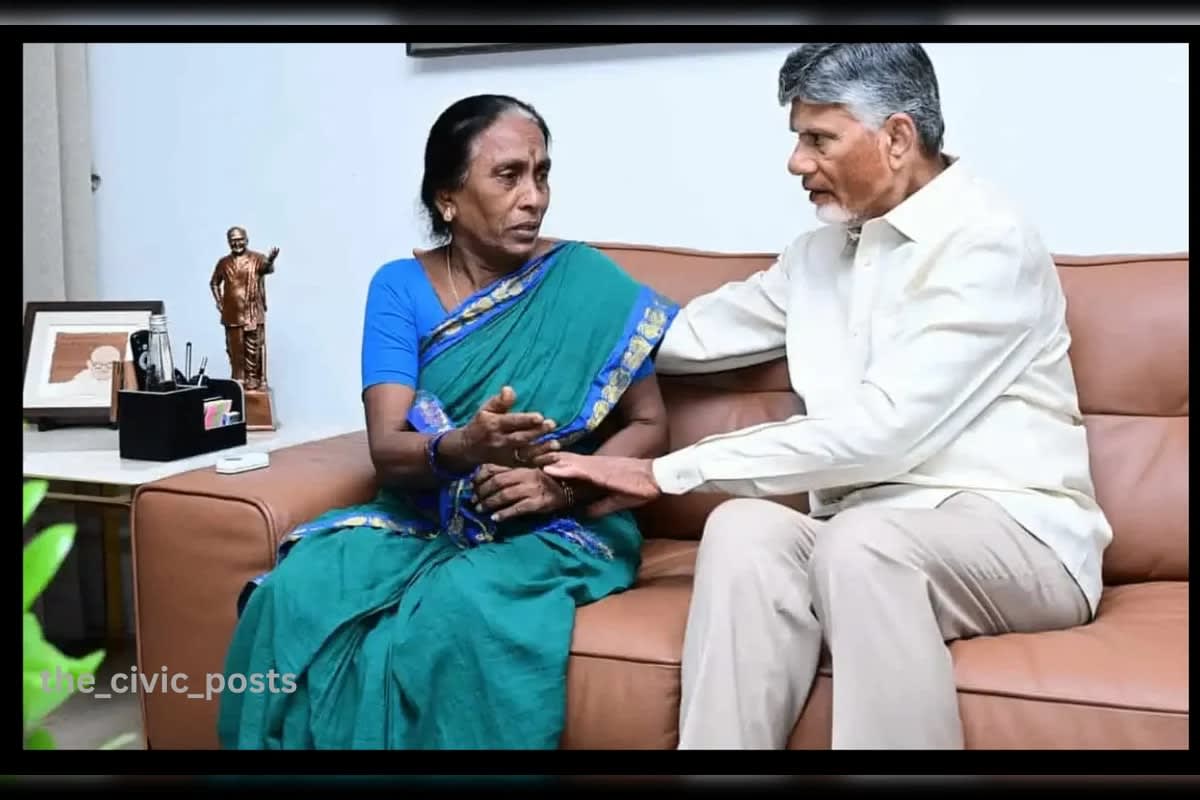
The profound emotional toll of this prolonged uncertainty was visibly on display when the grieving family was granted an official audience with Chief Minister N. Chandrababu Naidu at the leader's official camp office. During this emotional meeting, the family members expressed their sincere gratitude toward the highest levels of the state government for acknowledging the severity of the situation and ensuring that the case was not quietly swept under the rug.
However, the family also made it abundantly clear to the administration that their gratitude would not translate into complacency, asserting their unwavering commitment to a relentless legal battle until absolute clarity and justice are achieved. This resolve is heavily backed by the highest judicial authority in the region, as the Andhra Pradesh High Court has already issued a stern, legally binding mandate to the police department.
The court's explicit directive commands law enforcement officials to physically present Sai Krishna alive before the judicial bench on the upcoming date of June twenty-ninth. Confronted with the terrifying possibility that they may never see him alive again, the family delivered a devastatingly raw and emotional plea to the state authorities, begging that if he is somehow still breathing, he must be brought to the courtroom, but if the absolute worst has already occurred, the state must at the very least return his skeletal remains or ashes so they can find a sense of final closure.
The political ramifications of this unfolding scandal have rapidly spread across the entire state, drawing intense scrutiny from opposing political factions. Former Chief Minister Y.S. Jagan Mohan Reddy has forcefully entered the public discourse, launching a scathing critique against the current administration and openly demanding an immediate, independent inquiry by the Central Bureau of Investigation.
The political opposition is firmly characterizing the incident as an egregious example of a fatal custodial death, utilizing the tragedy to question the broader state of law and order and the safety of citizens within police custody. This immense external pressure has forced senior leadership within the police force to react swiftly, resulting in top-tier commanders personally visiting the local precincts to oversee the initial stages of the inquiry.
Ultimately, this case has evolved far beyond a localized criminal investigation into a defining moment for institutional accountability within the state's justice system.
The coming days will be incredibly critical as forensic teams process their gathered materials, analysts dissect weeks of hard-drive data from precinct security cameras, and the state inches closer to the strict deadline imposed by the High Court.
Whether the system can successfully hold its own officers accountable or if the truth will remain buried beneath layers of bureaucratic shielding remains a deeply troubling question that continues to grip the public consciousness across Andhra Pradesh.