News

NCERT Withdraws Textbook Chapter on Judiciary Corruption and Issues Apology Amidst Criticism

Kranthi Shekar - FEB 26, 2026
Share:
NCERT Withdraws Textbook Chapter on Judiciary Corruption and Issues Apology Amidst Criticism

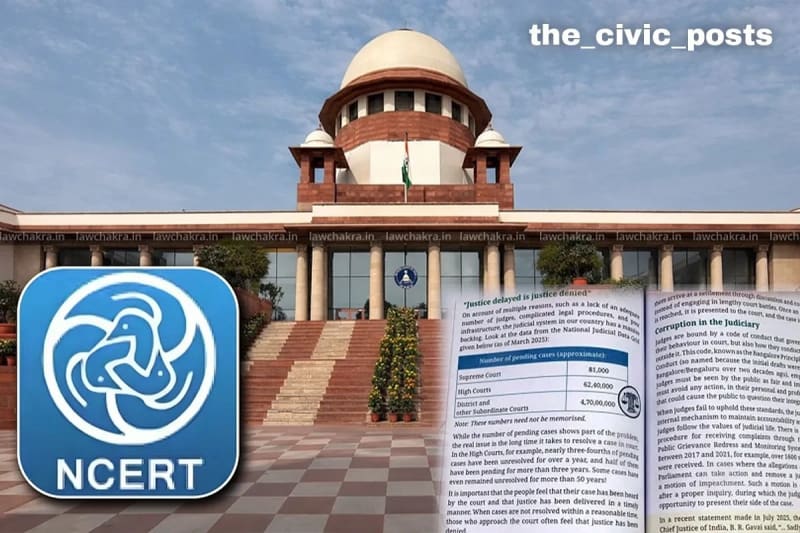
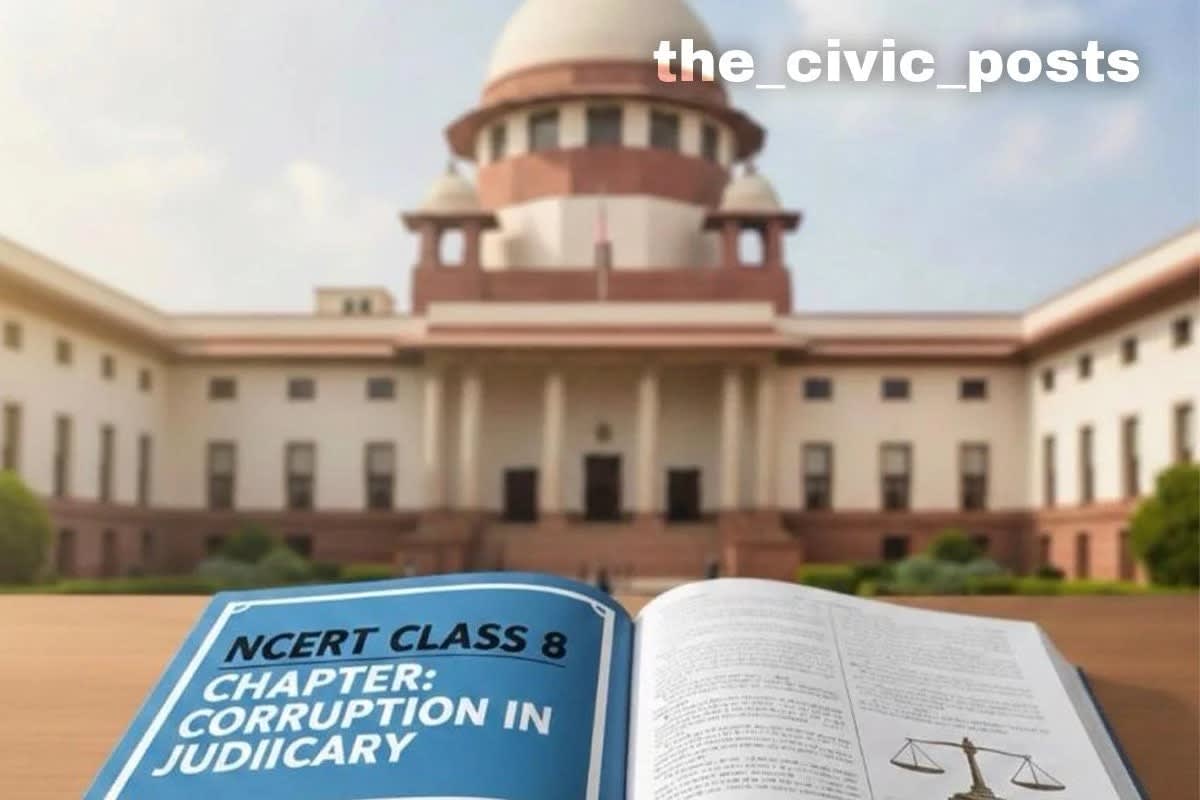
The National Council of Educational Research and Training (NCERT) has taken a noteworthy decision to withdraw a school textbook containing content that referred to corruption within the Indian judiciary. Following objections from legal circles and public debate over the appropriateness of the material for students, NCERT halted the distribution of the book and publicly acknowledged its error, apologising for any misunderstanding the passage may have caused.

This incident has sparked broader discussions about how sensitive topics such as corruption, governance and the role of constitutional institutions should be presented in school curricula. It also highlights the importance of careful content review and clear framing when educational material touches on complex societal issues.

Background: The Textbook Controversy

The issue began when a social science textbook—used in middle or secondary school—included a section that addressed corruption in public life. While educational texts frequently cover themes of ethics and accountability to help students understand the responsibilities of citizens and institutions, the specific wording in this chapter raised concerns.

Critics argued that the passage implied that corruption was widespread or systemic within the Indian judiciary. The judiciary is a key pillar of democracy tasked with upholding the Constitution, administering justice, and protecting the rights of citizens. Any suggestion of endemic corruption, if presented without sufficient context or balanced explanation, can risk shaping simplistic or negative perceptions among young readers.

Once the book circulated and educators, parents and legal observers reviewed its contents, voices of concern began to emerge. Legal professionals and judicial representatives expressed that while corruption is a serious social issue in many sectors of public life, implying similar conduct by the judiciary—without nuanced explanation or substantiation—was inappropriate for a school textbook.

NCERT’s Response: Apology and Withdrawal

In response to this feedback, the NCERT acted swiftly. The council issued a formal apology acknowledging that the inclusion of the contentious passage was not aligned with its intention to present balanced and well-contextualised content to students. NCERT made it clear that the book was not meant to target any institution in a manner that could erode trust or respect for constitutional bodies.

To address the issue, NCERT announced that the distribution of the textbook in question has been stopped immediately. Copies already dispatched to schools are being recalled to prevent further use of the controversial material in classrooms.

The council also emphasised that the decision to withdraw the book reflects its commitment to ensuring that educational resources promote accurate understanding and uphold the dignity of institutions fundamental to democratic functioning.

Revising the Curriculum: Expert Review Underway

Alongside the withdrawal, NCERT stated that it would undertake a comprehensive review of the chapter and possibly the broader textbook. An expert committee comprising educators, subject specialists, curriculum experts and academic reviewers will re-evaluate the content.

The review aims to ensure that future editions present complex themes such as corruption, governance and accountability in a way that is age-appropriate, fact-based and clearly contextualised. Instead of suggesting misconduct within constitutional institutions without explanation, the revamped chapter is expected to introduce broader principles of ethics, public trust, transparency and how different sectors of society are held accountable under law.

Curriculum designers emphasise the need for careful language and framing. Talking about corruption and ethical challenges can be valuable in teaching democratic values, but it must be done without oversimplifying or misrepresenting the functioning of vital institutions like the judiciary.

NCERT Withdraws Textbook Chapter on Judiciary Corruption and Issues Apology Amidst Criticism

Balancing Sensitivity and Education

The textbook episode underscores the delicate balance educational bodies must strike when addressing real-world issues. Education is not just about conveying facts; it is about helping students think critically and understand how society works, including both strengths and challenges.

However, when educational material points to weaknesses or failures in public life, it needs to provide context, historical background, mechanisms of accountability and the safeguards in place to correct such problems. Without these elements, young learners may form skewed impressions that do not reflect the full picture.

For instance, if a chapter addresses corruption in public life, it can focus on universal concepts like how corruption undermines development, why transparency matters, and how citizens and institutions work to prevent wrongdoing. Discussions can also explore how independent systems of checks and balances operate in a democracy, including the role of media, civil society and judicial review.

Response from the Judicial Community and the Public

Following NCERT’s decision, several legal experts and members of the judiciary welcomed the move. They appreciated the council’s willingness to reconsider educational content and the public apology acknowledging the oversight. Many felt that this episode would lead to healthier collaboration between educational authorities and subject-matter experts when dealing with sensitive or complex issues.

Parents, teachers and commentators also weighed in. While many agreed that students should learn about ethical challenges in society, they stressed that such lessons must be structured carefully to encourage informed understanding, not sensational or misleading interpretations.

Some educators saw this as an opportunity to revisit how civics, ethics and social science textbooks are developed and reviewed, suggesting that a wider range of perspectives should be included in the drafting process.

Looking Ahead: Strengthening Educational Content

NCERT’s action has opened a broader conversation about curriculum development and educational responsibility. Schools and teachers now have an example of why timely review and constructive feedback matter. The move also highlights the importance of transparency and responsiveness when stakeholders raise valid concerns about instructional material.

As the review process unfolds and revised textbooks are prepared, the focus is expected to be on presenting topics like governance, ethics, accountability and the functioning of institutions in a way that is clear, accurate and suitable for student comprehension.

Ultimately, the objective is to ensure that students are equipped with a nuanced understanding of how democratic systems work, the challenges they face, and the importance of integrity and public trust—without inadvertently undermining confidence in constitutional frameworks.

More Articles

Recent Articles

Shift to PNG Gains Momentum: LPG Supply May Stop Where Pipeline Gas Exists

Shift to PNG Gains Momentum: LPG Supply May Stop Where Pipeline Gas Exists

Kranthi Shekar - MAR 26, 2026

From Sacrifice to Inspiration: Narayana Speaks on Potti Sriramulu’s Legacy

From Sacrifice to Inspiration: Narayana Speaks on Potti Sriramulu’s Legacy

Kranthi Shekar - MAR 26, 2026

Hyderabad Traffic Diversions Announced for Sri Rama Navami Procession

Hyderabad Traffic Diversions Announced for Sri Rama Navami Procession

Kranthi Shekar - MAR 26, 2026

₹1000 Crore Rampage: Dhurandhar 2 Targets Pushpa 2: The Rule After Historic First Week

₹1000 Crore Rampage: Dhurandhar 2 Targets Pushpa 2: The Rule After Historic First Week

Kranthi Shekar - MAR 26, 2026

Can Ustaad Bhagat Singh Cross ₹100 Crore This Weekend? Box Office Race Gets Intense

Can Ustaad Bhagat Singh Cross ₹100 Crore This Weekend? Box Office Race Gets Intense

Kranthi Shekar - MAR 26, 2026

Fuel Scare in Hyderabad: Panic Buying Leaves Several Petrol Pumps Running Low

Fuel Scare in Hyderabad: Panic Buying Leaves Several Petrol Pumps Running Low

Kranthi Shekar - MAR 26, 2026

A Bitter Victory—South Africa Claims the Decider in a Series Defined by Scheduling Chaos

A Bitter Victory—South Africa Claims the Decider in a Series Defined by Scheduling Chaos

Kranthi Vegesna - MAR 26, 2026

The Multi-Billion Dollar Changing of the Guard: IPL’s New Ownership Era

The Multi-Billion Dollar Changing of the Guard: IPL’s New Ownership Era

Kranthi Vegesna - MAR 26, 2026

Miami Open 2026: Sinner Rewrites the Record Books as the Draw Opens Wide

Miami Open 2026: Sinner Rewrites the Record Books as the Draw Opens Wide

Kranthi Vegesna - MAR 26, 2026

The Fracturing of Peace-The Alarming Normalization of Hate Speech in India

The Fracturing of Peace-The Alarming Normalization of Hate Speech in India

Kranthi Vegesna - MAR 26, 2026

Self-Governance for Dalit Colonies and Lambada Tandas: Decentralization is the Sustainable Solution

Self-Governance for Dalit Colonies and Lambada Tandas: Decentralization is the Sustainable Solution

Kranthi Vegesna - MAR 26, 2026

“India Lockdown Again?” Viral Rumours Spark Panic After PM Modi Speech - Here’s What’s Really Happening

“India Lockdown Again?” Viral Rumours Spark Panic After PM Modi Speech - Here’s What’s Really Happening

Kranthi Shekar - MAR 25, 2026

$350M Crude Deal: Reliance Capitalizes on Temporary US Sanctions Waiver

$350M Crude Deal: Reliance Capitalizes on Temporary US Sanctions Waiver

Kranthi Shekar - MAR 25, 2026

Strength Training: Why India Needs to Re-think Fitness

Strength Training: Why India Needs to Re-think Fitness

Jennifer - MAR 25, 2026

In India, mango isn’t just a fruit-it’s the king of fruits.

In India, mango isn’t just a fruit-it’s the king of fruits.

Prakash Ranganathan - MAR 24, 2026

India Rising Fast, But Global Competition Intensifies: Key Takeaway from Bihar Sports Conclave

India Rising Fast, But Global Competition Intensifies: Key Takeaway from Bihar Sports Conclave

Kranthi Shekar - MAR 24, 2026

Telangana Cabinet Clears Key Bills to Tackle Hate Speech and Strengthen Family Responsibility

Telangana Cabinet Clears Key Bills to Tackle Hate Speech and Strengthen Family Responsibility

Kranthi Shekar - MAR 24, 2026

Iran Launches Missile Strikes on Israel, Rejects Trump’s Negotiation Claims

Iran Launches Missile Strikes on Israel, Rejects Trump’s Negotiation Claims

Kranthi Shekar - MAR 24, 2026

Andhra Pradesh Sets Stage for Industrial Boom with ₹1.36 Lakh Crore Steel Giant

Andhra Pradesh Sets Stage for Industrial Boom with ₹1.36 Lakh Crore Steel Giant

Kranthi Shekar - MAR 24, 2026

The Silent Chimes of the Nandi-Is the Golden Era of Telugu Cinema Awards Fading?

The Silent Chimes of the Nandi-Is the Golden Era of Telugu Cinema Awards Fading?

Kranthi Shekar - MAR 24, 2026

News

NCERT Withdraws Textbook Chapter on Judiciary Corruption and Issues Apology Amidst Criticism

Kranthi Shekar - FEB 26, 2026

Share:
NCERT Withdraws Textbook Chapter on Judiciary Corruption and Issues Apology Amidst Criticism

The National Council of Educational Research and Training (NCERT) has taken a noteworthy decision to withdraw a school textbook containing content that referred to corruption within the Indian judiciary. Following objections from legal circles and public debate over the appropriateness of the material for students, NCERT halted the distribution of the book and publicly acknowledged its error, apologising for any misunderstanding the passage may have caused.

This incident has sparked broader discussions about how sensitive topics such as corruption, governance and the role of constitutional institutions should be presented in school curricula. It also highlights the importance of careful content review and clear framing when educational material touches on complex societal issues.

Background: The Textbook Controversy

The issue began when a social science textbook—used in middle or secondary school—included a section that addressed corruption in public life. While educational texts frequently cover themes of ethics and accountability to help students understand the responsibilities of citizens and institutions, the specific wording in this chapter raised concerns.

Critics argued that the passage implied that corruption was widespread or systemic within the Indian judiciary. The judiciary is a key pillar of democracy tasked with upholding the Constitution, administering justice, and protecting the rights of citizens. Any suggestion of endemic corruption, if presented without sufficient context or balanced explanation, can risk shaping simplistic or negative perceptions among young readers.

Once the book circulated and educators, parents and legal observers reviewed its contents, voices of concern began to emerge. Legal professionals and judicial representatives expressed that while corruption is a serious social issue in many sectors of public life, implying similar conduct by the judiciary—without nuanced explanation or substantiation—was inappropriate for a school textbook.

NCERT’s Response: Apology and Withdrawal

In response to this feedback, the NCERT acted swiftly. The council issued a formal apology acknowledging that the inclusion of the contentious passage was not aligned with its intention to present balanced and well-contextualised content to students. NCERT made it clear that the book was not meant to target any institution in a manner that could erode trust or respect for constitutional bodies.

To address the issue, NCERT announced that the distribution of the textbook in question has been stopped immediately. Copies already dispatched to schools are being recalled to prevent further use of the controversial material in classrooms.

The council also emphasised that the decision to withdraw the book reflects its commitment to ensuring that educational resources promote accurate understanding and uphold the dignity of institutions fundamental to democratic functioning.

Revising the Curriculum: Expert Review Underway

Alongside the withdrawal, NCERT stated that it would undertake a comprehensive review of the chapter and possibly the broader textbook. An expert committee comprising educators, subject specialists, curriculum experts and academic reviewers will re-evaluate the content.

The review aims to ensure that future editions present complex themes such as corruption, governance and accountability in a way that is age-appropriate, fact-based and clearly contextualised. Instead of suggesting misconduct within constitutional institutions without explanation, the revamped chapter is expected to introduce broader principles of ethics, public trust, transparency and how different sectors of society are held accountable under law.

Curriculum designers emphasise the need for careful language and framing. Talking about corruption and ethical challenges can be valuable in teaching democratic values, but it must be done without oversimplifying or misrepresenting the functioning of vital institutions like the judiciary.

NCERT Withdraws Textbook Chapter on Judiciary Corruption and Issues Apology Amidst Criticism

Balancing Sensitivity and Education

The textbook episode underscores the delicate balance educational bodies must strike when addressing real-world issues. Education is not just about conveying facts; it is about helping students think critically and understand how society works, including both strengths and challenges.

However, when educational material points to weaknesses or failures in public life, it needs to provide context, historical background, mechanisms of accountability and the safeguards in place to correct such problems. Without these elements, young learners may form skewed impressions that do not reflect the full picture.

For instance, if a chapter addresses corruption in public life, it can focus on universal concepts like how corruption undermines development, why transparency matters, and how citizens and institutions work to prevent wrongdoing. Discussions can also explore how independent systems of checks and balances operate in a democracy, including the role of media, civil society and judicial review.

Response from the Judicial Community and the Public

Following NCERT’s decision, several legal experts and members of the judiciary welcomed the move. They appreciated the council’s willingness to reconsider educational content and the public apology acknowledging the oversight. Many felt that this episode would lead to healthier collaboration between educational authorities and subject-matter experts when dealing with sensitive or complex issues.

Parents, teachers and commentators also weighed in. While many agreed that students should learn about ethical challenges in society, they stressed that such lessons must be structured carefully to encourage informed understanding, not sensational or misleading interpretations.

Some educators saw this as an opportunity to revisit how civics, ethics and social science textbooks are developed and reviewed, suggesting that a wider range of perspectives should be included in the drafting process.

Looking Ahead: Strengthening Educational Content

NCERT’s action has opened a broader conversation about curriculum development and educational responsibility. Schools and teachers now have an example of why timely review and constructive feedback matter. The move also highlights the importance of transparency and responsiveness when stakeholders raise valid concerns about instructional material.

As the review process unfolds and revised textbooks are prepared, the focus is expected to be on presenting topics like governance, ethics, accountability and the functioning of institutions in a way that is clear, accurate and suitable for student comprehension.

Ultimately, the objective is to ensure that students are equipped with a nuanced understanding of how democratic systems work, the challenges they face, and the importance of integrity and public trust—without inadvertently undermining confidence in constitutional frameworks.

More Articles

Recent Articles

Shift to PNG Gains Momentum: LPG Supply May Stop Where Pipeline Gas Exists

Shift to PNG Gains Momentum: LPG Supply May Stop Where Pipeline Gas Exists

Kranthi Shekar - MAR 26, 2026

From Sacrifice to Inspiration: Narayana Speaks on Potti Sriramulu’s Legacy

From Sacrifice to Inspiration: Narayana Speaks on Potti Sriramulu’s Legacy

Kranthi Shekar - MAR 26, 2026

Hyderabad Traffic Diversions Announced for Sri Rama Navami Procession

Hyderabad Traffic Diversions Announced for Sri Rama Navami Procession

Kranthi Shekar - MAR 26, 2026

₹1000 Crore Rampage: Dhurandhar 2 Targets Pushpa 2: The Rule After Historic First Week

₹1000 Crore Rampage: Dhurandhar 2 Targets Pushpa 2: The Rule After Historic First Week

Kranthi Shekar - MAR 26, 2026

Can Ustaad Bhagat Singh Cross ₹100 Crore This Weekend? Box Office Race Gets Intense

Can Ustaad Bhagat Singh Cross ₹100 Crore This Weekend? Box Office Race Gets Intense

Kranthi Shekar - MAR 26, 2026

Fuel Scare in Hyderabad: Panic Buying Leaves Several Petrol Pumps Running Low

Fuel Scare in Hyderabad: Panic Buying Leaves Several Petrol Pumps Running Low

Kranthi Shekar - MAR 26, 2026

A Bitter Victory—South Africa Claims the Decider in a Series Defined by Scheduling Chaos

A Bitter Victory—South Africa Claims the Decider in a Series Defined by Scheduling Chaos

Kranthi Vegesna - MAR 26, 2026

The Multi-Billion Dollar Changing of the Guard: IPL’s New Ownership Era

The Multi-Billion Dollar Changing of the Guard: IPL’s New Ownership Era

Kranthi Vegesna - MAR 26, 2026

Miami Open 2026: Sinner Rewrites the Record Books as the Draw Opens Wide

Miami Open 2026: Sinner Rewrites the Record Books as the Draw Opens Wide

Kranthi Vegesna - MAR 26, 2026

The Fracturing of Peace-The Alarming Normalization of Hate Speech in India

The Fracturing of Peace-The Alarming Normalization of Hate Speech in India

Kranthi Vegesna - MAR 26, 2026

Self-Governance for Dalit Colonies and Lambada Tandas: Decentralization is the Sustainable Solution

Self-Governance for Dalit Colonies and Lambada Tandas: Decentralization is the Sustainable Solution

Kranthi Vegesna - MAR 26, 2026

“India Lockdown Again?” Viral Rumours Spark Panic After PM Modi Speech - Here’s What’s Really Happening

“India Lockdown Again?” Viral Rumours Spark Panic After PM Modi Speech - Here’s What’s Really Happening

Kranthi Shekar - MAR 25, 2026

$350M Crude Deal: Reliance Capitalizes on Temporary US Sanctions Waiver

$350M Crude Deal: Reliance Capitalizes on Temporary US Sanctions Waiver

Kranthi Shekar - MAR 25, 2026

Strength Training: Why India Needs to Re-think Fitness

Strength Training: Why India Needs to Re-think Fitness

Jennifer - MAR 25, 2026

In India, mango isn’t just a fruit-it’s the king of fruits.

In India, mango isn’t just a fruit-it’s the king of fruits.

Prakash Ranganathan - MAR 24, 2026

India Rising Fast, But Global Competition Intensifies: Key Takeaway from Bihar Sports Conclave

India Rising Fast, But Global Competition Intensifies: Key Takeaway from Bihar Sports Conclave

Kranthi Shekar - MAR 24, 2026

Telangana Cabinet Clears Key Bills to Tackle Hate Speech and Strengthen Family Responsibility

Telangana Cabinet Clears Key Bills to Tackle Hate Speech and Strengthen Family Responsibility

Kranthi Shekar - MAR 24, 2026

Iran Launches Missile Strikes on Israel, Rejects Trump’s Negotiation Claims

Iran Launches Missile Strikes on Israel, Rejects Trump’s Negotiation Claims

Kranthi Shekar - MAR 24, 2026

Andhra Pradesh Sets Stage for Industrial Boom with ₹1.36 Lakh Crore Steel Giant

Andhra Pradesh Sets Stage for Industrial Boom with ₹1.36 Lakh Crore Steel Giant

Kranthi Shekar - MAR 24, 2026

The Silent Chimes of the Nandi-Is the Golden Era of Telugu Cinema Awards Fading?

The Silent Chimes of the Nandi-Is the Golden Era of Telugu Cinema Awards Fading?

Kranthi Shekar - MAR 24, 2026