Mahendragiri Varahi: A Journey Into the Heart of Mystery, Faith, and Hidden Truths
Editorial desk - JUN 18, 2026
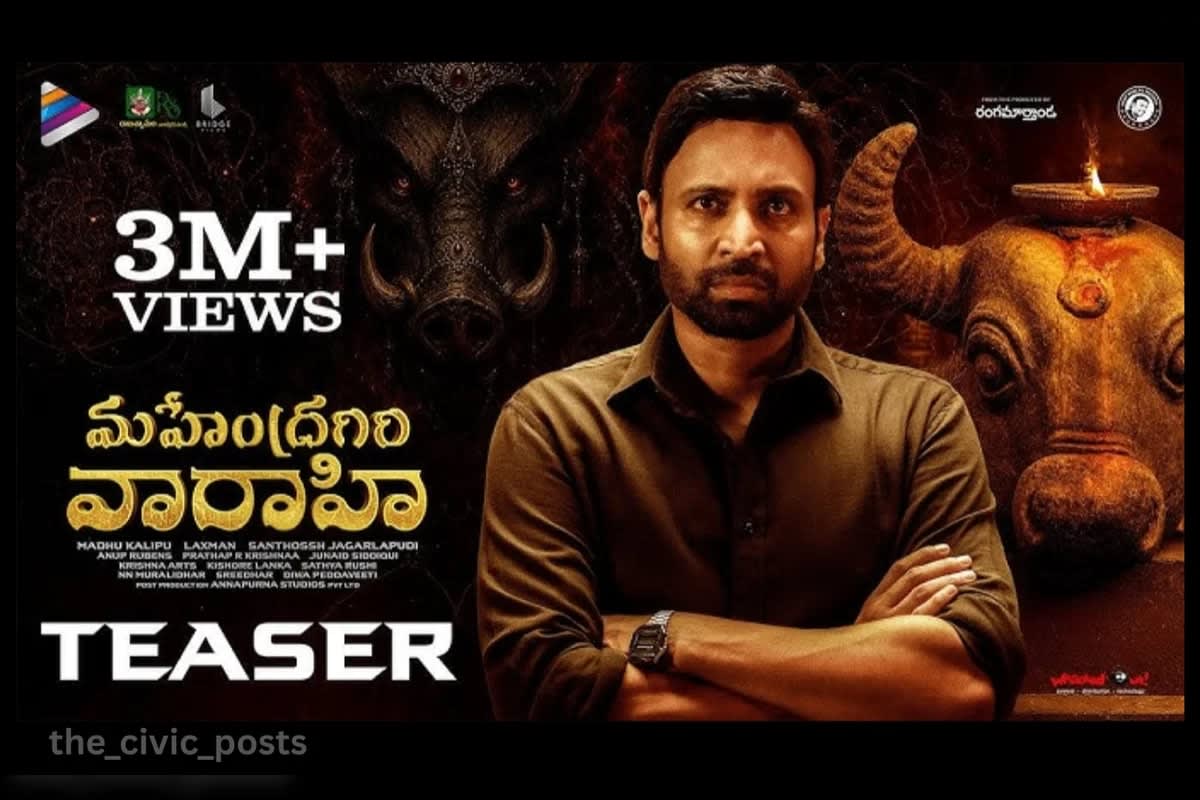
Some stories attract audiences not because of grand action sequences or larger-than-life heroes, but because they awaken curiosity. They invite viewers into a world where every answer leads to another question and every secret carries the weight of history. Mahendragiri Varahi appears to be one such film. Built around mystery, mythology, and suspense, it promises an experience that goes beyond conventional storytelling and explores the complex relationship between faith, fear, and truth.
The story is set in Mahendragiri, a village that seems untouched by time. Surrounded by natural beauty and steeped in spiritual traditions, it is a place where ancient customs continue to guide everyday life. The villagers share a deep devotion to Goddess Varahi, whose presence is felt in every ritual, festival, and sacred ceremony. For generations, people have looked to the deity for protection, guidance, and strength.
Yet beneath this atmosphere of devotion lies an unsettling reality. The village carries a burden that has lingered for decades. Mysterious incidents, unexplained tragedies, and whispered stories of a curse have become part of its identity. What should have been a peaceful community has instead become a place where fear quietly shapes the lives of its people.
The most fascinating aspect of the narrative is the way it explores inherited beliefs. The people of Mahendragiri have grown up listening to the same stories. They have watched elders pass these tales from one generation to the next, reinforcing the idea that certain events are unavoidable. Over time, these beliefs have become so deeply rooted that few dare to question them.
This creates an intriguing conflict within the story. On one side stands tradition, supported by years of faith and cultural memory. On the other side stands curiosity, represented by individuals who are unwilling to accept everything without seeking evidence. The clash between these perspectives forms the emotional and intellectual foundation of the film.
At the center of the narrative is a character determined to uncover the truth. Unlike others who have accepted the village’s fears as destiny, he approaches the mystery with an open mind. His goal is not merely to challenge beliefs but to understand the reasons behind the strange events that continue to haunt Mahendragiri.
As he begins his search for answers, he discovers that the village is filled with hidden layers. Every conversation reveals a new clue. Every location appears connected to a forgotten chapter of history. What initially seems like a straightforward investigation gradually transforms into a journey through secrets buried beneath generations of silence.
One of the film’s greatest strengths is likely to be its atmosphere. Mystery stories succeed when they create a sense of uncertainty, and Mahendragiri Varahi appears to embrace this principle fully. The village itself becomes an important character in the narrative. Ancient temples, weathered pathways, sacred spaces, and abandoned structures contribute to an environment where the past feels constantly present.
The visual world of the film seems designed to reinforce this mood. Bright religious celebrations and spiritual rituals coexist with dark corners and unsettling discoveries. This contrast creates a unique cinematic experience where beauty and danger exist side by side. Audiences are encouraged to admire the cultural richness of the village while simultaneously sensing that something is not quite right.
The film also appears to explore the psychological impact of fear. Fear is a powerful force because it often survives even in the absence of proof. When people repeatedly hear stories about curses or misfortune, they begin to interpret events through that lens. Ordinary occurrences can start to seem extraordinary, and coincidences can become evidence of something supernatural.
Mahendragiri’s villagers seem trapped within this cycle. Their belief in the curse influences how they think, how they behave, and how they view the future. This makes the protagonist’s investigation particularly significant because it challenges not only a mystery but also a deeply established mindset.
Another interesting aspect of the story is its use of mythology. Indian mythology has long provided storytellers with rich themes and powerful symbols. Rather than using mythology simply as decoration, Mahendragiri Varahi appears to integrate it directly into the narrative. The legends surrounding Goddess Varahi influence the actions of the characters and shape the village’s understanding of its own history.
This connection between mythology and everyday life gives the story emotional depth. For the villagers, these beliefs are not distant tales from ancient texts. They are living realities that affect personal decisions and community relationships. As a result, the mystery becomes more than a puzzle-it becomes a question of identity and faith.
The suspense in the film seems to arise from uncertainty rather than shock value. Instead of relying solely on sudden twists, the narrative gradually builds tension by revealing information piece by piece. Every clue adds another layer to the mystery, encouraging viewers to form their own theories while remaining unsure of the final answer.
This approach can be particularly effective because it turns the audience into active participants. Rather than simply observing events, viewers become involved in the search for truth. They question characters, analyze clues, and attempt to predict what lies ahead. Such engagement often makes a mystery more memorable and satisfying.
The supporting characters are also likely to play important roles in maintaining suspense. In a story built around secrets, every individual has something to contribute. Some may possess information they are afraid to reveal. Others may genuinely believe they are protecting the village by preserving old traditions. Their actions and motivations create additional complexity, ensuring that the mystery remains unpredictable.
Emotion appears to be another key ingredient in the narrative. Behind every legend and every unexplained incident are people whose lives have been affected. Families dealing with loss, individuals struggling with fear, and communities divided by uncertainty provide the human element that keeps the story grounded.
Without emotional stakes, mysteries can sometimes feel detached. Mahendragiri Varahi seems determined to avoid this by focusing on the personal consequences of the village’s secrets. The audience is invited not only to solve the mystery but also to understand the emotional burden carried by those living within it.
The film’s exploration of truth is particularly relevant. Throughout history, societies have often accepted explanations simply because they have been repeated for generations. Challenging those explanations requires courage, especially when doing so risks upsetting established beliefs. The protagonist’s journey reflects this challenge, highlighting the importance of questioning assumptions and seeking evidence.
At the same time, the story does not appear to dismiss faith. Instead, it seems interested in examining how faith and truth can coexist. This balanced approach allows the narrative to respect cultural traditions while still encouraging critical thinking. Such nuance can make the film appealing to a wide audience.
Music and sound design are expected to enhance the storytelling experience significantly. In suspense-driven narratives, sound often communicates emotions that words cannot. A haunting melody, distant chants, or moments of silence can increase tension and immerse viewers more deeply in the story’s world.
Ultimately, Mahendragiri Varahi promises more than just a tale of mystery. It appears to be a story about the power of belief, the weight of history, and the courage required to uncover hidden truths. By combining mythology, suspense, emotion, and investigation, the film creates a narrative that is both entertaining and thought-provoking.
As audiences prepare to enter the world of Mahendragiri, they can expect a journey filled with questions, discoveries, and unexpected revelations. The village may be guarded by ancient traditions and sacred legends, but beneath those layers lies a truth waiting to be uncovered. Whether that truth confirms the fears of the villagers or challenges everything they have ever believed, it is certain to leave a lasting impression.
In the end, Mahendragiri Varahi is not merely about solving a mystery. It is about understanding how stories shape people, how fear influences communities, and how the search for truth can transform lives. That combination of suspense and substance has the potential to make it a memorable addition to the genre.