Madras High Court Seeks Reply From TVK Over Alleged Use of Children During Election Campaign
Alekhya Kota - MAY 30, 2026

A fresh political and legal controversy has emerged in Tamil Nadu after the Madras High Court questioned the alleged use of children during election campaigning by the Tamilaga Vettri Kazhagam (TVK). The court has directed the party, along with the Election Commission of India and other political parties named in the petitions, to file detailed responses regarding allegations that children were indirectly used to influence voting decisions during the recently concluded Assembly elections. The development has triggered a wider debate about ethics in political campaigning and the limits of voter outreach strategies.
The matter came before a division bench comprising Justices G.R. Swaminathan and V. Lakshminarayanan. During the hearing, the judges expressed concern over allegations that children were encouraged to influence the voting choices of their parents and family members. The court orally observed that involving children in political persuasion was inappropriate and raised serious concerns about the nature of electoral campaigning.
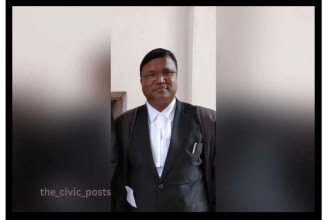
The controversy stems from petitions filed before the High Court alleging that political parties, particularly TVK, engaged in practices that could amount to indirect voter influence. One of the petitions was filed by advocate L. Vasuki, while another was filed by K.S. Gita. The petitioners argued that children should not be used as tools for political messaging or electoral gain because they are minors and cannot be expected to understand the complexities of political choices and democratic processes.
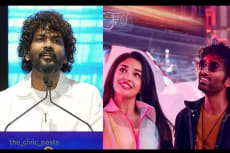
According to the allegations presented before the court, TVK president and Tamil Nadu Chief Minister C. Joseph Vijay had made remarks during an election campaign meeting that allegedly encouraged children to persuade their parents regarding voting preferences. The petitioners argued that such appeals crossed ethical boundaries and could amount to undue influence under election laws.
The issue gained traction because the remarks were allegedly made during a major public gathering held in Chennai in the run-up to the Assembly elections. The petitioners claimed that encouraging children to emotionally influence family voting decisions could undermine the fairness of the electoral process. They argued that elections should be decided by informed adult voters acting independently rather than through emotional pressure created within families.
During the proceedings, the High Court reportedly remarked that appealing to children for electoral influence was problematic. The judges emphasized that children should not become instruments in political campaigns. These observations immediately drew public attention because they touched on broader concerns regarding political ethics and the responsibilities of parties during elections.
Apart from allegations against TVK, the petitions also raised complaints regarding alleged electoral irregularities involving other major political parties, including the DMK and AIADMK. Claims relating to voter inducement and election-related misconduct were also mentioned. However, the present hearing primarily focused on the issue of children allegedly being used in political messaging.
Senior advocate S. Muralidhar, appearing on behalf of TVK, argued before the court that important legal questions needed examination. He pointed out that the Model Code of Conduct applies during elections and that once election results are declared, the powers of the Election Commission become limited in certain respects. According to the arguments presented, any allegations relating to electoral misconduct after the conclusion of elections would generally need to be pursued through election petitions rather than through separate proceedings.
The legal team representing TVK also reportedly argued that election laws contain specific provisions regarding undue influence and corrupt practices. They contended that these provisions are generally applied in relation to individual candidates rather than political parties as a whole. Therefore, questions arise regarding the extent of action that can be taken against an entire party based on such allegations.
The Election Commission of India was also drawn into the matter because the petitioners argued that the Commission should examine whether election rules were violated during campaigning. The petitioners maintained that if improper practices occurred during the election period, the Commission had a responsibility to investigate and determine whether any action was necessary.
Following the arguments, the High Court directed TVK, the Election Commission, DMK, AIADMK and other respondents to file counter-affidavits. The court granted time for detailed responses and adjourned the matter for further hearing. The next stage of proceedings is expected to focus on the legal questions surrounding election law, political campaigning and the alleged use of children for electoral purposes.
The controversy has generated considerable discussion across Tamil Nadu because TVK is currently one of the state's most talked-about political forces. Founded by actor-turned-politician Vijay, the party has rapidly expanded its political presence and emerged as a major player in Tamil Nadu politics. Because of the party's growing influence, any legal challenge involving its campaign methods naturally attracts significant public and media attention.
Political analysts believe the case could have implications beyond TVK alone. If the court ultimately examines the broader issue of children being involved in election campaigns, it may lead to clearer guidelines for all political parties in future elections. Modern campaigning increasingly relies on emotional appeals, social media engagement and community outreach. Questions are now being raised about where the line should be drawn when minors become part of political messaging.
Supporters of stricter regulations argue that children should remain outside political campaigns because they are vulnerable to influence and may not fully understand the consequences of political advocacy. They believe that using children, even indirectly, risks turning family relationships into channels for political pressure. According to this view, democratic decisions should be based on informed judgment rather than emotional persuasion through minors.
On the other hand, some political observers argue that the matter involves complex questions regarding free speech and campaign communication. They point out that political leaders often address families, youth and students during public meetings. Determining what constitutes legitimate public engagement and what amounts to improper electoral influence may require careful legal interpretation.
The case also highlights the growing scrutiny being applied to election campaigns in the digital age. Political speeches, videos and public interactions are now extensively recorded and circulated through television channels and social media platforms. As a result, campaign statements that might previously have gone unnoticed can quickly become subjects of legal and public examination.
Legal experts note that the final outcome will depend on how the court interprets provisions of the Representation of the People Act and other election-related regulations. The central question is whether the alleged appeals to children fall within the scope of prohibited electoral conduct or whether they remain protected forms of political speech. The responses filed by TVK and other parties are expected to play an important role in shaping the court's assessment.
For now, the High Court has not reached any conclusions regarding the allegations. The court's current direction is limited to seeking explanations and responses from the parties involved. However, the observations made during the hearing have already intensified public discussion about campaign ethics and electoral responsibility.
As Tamil Nadu continues to witness changing political dynamics, this case has emerged as an important legal and political development. The proceedings are likely to be closely watched by political parties, legal experts and election observers because the final ruling could influence how future election campaigns are conducted in the state. The matter has gone beyond a dispute involving a single party and evolved into a broader debate about democracy, political influence and the role of children in public life.