Rajya Sabha Elections Heat Up Andhra Pradesh Politics Again
Editorial desk - MAY 29, 2026
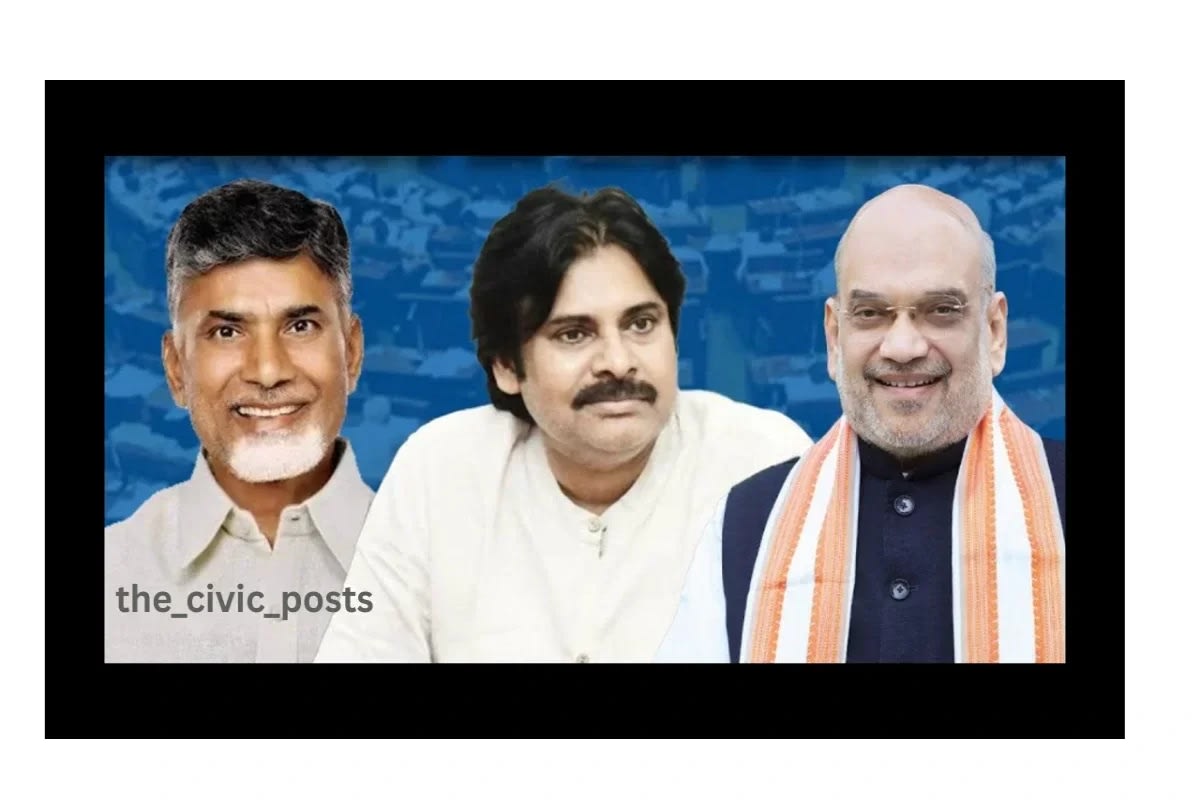
Political temperatures are once again rising in Andhra Pradesh after the general elections. The Election Commission’s announcement of the schedule for four Rajya Sabha seats falling vacant from the state has reignited intense political activity in Amaravati. Given the current strength of parties in the Assembly, all four seats are almost certain to go unanimously to the ruling NDA alliance. However, the real debate now revolves around how these seats will be distributed among the Telugu Desam Party (TDP), Jana Sena Party (JSP), and Bharatiya Janata Party (BJP).
Who will get how many seats? Which leaders are in contention? And how will Chief Minister N. Chandrababu Naidu balance alliance politics, social equations, and internal party pressures? These questions have now become central to Andhra Pradesh politics.
Why Are These Seats Vacant?
The vacancies have arisen as the terms of four Rajya Sabha MPs from Andhra Pradesh are coming to an end. These include YSR Congress Party leaders Parimal Nathwani, Pilli Subhash Chandra Bose, and Alla Ayodhya Rami Reddy, along with TDP member Kanakamedala Ravindra Kumar, popularly known as Satish Babu.
In the 175-member Andhra Pradesh Assembly, a candidate requires the support of at least 36 MLAs to secure a Rajya Sabha berth. The ruling alliance - consisting of TDP, Jana Sena, and BJP - currently commands an overwhelming strength of 164 MLAs, putting it in a position to sweep all four seats comfortably.
With only 11 MLAs left in the Assembly, the YSR Congress Party lacks the numerical strength even to field a competitive candidate. This has effectively turned the Rajya Sabha elections into an internal alliance negotiation rather than a traditional electoral contest.
Seat Sharing Becomes a Political Challenge
As part of the alliance arrangement, balancing four seats among three parties has emerged as a delicate political challenge for Chandrababu Naidu.
According to political circles, a preliminary understanding appears to have been reached. The TDP is reportedly keen on retaining three of the four seats for itself. Party insiders say Chandrababu is under pressure from senior leaders, social representation demands, and commitments made during the elections, making it politically difficult to concede more seats to allies.
At the same time, allocating one seat to Jana Sena is said to be almost certain. This would mark the first-ever Rajya Sabha representation for the party since its inception, making the decision politically symbolic for Deputy Chief Minister Pawan Kalyan and his supporters.
BJP’s Expectations and Alliance Complications
The BJP’s state leadership has also reportedly sought one Rajya Sabha seat as part of the alliance arrangement. However, analysts believe that due to internal pressures within the TDP and the limited number of available seats, accommodating the BJP this time may prove difficult.
There is speculation that the TDP leadership may attempt to convince the BJP high command at the national level and manage the alliance equation diplomatically rather than through direct seat allocation.
Senior BJP leaders recently met Chandrababu Naidu to discuss local body elections and Rajya Sabha seat-sharing. Sources suggest that the Chief Minister conveyed the practical difficulties in allotting a seat to the BJP in this round because of the large number of aspirants within the TDP itself.
Intense Competition Within TDP
Within the TDP, competition for the three probable seats is intense.
Satish Babu, who won a by-election recently and still has only a short tenure left, is considered close to IT Minister Nara Lokesh. Political observers believe this proximity could help him secure another Rajya Sabha term.
Several other prominent names are also being discussed, including educationist Bhashyam Ramakrishna, senior leader Yanamala Ramakrishnudu, Varla Ramaiah, former MP Galla Jayadev, Kilari Rajesh, and Sharif.
Social representation is expected to play a major role in the final selection process. There is strong speculation that one of the seats may go either to a Backward Class (BC) or Scheduled Caste (SC) candidate to maintain caste balance within the alliance and government structure.
Varla Ramaiah is reportedly lobbying for an SC-category nomination, while younger leaders are also pushing for generational representation within the party structure.
Who Will Jana Sena Pick?
The biggest point of curiosity now surrounds Jana Sena chief Pawan Kalyan’s choice for the party’s likely Rajya Sabha seat.
Industrialist Lingamaneni Ramesh, who is believed to have financially and politically supported the party since its early days, is among the names being discussed. However, political observers believe his candidature could attract criticism over social representation concerns.
Another name doing the rounds is Nagababu, Pawan Kalyan’s brother. However, since he has already been accommodated in the Legislative Council, insiders suggest that despite speculation, he may not actually be Pawan Kalyan’s preferred choice for the Rajya Sabha.
Bandaru Narasimha Rao is also said to be under consideration.
Meanwhile, if the BJP unexpectedly secures a seat through alliance negotiations, speculation suggests that the party could even consider nominating Tamil Nadu BJP leader K. Annamalai to the Rajya Sabha from Andhra Pradesh.
Timeline and Political Significance
The Election Commission is expected to issue the formal notification on June 1, while June 8 is the last date for filing nominations. Polling is scheduled for June 18.
However, since there are unlikely to be opposition candidates, the ruling alliance nominees are expected to be elected unopposed immediately after the withdrawal deadline.
Over the coming days, all eyes will remain on Chandrababu Naidu, Pawan Kalyan, and the BJP leadership as they attempt to finalize candidates without disturbing social balance, alliance harmony, or internal political equations.
Ultimately, the filling of these four Rajya Sabha seats is set to further strengthen the NDA alliance’s influence in the national capital while also shaping the future political dynamics of Andhra Pradesh.