The Multi-Billion Dollar Changing of the Guard: IPL’s New Ownership Era
fg
Kranthi Vegesna - MAR 26, 2026

The Indian Premier League (IPL) has long been a masterclass in sports valuation, but the events of late March 2026 have rewritten the financial playbook entirely. In a historic "double-header" of corporate transactions, two of the league's most iconic franchises-Royal Challengers Bengaluru (RCB) and Rajasthan Royals (RR)-have been sold for a combined staggering total of $3.41 billion. These deals represent more than just a change in ownership; they signify the transition of the IPL from a regional powerhouse to a global institutional asset class.
The RCB Landmark: A $1.78 Billion Coronation
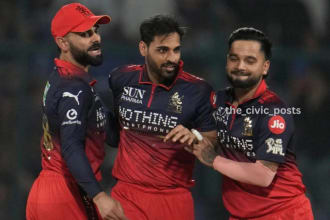
The headline of the week is the sale of Royal Challengers Bengaluru to a high-powered multi-industry consortium led by the Aditya Birla Group (ABG) and the Times of India Group (ToI). Finalized on March 24, 2026, the deal is valued at $1.78 billion (approximately ₹16,660 crore), making RCB the most valuable franchise in the history of T20 cricket.
The Transaction & History
The seller, United Spirits Limited (USL), a subsidiary of the UK-based drinks giant Diageo, held a 100% stake in the franchise. Historically, the team was bought by Vijay Mallya in 2008 for $111.6 million. Following Mallya’s exit, control passed to Diageo. The catalyst for this divestment was a "strategic review" initiated in November 2025, as Diageo sought to sharpen its focus on its core beverage alcohol business.
The New Custodians
The winning consortium brings together a mix of Indian industrial heritage and global private equity. Under the new agreement, Aryaman Vikram Birla-a former professional cricketer and director at ABG-has been named the Chairman of RCB. Satyan Gajwani of the Times of India Group will serve as the Vice Chairman. The group is further bolstered by David Blitzer’s Bolt Ventures (owner of the Philadelphia 76ers) and Blackstone’s BXPE, led by CEO Viral Patel. This group effectively acquires both the IPL and Women's Premier League (WPL) teams, ensuring a unified vision for the "Bold" army.
The Rajasthan Royals’ Full Circle: The $1.63 Billion Buyout
While RCB set the valuation record, the Rajasthan Royals sale is equally significant for its massive return on investment. A consortium led by US-based tech entrepreneur Kal Somani acquired the franchise for $1.63 billion (approximately ₹15,286 crore).
The Evolution of Value
In the inaugural 2008 auction, RR was famously the "cheapest" team, bought for just $67 million by Manoj Badale’s Emerging Media Ventures. This latest sale represents a staggering 2,332% jump in value over 19 years. Somani, who has held a minority stake in the Royals since 2021, now takes 100% control, buying out the majority stake from Badale.
The New Power Structure
Somani is backed by immense global capital, including Rob Walton (heir to the Walmart fortune and owner of the Denver Broncos) and the Hamp family (owners of the NFL’s Detroit Lions). This partnership represents one of the largest single entries of American private equity into Indian sport. Unlike the RCB deal, however, the change in RR's ownership is expected to take effect after the conclusion of the 2026 season, allowing the current management to oversee the upcoming campaign.
The Road to Approval: What Happens Next?
As with any transaction of this magnitude, the deals are currently subject to a rigorous approval process. Both transactions must clear several hurdles:
BCCI Ratification: The Board of Control for Cricket in India (BCCI) and the IPL/WPL Governing Councils must conduct "Fit and Proper" tests on all new owners.
Regulatory Scrutiny: The Competition Commission of India (CCI) must review the deals to ensure they comply with anti-monopoly laws and sports governance standards.
Finality: While definitive agreements have been signed, the transition period involves satisfying "customary closing conditions." For RCB, this process is being fast-tracked to ensure the new leadership is in place for their title defense.
A New Financial Identity
The entry of names like Birla, Times of India, Walmart, and Blackstone signals that the IPL is no longer just a "high-net-worth individual's" playground. It has become a cornerstone of global sports portfolios. For the fans, this new era promises a professionalized future where the legacy of the clubs is matched by the institutional strength of their owners. The IPL has officially graduated from a league of stars to a league of global giants.