Campus Politics: From Student Unions to National Leadership
Kranthi Vegesna - FEB 24, 2026
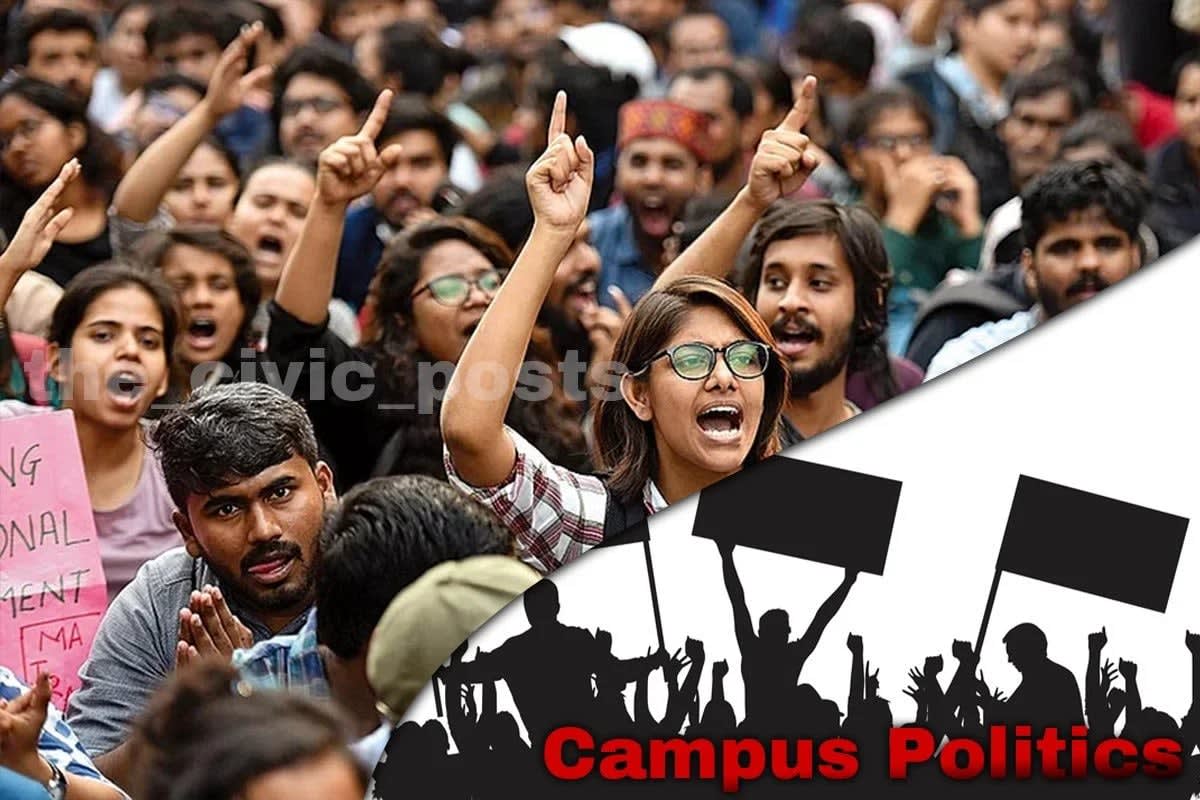
Universities have played a crucial role in the history of Indian democracy. They are not merely centres of learning; they have also evolved into spaces that nurture social awareness, political understanding, and leadership. From the early emergence of student unions during the freedom movement to their influence on contemporary politics, student organizations have continuously shaped the direction of the nation.
Origins of Student Unions – Roots in the Freedom Movement
The introduction of Western education in India during the late 19th century led to the growth of social and political awareness among students. Platforms such as the Students’ Scientific and Historic Society, established in 1848 by Dadabhai Naoroji, encouraged discussion, debate, and intellectual engagement among young people.
During the freedom struggle, leaders like Mahatma Gandhi and Bhagat Singh actively called upon students to participate in the movement. In 1936, the All India Students' Federation (AISF) was formed, becoming the first nationwide student organization in the country.
After independence, especially during the 1960s and 1970s, student politics played a major role in shaping mass political movements. The movement led by Jayaprakash Narayan demonstrated the immense power and influence of student participation in national politics.
Alignment with Political Parties
Many major student organizations in India are ideologically or directly linked with national political parties.
Akhil Bharatiya Vidyarthi Parishad (ABVP) – Associated with the ideology of the RSS.
National Students' Union of India (NSUI) – Student wing of the Congress party.
Students' Federation of India (SFI) – Linked with CPI(M).
All India Students Association (AISA) – Associated with CPI(ML).
Chhatra Yuva Sangharsh Samiti (CYSS) – Student wing of the Aam Aadmi Party.
Political parties often view universities as nurseries for future leadership. Influencing young minds during their formative years helps them build ideological support and long-term political engagement.
Universities that Mirror National Politics
Student union elections in several major universities resemble national political contests in both intensity and attention.
University of Delhi Students' Union elections
Jawaharlal Nehru University
University of Hyderabad
Debates, ideological clashes, and discussions on national issues often dominate these campuses, drawing significant media and public attention.
Leaders Who Emerged from Campus Politics
Several prominent political leaders in India began their journey through student politics.
Arun Jaitley – Former president of the Delhi University Students’ Union.
Sitaram Yechury – Prominent student leader at JNU.
Lalu Prasad Yadav – Former president of the Patna University Students’ Union.
Nitin Gadkari – Began as an ABVP activist in Nagpur.
Eetela Rajender – Active in student politics at Osmania University.
These examples highlight how student organizations serve as training grounds for future leadership.
The Current Scenario – A Mixed Picture
The condition of student unions across India today is uneven.
Regular elections: Some central universities continue to hold student elections regularly.
Restrictions: In certain states, elections have been restricted due to incidents of campus violence.
Political interference: Critics argue that party agendas often overshadow genuine student issues.
Emerging challenges: Rising fees, scholarship cuts, unemployment, and privatization have become key issues around which student unions mobilize.
In many private universities, student unions either do not exist or have very limited space, raising concerns about democratic participation in campuses.
Why Student Unions Matter in a Democracy
Student unions are not merely platforms for political training. They help young people develop leadership skills, encourage debate and dissent, and raise awareness about social justice, equality, and rights.
However, when they become completely controlled by political parties, there is a risk that real student concerns may be sidelined. For this reason, independence, transparency, and non-violent engagement are essential for healthy campus politics.
Universities shape the future of a nation, and student unions function as schools of democracy. From the freedom movement to the present day, they have influenced India’s political landscape.
Despite criticisms, their role as a voice for students and a foundation for future leadership remains significant. If student organizations truly represent student concerns and serve as platforms for social change, they will continue to strengthen Indian democracy.