Editorial

Collegium System in the Indian Judiciary – A Review, Challenges, and the Need for Social Justice

Kranthi Vegesna - MAR 5, 2026

Share:
Collegium System in the Indian Judiciary – A Review, Challenges, and the Need for Social Justice

Introduction

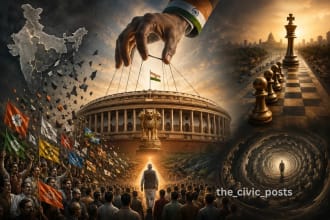
The Constitution of India enshrines democracy, justice, and equality as its core values. Yet, many argue that certain parts of the judiciary have not transformed in alignment with these principles. The most debated among them is the Collegium System - the mechanism through which judges of the Supreme Court and High Courts are appointed and transferred.

---

What is the Collegium?

The term Collegium comes from Latin, meaning “a council or group of learned persons.”

In India, it refers to the body of senior judges responsible for recommending judicial appointments and transfers. This mechanism does not exist in the original Constitution; it evolved through landmark Supreme Court judgments known as the Judges Cases.

---

How Did the Collegium System Emerge?

First Phase – 1981 (First Judges Case)

In S.P. Gupta vs Union of India (1981), the Supreme Court ruled that the central government had the final authority in judicial appointments.

This was widely criticized as it undermined judicial independence.

Second Phase – 1993 (Second Judges Case)

In Advocates-on-Record Association vs Union of India (1993), the court reversed its earlier view.

It declared that appointments must be decided by the Chief Justice of India (CJI) and senior judges-not the executive.

This laid the foundation of the Collegium.

Third Phase – 1998 (Third Judges Case)

Responding to a Presidential Reference, the Supreme Court clarified:

The Supreme Court Collegium consists of the CJI + 4 senior-most judges.

The High Court Collegium consists of the Chief Justice + 2 senior-most judges.

This remains the system in force today.

---

Subsequent Developments

In 2014, the government introduced the National Judicial Appointments Commission (NJAC) to replace the Collegium.

The NJAC proposed a mixed panel of judges, ministers, and independent members.

However, in 2015, the Supreme Court struck it down as unconstitutional.

Thus, the older Collegium System returned.

Despite this, the system continues to face criticism:

Lack of transparency

Absence of caste, gender, and regional diversity

The perception of “judges appointing judges”

Dominance of elite networks within judiciary

---

Is There Reservation in the Judiciary?

Judicial appointments do not follow reservation policies

The Constitution’s reservation provisions apply only to education, employment, and political representation-not judicial appointments.

Articles 124 and 217 emphasize merit and experience, which has inadvertently resulted in a judiciary dominated by upper castes.

Studies indicate that:

Over 70% of judges appointed to the Supreme Court historically belong to upper-caste communities.

Representation of Dalits, Adivasis, OBCs, and minorities remains minimal.

This fails to reflect India’s vast social diversity.

---

Why Is This a Problem?

The judiciary is the final guardian of democracy. For justice to be meaningful, those who interpret the law must understand diverse social realities.

When the majority of judges come from a single socio-economic background:

Their worldview may be limited.

Lived experiences of marginalized communities may not be fully understood.

For example:

Everyday discrimination against Dalits

Women’s experiences with violence and injustice

Rural, tribal, and backward-class realities

A judiciary lacking social representation struggles to comprehend these lived truths.

---

What Is the Solution?

1.⁠ ⁠Transparent Appointment Process

Collegium decisions must be made public, including reasons for selection or rejection.

2.⁠ ⁠Social Diversity Index

Appointments should consider population proportions-Dalits (15%), OBCs (27%), Adivasis (7%), women (50%), etc.- ensuring fair representation.

3.⁠ ⁠Support in Legal Education

Provide scholarships, mentorships, internships, and coaching support for students from marginalized communities.

4.⁠ ⁠Reservation in Judicial Services

Extend existing reservation in lower judiciary to promotions leading to the High Courts and Supreme Court.

This creates a pipeline for diverse legal talent to rise.

5.⁠ ⁠Civil Society Oversight

A neutral oversight body comprising senior advocates, academics, and social representatives should review the process.

---

Equal Justice Requires Equal Representation

The Constitution promises social, economic, and political justice to every citizen.

Justice cannot be truly democratic if those delivering it come predominantly from one social group.

Only when all communities-across caste, gender, region, and religion-find representation in the judiciary will public trust deepen.

This is not merely a demand for caste-based inclusion;

it is a constitutional necessity for a fair, diverse, and democratic judicial system.

---

Conclusion

While the Collegium System protects judicial independence, it falls short on transparency and social justice. For India to realize its constitutional promise of equal justice, judicial appointments must embrace social diversity.

This transformation is not just a reform-it is a historic step toward bringing the judiciary closer to the people.

More Articles

Recent Articles

Shift to PNG Gains Momentum: LPG Supply May Stop Where Pipeline Gas Exists

Shift to PNG Gains Momentum: LPG Supply May Stop Where Pipeline Gas Exists

Kranthi Shekar - MAR 26, 2026

From Sacrifice to Inspiration: Narayana Speaks on Potti Sriramulu’s Legacy

From Sacrifice to Inspiration: Narayana Speaks on Potti Sriramulu’s Legacy

Kranthi Shekar - MAR 26, 2026

Hyderabad Traffic Diversions Announced for Sri Rama Navami Procession

Hyderabad Traffic Diversions Announced for Sri Rama Navami Procession

Kranthi Shekar - MAR 26, 2026

₹1000 Crore Rampage: Dhurandhar 2 Targets Pushpa 2: The Rule After Historic First Week

₹1000 Crore Rampage: Dhurandhar 2 Targets Pushpa 2: The Rule After Historic First Week

Kranthi Shekar - MAR 26, 2026

Can Ustaad Bhagat Singh Cross ₹100 Crore This Weekend? Box Office Race Gets Intense

Can Ustaad Bhagat Singh Cross ₹100 Crore This Weekend? Box Office Race Gets Intense

Kranthi Shekar - MAR 26, 2026

Fuel Scare in Hyderabad: Panic Buying Leaves Several Petrol Pumps Running Low

Fuel Scare in Hyderabad: Panic Buying Leaves Several Petrol Pumps Running Low

Kranthi Shekar - MAR 26, 2026

A Bitter Victory—South Africa Claims the Decider in a Series Defined by Scheduling Chaos

A Bitter Victory—South Africa Claims the Decider in a Series Defined by Scheduling Chaos

Kranthi Vegesna - MAR 26, 2026

The Multi-Billion Dollar Changing of the Guard: IPL’s New Ownership Era

The Multi-Billion Dollar Changing of the Guard: IPL’s New Ownership Era

Kranthi Vegesna - MAR 26, 2026

Miami Open 2026: Sinner Rewrites the Record Books as the Draw Opens Wide

Miami Open 2026: Sinner Rewrites the Record Books as the Draw Opens Wide

Kranthi Vegesna - MAR 26, 2026

The Fracturing of Peace-The Alarming Normalization of Hate Speech in India

The Fracturing of Peace-The Alarming Normalization of Hate Speech in India

Kranthi Vegesna - MAR 26, 2026

Self-Governance for Dalit Colonies and Lambada Tandas: Decentralization is the Sustainable Solution

Self-Governance for Dalit Colonies and Lambada Tandas: Decentralization is the Sustainable Solution

Kranthi Vegesna - MAR 26, 2026

“India Lockdown Again?” Viral Rumours Spark Panic After PM Modi Speech - Here’s What’s Really Happening

“India Lockdown Again?” Viral Rumours Spark Panic After PM Modi Speech - Here’s What’s Really Happening

Kranthi Shekar - MAR 25, 2026

$350M Crude Deal: Reliance Capitalizes on Temporary US Sanctions Waiver

$350M Crude Deal: Reliance Capitalizes on Temporary US Sanctions Waiver

Kranthi Shekar - MAR 25, 2026

Strength Training: Why India Needs to Re-think Fitness

Strength Training: Why India Needs to Re-think Fitness

Jennifer - MAR 25, 2026

In India, mango isn’t just a fruit-it’s the king of fruits.

In India, mango isn’t just a fruit-it’s the king of fruits.

Prakash Ranganathan - MAR 24, 2026

India Rising Fast, But Global Competition Intensifies: Key Takeaway from Bihar Sports Conclave

India Rising Fast, But Global Competition Intensifies: Key Takeaway from Bihar Sports Conclave

Kranthi Shekar - MAR 24, 2026

Telangana Cabinet Clears Key Bills to Tackle Hate Speech and Strengthen Family Responsibility

Telangana Cabinet Clears Key Bills to Tackle Hate Speech and Strengthen Family Responsibility

Kranthi Shekar - MAR 24, 2026

Iran Launches Missile Strikes on Israel, Rejects Trump’s Negotiation Claims

Iran Launches Missile Strikes on Israel, Rejects Trump’s Negotiation Claims

Kranthi Shekar - MAR 24, 2026

Andhra Pradesh Sets Stage for Industrial Boom with ₹1.36 Lakh Crore Steel Giant

Andhra Pradesh Sets Stage for Industrial Boom with ₹1.36 Lakh Crore Steel Giant

Kranthi Shekar - MAR 24, 2026

The Silent Chimes of the Nandi-Is the Golden Era of Telugu Cinema Awards Fading?

The Silent Chimes of the Nandi-Is the Golden Era of Telugu Cinema Awards Fading?

Kranthi Shekar - MAR 24, 2026

Editorial

Collegium System in the Indian Judiciary – A Review, Challenges, and the Need for Social Justice

Kranthi Vegesna - MAR 5, 2026

Share:
Collegium System in the Indian Judiciary – A Review, Challenges, and the Need for Social Justice

Introduction

The Constitution of India enshrines democracy, justice, and equality as its core values. Yet, many argue that certain parts of the judiciary have not transformed in alignment with these principles. The most debated among them is the Collegium System - the mechanism through which judges of the Supreme Court and High Courts are appointed and transferred.

---

What is the Collegium?

The term Collegium comes from Latin, meaning “a council or group of learned persons.”

In India, it refers to the body of senior judges responsible for recommending judicial appointments and transfers. This mechanism does not exist in the original Constitution; it evolved through landmark Supreme Court judgments known as the Judges Cases.

---

How Did the Collegium System Emerge?

First Phase – 1981 (First Judges Case)

In S.P. Gupta vs Union of India (1981), the Supreme Court ruled that the central government had the final authority in judicial appointments.

This was widely criticized as it undermined judicial independence.

Second Phase – 1993 (Second Judges Case)

In Advocates-on-Record Association vs Union of India (1993), the court reversed its earlier view.

It declared that appointments must be decided by the Chief Justice of India (CJI) and senior judges-not the executive.

This laid the foundation of the Collegium.

Third Phase – 1998 (Third Judges Case)

Responding to a Presidential Reference, the Supreme Court clarified:

The Supreme Court Collegium consists of the CJI + 4 senior-most judges.

The High Court Collegium consists of the Chief Justice + 2 senior-most judges.

This remains the system in force today.

---

Subsequent Developments

In 2014, the government introduced the National Judicial Appointments Commission (NJAC) to replace the Collegium.

The NJAC proposed a mixed panel of judges, ministers, and independent members.

However, in 2015, the Supreme Court struck it down as unconstitutional.

Thus, the older Collegium System returned.

Despite this, the system continues to face criticism:

Lack of transparency

Absence of caste, gender, and regional diversity

The perception of “judges appointing judges”

Dominance of elite networks within judiciary

---

Is There Reservation in the Judiciary?

Judicial appointments do not follow reservation policies

The Constitution’s reservation provisions apply only to education, employment, and political representation-not judicial appointments.

Articles 124 and 217 emphasize merit and experience, which has inadvertently resulted in a judiciary dominated by upper castes.

Studies indicate that:

Over 70% of judges appointed to the Supreme Court historically belong to upper-caste communities.

Representation of Dalits, Adivasis, OBCs, and minorities remains minimal.

This fails to reflect India’s vast social diversity.

---

Why Is This a Problem?

The judiciary is the final guardian of democracy. For justice to be meaningful, those who interpret the law must understand diverse social realities.

When the majority of judges come from a single socio-economic background:

Their worldview may be limited.

Lived experiences of marginalized communities may not be fully understood.

For example:

Everyday discrimination against Dalits

Women’s experiences with violence and injustice

Rural, tribal, and backward-class realities

A judiciary lacking social representation struggles to comprehend these lived truths.

---

What Is the Solution?

1.⁠ ⁠Transparent Appointment Process

Collegium decisions must be made public, including reasons for selection or rejection.

2.⁠ ⁠Social Diversity Index

Appointments should consider population proportions-Dalits (15%), OBCs (27%), Adivasis (7%), women (50%), etc.- ensuring fair representation.

3.⁠ ⁠Support in Legal Education

Provide scholarships, mentorships, internships, and coaching support for students from marginalized communities.

4.⁠ ⁠Reservation in Judicial Services

Extend existing reservation in lower judiciary to promotions leading to the High Courts and Supreme Court.

This creates a pipeline for diverse legal talent to rise.

5.⁠ ⁠Civil Society Oversight

A neutral oversight body comprising senior advocates, academics, and social representatives should review the process.

---

Equal Justice Requires Equal Representation

The Constitution promises social, economic, and political justice to every citizen.

Justice cannot be truly democratic if those delivering it come predominantly from one social group.

Only when all communities-across caste, gender, region, and religion-find representation in the judiciary will public trust deepen.

This is not merely a demand for caste-based inclusion;

it is a constitutional necessity for a fair, diverse, and democratic judicial system.

---

Conclusion

While the Collegium System protects judicial independence, it falls short on transparency and social justice. For India to realize its constitutional promise of equal justice, judicial appointments must embrace social diversity.

This transformation is not just a reform-it is a historic step toward bringing the judiciary closer to the people.

More Articles

Recent Articles

Shift to PNG Gains Momentum: LPG Supply May Stop Where Pipeline Gas Exists

Shift to PNG Gains Momentum: LPG Supply May Stop Where Pipeline Gas Exists

Kranthi Shekar - MAR 26, 2026

From Sacrifice to Inspiration: Narayana Speaks on Potti Sriramulu’s Legacy

From Sacrifice to Inspiration: Narayana Speaks on Potti Sriramulu’s Legacy

Kranthi Shekar - MAR 26, 2026

Hyderabad Traffic Diversions Announced for Sri Rama Navami Procession

Hyderabad Traffic Diversions Announced for Sri Rama Navami Procession

Kranthi Shekar - MAR 26, 2026

₹1000 Crore Rampage: Dhurandhar 2 Targets Pushpa 2: The Rule After Historic First Week

₹1000 Crore Rampage: Dhurandhar 2 Targets Pushpa 2: The Rule After Historic First Week

Kranthi Shekar - MAR 26, 2026

Can Ustaad Bhagat Singh Cross ₹100 Crore This Weekend? Box Office Race Gets Intense

Can Ustaad Bhagat Singh Cross ₹100 Crore This Weekend? Box Office Race Gets Intense

Kranthi Shekar - MAR 26, 2026

Fuel Scare in Hyderabad: Panic Buying Leaves Several Petrol Pumps Running Low

Fuel Scare in Hyderabad: Panic Buying Leaves Several Petrol Pumps Running Low

Kranthi Shekar - MAR 26, 2026

A Bitter Victory—South Africa Claims the Decider in a Series Defined by Scheduling Chaos

A Bitter Victory—South Africa Claims the Decider in a Series Defined by Scheduling Chaos

Kranthi Vegesna - MAR 26, 2026

The Multi-Billion Dollar Changing of the Guard: IPL’s New Ownership Era

The Multi-Billion Dollar Changing of the Guard: IPL’s New Ownership Era

Kranthi Vegesna - MAR 26, 2026

Miami Open 2026: Sinner Rewrites the Record Books as the Draw Opens Wide

Miami Open 2026: Sinner Rewrites the Record Books as the Draw Opens Wide

Kranthi Vegesna - MAR 26, 2026

The Fracturing of Peace-The Alarming Normalization of Hate Speech in India

The Fracturing of Peace-The Alarming Normalization of Hate Speech in India

Kranthi Vegesna - MAR 26, 2026

Self-Governance for Dalit Colonies and Lambada Tandas: Decentralization is the Sustainable Solution

Self-Governance for Dalit Colonies and Lambada Tandas: Decentralization is the Sustainable Solution

Kranthi Vegesna - MAR 26, 2026

“India Lockdown Again?” Viral Rumours Spark Panic After PM Modi Speech - Here’s What’s Really Happening

“India Lockdown Again?” Viral Rumours Spark Panic After PM Modi Speech - Here’s What’s Really Happening

Kranthi Shekar - MAR 25, 2026

$350M Crude Deal: Reliance Capitalizes on Temporary US Sanctions Waiver

$350M Crude Deal: Reliance Capitalizes on Temporary US Sanctions Waiver

Kranthi Shekar - MAR 25, 2026

Strength Training: Why India Needs to Re-think Fitness

Strength Training: Why India Needs to Re-think Fitness

Jennifer - MAR 25, 2026

In India, mango isn’t just a fruit-it’s the king of fruits.

In India, mango isn’t just a fruit-it’s the king of fruits.

Prakash Ranganathan - MAR 24, 2026

India Rising Fast, But Global Competition Intensifies: Key Takeaway from Bihar Sports Conclave

India Rising Fast, But Global Competition Intensifies: Key Takeaway from Bihar Sports Conclave

Kranthi Shekar - MAR 24, 2026

Telangana Cabinet Clears Key Bills to Tackle Hate Speech and Strengthen Family Responsibility

Telangana Cabinet Clears Key Bills to Tackle Hate Speech and Strengthen Family Responsibility

Kranthi Shekar - MAR 24, 2026

Iran Launches Missile Strikes on Israel, Rejects Trump’s Negotiation Claims

Iran Launches Missile Strikes on Israel, Rejects Trump’s Negotiation Claims

Kranthi Shekar - MAR 24, 2026

Andhra Pradesh Sets Stage for Industrial Boom with ₹1.36 Lakh Crore Steel Giant

Andhra Pradesh Sets Stage for Industrial Boom with ₹1.36 Lakh Crore Steel Giant

Kranthi Shekar - MAR 24, 2026

The Silent Chimes of the Nandi-Is the Golden Era of Telugu Cinema Awards Fading?

The Silent Chimes of the Nandi-Is the Golden Era of Telugu Cinema Awards Fading?

Kranthi Shekar - MAR 24, 2026