Editorial

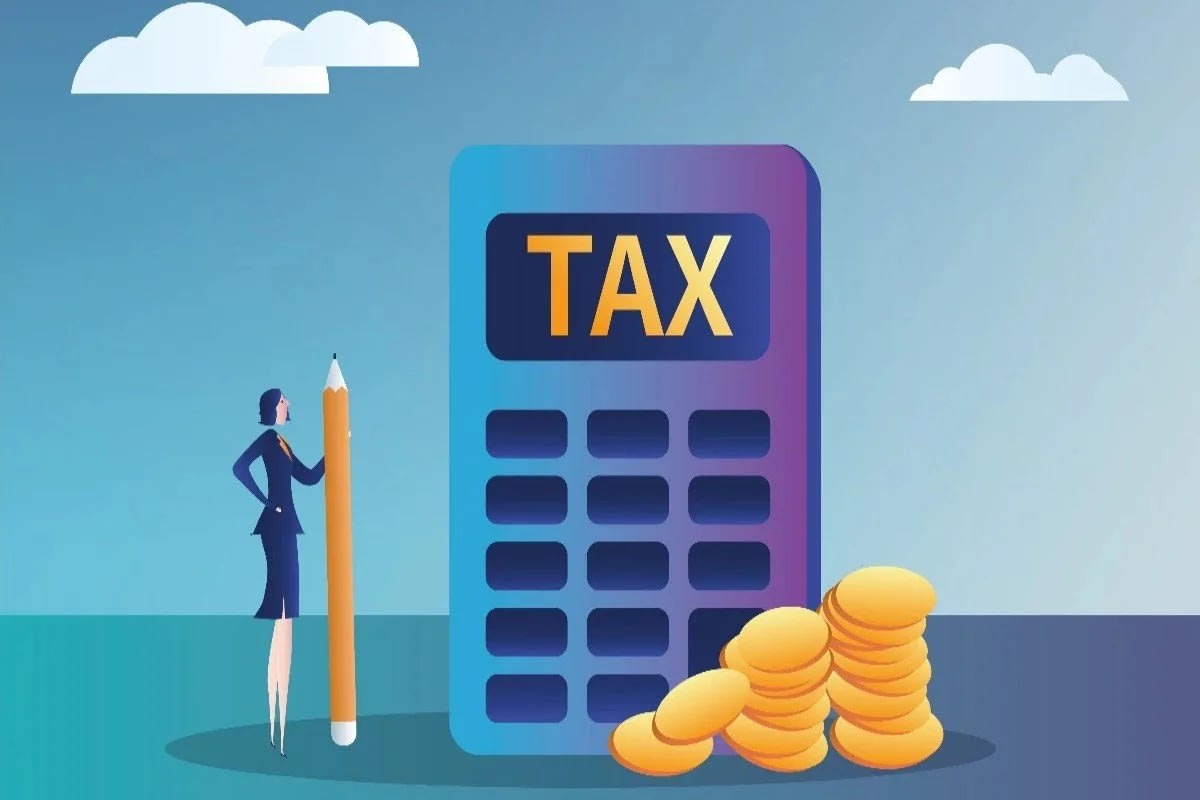
Counting the Cost: Can India Make Its Taxes Worth Staying For?

Aki - MAR 4, 2026

Share:
Counting the Cost: Can India Make Its Taxes Worth Staying For?

Nearly 6,500 Indian millionaires (High-Net-Worth Individuals, or HNWIs, people with a net worth of ₹8 crore or more) are expected to relocate abroad in 2025, the highest projected outflow of wealthy individuals in the world. This exodus comes even as the government rolls out a series of tax reforms promising simplicity, lower rates, and cleaner compliance. Yet, for many, the promise rings hollow. Lower-tax destinations like the United Arab Emirates and Singapore continue to attract India’s high earners - not just with lighter levies, but with something India still struggles to deliver: visible value for money. The question isn’t only whether India taxes too much, but whether it gives too little in return.

India’s tax framework looks balanced on paper. The top income tax rate stands at 30%, corporate tax at 22%, and the Goods and Services Tax (GST) averages around 18%. These rates are broadly in line with global norms. Yet, where taxpayers in countries like Germany, Canada, or the UK receive dependable healthcare, world-class public transport, and education access in return, Indian taxpayers often face congested roads, private school fees, and out-of-pocket medical costs. The trust deficit isn’t in the rates-it’s in the returns.

This imbalance cuts deeper when seen across income brackets. India’s tax system is often viewed as biased against the salaried middle and upper-middle classes, who have limited flexibility for deductions or creative accounting. According to CBDT data (Central Board of Direct Taxes, the official body for collecting direct taxes) (2024), over 80% of personal income tax is paid by individuals earning between ₹10 lakh and ₹50 lakh per year, representing barely 3% of the population. The top 1% of earners contribute nearly 60% of total income tax, yet their benefits from public spending often remain minimal. The few who shoulder this burden feel exploited- bearing the weight of a system that demands more than it gives, they are compelled to look for ways to leave.

Meanwhile, the poorest citizens, though legitimate recipients of welfare support, contribute almost nothing to direct tax revenues. India spends roughly ₹17 lakh crore annually - over 6% of GDP - on subsidies and social welfare schemes, from rural employment to food distribution. That expenditure is sustained by the taxes of a small base, not a broad one. While these schemes are crucial in reducing inequality, they inadvertently widen the perception gap between taxpayers and beneficiaries: a few pay for both state functioning and social equity. But the story doesn’t end with the poor. Corporates and ultra-rich individuals, despite appearing as large contributors, often benefit from exemptions, tax holidays, and deferrals. India’s effective corporate tax rate averages 19%, well below the statutory 22%, after incentives and rebates. Over ₹1.5 lakh crore in tax credits are pending adjustment, allowing large firms to delay payments indefinitely. According to the Comptroller and Auditor General (CAG, India's supreme audit institution), tax incentives to corporates cost the exchequer (the government's public treasury) over ₹1.8 lakh crore annually- nearly as much as India spends on rural development. So, while it’s tempting to blame welfare beneficiaries for draining public funds, the truth is far more complex. The real distortion lies not in who benefits, but in how unequally and inefficiently the system collects and redistributes resources. The imbalance is sustained as much by policy loopholes, inconsistent enforcement, and governance inefficiency, as by the economic divide between rich and poor.

At the same time, governance inefficiency remains a silent tax in itself. Leakages in subsidy delivery, bureaucratic delays, and project cost overruns quietly erode the value of every rupee collected. The result is not just inequity, but inefficiency- a perception that taxpayers’ money disappears into a system that delivers too little, too late. Until accountability and fiscal transparency (the clarity and openness in government budget and revenue reporting) match collection efficiency, the system will keep feeling unfair, no matter how rational the rates appear on paper.

The comparison with low-tax economies like Singapore and the UAE offers useful perspective. Singapore’s top income tax rate of 22% funds world-class infrastructure, public housing, and efficient urban services because governance is lean, corruption minimal, and compliance high. The UAE offsets its zero personal tax with oil revenues and diversified service-sector taxes, but above all, a predictable regulatory climate. What both economies show is that people pay-or stay-when they can see their taxes at work.

For India, therefore, reform isn’t just about adjusting rates or simplifying slabs-it’s about rebuilding trust through visible, equitable governance. The government must not only broaden the tax base but creatively move citizens from dependence to participation, from welfare recipients to contributors. Investments in education, job creation, and entrepreneurship can help people graduate from subsidy reliance to taxpaying capacity. Equally, tightening corporate loopholes and improving fiscal transparency can ensure that every class pays its fair share. Ultimately, taxation is more than a fiscal equation-it’s a reflection of a nation’s moral contract (or social contract) with its citizens. When taxpayers feel exploited, the social contract weakens. But when they see their contributions shaping roads, schools, and hospitals, taxation transforms from a burden into belonging. India’s tax reforms have begun a journey, but true progress will come when fairness replaces frustration, and the incentive to stay outweighs the temptation to leave.


More Articles

Recent Articles

IPL 2026 Setback for RCB as Nuwan Thushara Withdraws, Team Eyes Bowling Alternatives

IPL 2026 Setback for RCB as Nuwan Thushara Withdraws, Team Eyes Bowling Alternatives

Kranthi Shekar - MAR 27, 2026

Revanth Reddy Joins Devotees in Grand Sri Rama Navami Celebrations at Bhadrachalam

Revanth Reddy Joins Devotees in Grand Sri Rama Navami Celebrations at Bhadrachalam

Kranthi Shekar - MAR 27, 2026

Father’s Pride: Chiranjeevi Celebrates Ram Charan with Rare Childhood Photos

Father’s Pride: Chiranjeevi Celebrates Ram Charan with Rare Childhood Photos

Kranthi Shekar - MAR 27, 2026

HBO’s Harry Potter Series Set to Debut This Christmas with a Fresh Take on Hogwarts

HBO’s Harry Potter Series Set to Debut This Christmas with a Fresh Take on Hogwarts

Kranthi Shekar - MAR 27, 2026

‘Peddi Pehelwan’ First Glimpse: Ram Charan Roars in a Fierce, Power-Packed Avatar

‘Peddi Pehelwan’ First Glimpse: Ram Charan Roars in a Fierce, Power-Packed Avatar

Kranthi Shekar - MAR 27, 2026

Petrol and Diesel Get Tax Relief as India Faces Global Oil Market Heat

Petrol and Diesel Get Tax Relief as India Faces Global Oil Market Heat

Kranthi Shekar - MAR 27, 2026

A Promise Kept-The Redemption and Resurgence of Hardik Pandya

A Promise Kept-The Redemption and Resurgence of Hardik Pandya

Kranthi Vegesna - MAR 27, 2026

A Legend Honored: Nandamuri Balakrishna Receives Lifetime Achievement Award in Delhi

A Legend Honored: Nandamuri Balakrishna Receives Lifetime Achievement Award in Delhi

Kranthi Vegesna - MAR 27, 2026

Shift to PNG Gains Momentum: LPG Supply May Stop Where Pipeline Gas Exists

Shift to PNG Gains Momentum: LPG Supply May Stop Where Pipeline Gas Exists

Kranthi Shekar - MAR 26, 2026

From Sacrifice to Inspiration: Narayana Speaks on Potti Sriramulu’s Legacy

From Sacrifice to Inspiration: Narayana Speaks on Potti Sriramulu’s Legacy

Kranthi Shekar - MAR 26, 2026

Hyderabad Traffic Diversions Announced for Sri Rama Navami Procession

Hyderabad Traffic Diversions Announced for Sri Rama Navami Procession

Kranthi Shekar - MAR 26, 2026

₹1000 Crore Rampage: Dhurandhar 2 Targets Pushpa 2: The Rule After Historic First Week

₹1000 Crore Rampage: Dhurandhar 2 Targets Pushpa 2: The Rule After Historic First Week

Kranthi Shekar - MAR 26, 2026

Can Ustaad Bhagat Singh Cross ₹100 Crore This Weekend? Box Office Race Gets Intense

Can Ustaad Bhagat Singh Cross ₹100 Crore This Weekend? Box Office Race Gets Intense

Kranthi Shekar - MAR 26, 2026

Fuel Scare in Hyderabad: Panic Buying Leaves Several Petrol Pumps Running Low

Fuel Scare in Hyderabad: Panic Buying Leaves Several Petrol Pumps Running Low

Kranthi Shekar - MAR 26, 2026

A Bitter Victory—South Africa Claims the Decider in a Series Defined by Scheduling Chaos

A Bitter Victory—South Africa Claims the Decider in a Series Defined by Scheduling Chaos

Kranthi Vegesna - MAR 26, 2026

The Multi-Billion Dollar Changing of the Guard: IPL’s New Ownership Era

The Multi-Billion Dollar Changing of the Guard: IPL’s New Ownership Era

Kranthi Vegesna - MAR 26, 2026

Miami Open 2026: Sinner Rewrites the Record Books as the Draw Opens Wide

Miami Open 2026: Sinner Rewrites the Record Books as the Draw Opens Wide

Kranthi Vegesna - MAR 26, 2026

The Fracturing of Peace-The Alarming Normalization of Hate Speech in India

The Fracturing of Peace-The Alarming Normalization of Hate Speech in India

Kranthi Vegesna - MAR 26, 2026

Self-Governance for Dalit Colonies and Lambada Tandas: Decentralization is the Sustainable Solution

Self-Governance for Dalit Colonies and Lambada Tandas: Decentralization is the Sustainable Solution

Kranthi Vegesna - MAR 26, 2026

“India Lockdown Again?” Viral Rumours Spark Panic After PM Modi Speech - Here’s What’s Really Happening

“India Lockdown Again?” Viral Rumours Spark Panic After PM Modi Speech - Here’s What’s Really Happening

Kranthi Shekar - MAR 25, 2026

Editorial

Counting the Cost: Can India Make Its Taxes Worth Staying For?

Aki - MAR 4, 2026

Share:
Counting the Cost: Can India Make Its Taxes Worth Staying For?

Nearly 6,500 Indian millionaires (High-Net-Worth Individuals, or HNWIs, people with a net worth of ₹8 crore or more) are expected to relocate abroad in 2025, the highest projected outflow of wealthy individuals in the world. This exodus comes even as the government rolls out a series of tax reforms promising simplicity, lower rates, and cleaner compliance. Yet, for many, the promise rings hollow. Lower-tax destinations like the United Arab Emirates and Singapore continue to attract India’s high earners - not just with lighter levies, but with something India still struggles to deliver: visible value for money. The question isn’t only whether India taxes too much, but whether it gives too little in return.

India’s tax framework looks balanced on paper. The top income tax rate stands at 30%, corporate tax at 22%, and the Goods and Services Tax (GST) averages around 18%. These rates are broadly in line with global norms. Yet, where taxpayers in countries like Germany, Canada, or the UK receive dependable healthcare, world-class public transport, and education access in return, Indian taxpayers often face congested roads, private school fees, and out-of-pocket medical costs. The trust deficit isn’t in the rates-it’s in the returns.

This imbalance cuts deeper when seen across income brackets. India’s tax system is often viewed as biased against the salaried middle and upper-middle classes, who have limited flexibility for deductions or creative accounting. According to CBDT data (Central Board of Direct Taxes, the official body for collecting direct taxes) (2024), over 80% of personal income tax is paid by individuals earning between ₹10 lakh and ₹50 lakh per year, representing barely 3% of the population. The top 1% of earners contribute nearly 60% of total income tax, yet their benefits from public spending often remain minimal. The few who shoulder this burden feel exploited- bearing the weight of a system that demands more than it gives, they are compelled to look for ways to leave.

Meanwhile, the poorest citizens, though legitimate recipients of welfare support, contribute almost nothing to direct tax revenues. India spends roughly ₹17 lakh crore annually - over 6% of GDP - on subsidies and social welfare schemes, from rural employment to food distribution. That expenditure is sustained by the taxes of a small base, not a broad one. While these schemes are crucial in reducing inequality, they inadvertently widen the perception gap between taxpayers and beneficiaries: a few pay for both state functioning and social equity. But the story doesn’t end with the poor. Corporates and ultra-rich individuals, despite appearing as large contributors, often benefit from exemptions, tax holidays, and deferrals. India’s effective corporate tax rate averages 19%, well below the statutory 22%, after incentives and rebates. Over ₹1.5 lakh crore in tax credits are pending adjustment, allowing large firms to delay payments indefinitely. According to the Comptroller and Auditor General (CAG, India's supreme audit institution), tax incentives to corporates cost the exchequer (the government's public treasury) over ₹1.8 lakh crore annually- nearly as much as India spends on rural development. So, while it’s tempting to blame welfare beneficiaries for draining public funds, the truth is far more complex. The real distortion lies not in who benefits, but in how unequally and inefficiently the system collects and redistributes resources. The imbalance is sustained as much by policy loopholes, inconsistent enforcement, and governance inefficiency, as by the economic divide between rich and poor.

At the same time, governance inefficiency remains a silent tax in itself. Leakages in subsidy delivery, bureaucratic delays, and project cost overruns quietly erode the value of every rupee collected. The result is not just inequity, but inefficiency- a perception that taxpayers’ money disappears into a system that delivers too little, too late. Until accountability and fiscal transparency (the clarity and openness in government budget and revenue reporting) match collection efficiency, the system will keep feeling unfair, no matter how rational the rates appear on paper.

The comparison with low-tax economies like Singapore and the UAE offers useful perspective. Singapore’s top income tax rate of 22% funds world-class infrastructure, public housing, and efficient urban services because governance is lean, corruption minimal, and compliance high. The UAE offsets its zero personal tax with oil revenues and diversified service-sector taxes, but above all, a predictable regulatory climate. What both economies show is that people pay-or stay-when they can see their taxes at work.

For India, therefore, reform isn’t just about adjusting rates or simplifying slabs-it’s about rebuilding trust through visible, equitable governance. The government must not only broaden the tax base but creatively move citizens from dependence to participation, from welfare recipients to contributors. Investments in education, job creation, and entrepreneurship can help people graduate from subsidy reliance to taxpaying capacity. Equally, tightening corporate loopholes and improving fiscal transparency can ensure that every class pays its fair share. Ultimately, taxation is more than a fiscal equation-it’s a reflection of a nation’s moral contract (or social contract) with its citizens. When taxpayers feel exploited, the social contract weakens. But when they see their contributions shaping roads, schools, and hospitals, taxation transforms from a burden into belonging. India’s tax reforms have begun a journey, but true progress will come when fairness replaces frustration, and the incentive to stay outweighs the temptation to leave.

More Articles

Recent Articles

IPL 2026 Setback for RCB as Nuwan Thushara Withdraws, Team Eyes Bowling Alternatives

IPL 2026 Setback for RCB as Nuwan Thushara Withdraws, Team Eyes Bowling Alternatives

Kranthi Shekar - MAR 27, 2026

Revanth Reddy Joins Devotees in Grand Sri Rama Navami Celebrations at Bhadrachalam

Revanth Reddy Joins Devotees in Grand Sri Rama Navami Celebrations at Bhadrachalam

Kranthi Shekar - MAR 27, 2026

Father’s Pride: Chiranjeevi Celebrates Ram Charan with Rare Childhood Photos

Father’s Pride: Chiranjeevi Celebrates Ram Charan with Rare Childhood Photos

Kranthi Shekar - MAR 27, 2026

HBO’s Harry Potter Series Set to Debut This Christmas with a Fresh Take on Hogwarts

HBO’s Harry Potter Series Set to Debut This Christmas with a Fresh Take on Hogwarts

Kranthi Shekar - MAR 27, 2026

‘Peddi Pehelwan’ First Glimpse: Ram Charan Roars in a Fierce, Power-Packed Avatar

‘Peddi Pehelwan’ First Glimpse: Ram Charan Roars in a Fierce, Power-Packed Avatar

Kranthi Shekar - MAR 27, 2026

Petrol and Diesel Get Tax Relief as India Faces Global Oil Market Heat

Petrol and Diesel Get Tax Relief as India Faces Global Oil Market Heat

Kranthi Shekar - MAR 27, 2026

A Promise Kept-The Redemption and Resurgence of Hardik Pandya

A Promise Kept-The Redemption and Resurgence of Hardik Pandya

Kranthi Vegesna - MAR 27, 2026

A Legend Honored: Nandamuri Balakrishna Receives Lifetime Achievement Award in Delhi

A Legend Honored: Nandamuri Balakrishna Receives Lifetime Achievement Award in Delhi

Kranthi Vegesna - MAR 27, 2026

Shift to PNG Gains Momentum: LPG Supply May Stop Where Pipeline Gas Exists

Shift to PNG Gains Momentum: LPG Supply May Stop Where Pipeline Gas Exists

Kranthi Shekar - MAR 26, 2026

From Sacrifice to Inspiration: Narayana Speaks on Potti Sriramulu’s Legacy

From Sacrifice to Inspiration: Narayana Speaks on Potti Sriramulu’s Legacy

Kranthi Shekar - MAR 26, 2026

Hyderabad Traffic Diversions Announced for Sri Rama Navami Procession

Hyderabad Traffic Diversions Announced for Sri Rama Navami Procession

Kranthi Shekar - MAR 26, 2026

₹1000 Crore Rampage: Dhurandhar 2 Targets Pushpa 2: The Rule After Historic First Week

₹1000 Crore Rampage: Dhurandhar 2 Targets Pushpa 2: The Rule After Historic First Week

Kranthi Shekar - MAR 26, 2026

Can Ustaad Bhagat Singh Cross ₹100 Crore This Weekend? Box Office Race Gets Intense

Can Ustaad Bhagat Singh Cross ₹100 Crore This Weekend? Box Office Race Gets Intense

Kranthi Shekar - MAR 26, 2026

Fuel Scare in Hyderabad: Panic Buying Leaves Several Petrol Pumps Running Low

Fuel Scare in Hyderabad: Panic Buying Leaves Several Petrol Pumps Running Low

Kranthi Shekar - MAR 26, 2026

A Bitter Victory—South Africa Claims the Decider in a Series Defined by Scheduling Chaos

A Bitter Victory—South Africa Claims the Decider in a Series Defined by Scheduling Chaos

Kranthi Vegesna - MAR 26, 2026

The Multi-Billion Dollar Changing of the Guard: IPL’s New Ownership Era

The Multi-Billion Dollar Changing of the Guard: IPL’s New Ownership Era

Kranthi Vegesna - MAR 26, 2026

Miami Open 2026: Sinner Rewrites the Record Books as the Draw Opens Wide

Miami Open 2026: Sinner Rewrites the Record Books as the Draw Opens Wide

Kranthi Vegesna - MAR 26, 2026

The Fracturing of Peace-The Alarming Normalization of Hate Speech in India

The Fracturing of Peace-The Alarming Normalization of Hate Speech in India

Kranthi Vegesna - MAR 26, 2026

Self-Governance for Dalit Colonies and Lambada Tandas: Decentralization is the Sustainable Solution

Self-Governance for Dalit Colonies and Lambada Tandas: Decentralization is the Sustainable Solution

Kranthi Vegesna - MAR 26, 2026

“India Lockdown Again?” Viral Rumours Spark Panic After PM Modi Speech - Here’s What’s Really Happening

“India Lockdown Again?” Viral Rumours Spark Panic After PM Modi Speech - Here’s What’s Really Happening

Kranthi Shekar - MAR 25, 2026