Editorial

Daylight savings

Aki - MAR 4, 2026

Share:
Daylight savings

The Daylight Savings Dilemma: A Habit the World Can’t Let Go Of

Every year, around late October or early November, millions across Europe and North America turn their clocks back by an hour as Daylight Saving Time (DST) ends. This annual ritual of adjusting schedules, auto-updating gadgets, and disrupted sleep patterns brings a familiar confusion to many in India’s massive service sector. Suddenly, meetings shift, deadlines move, and "9 a.m. PST" no longer means what it did yesterday. The ritual leaves many Indians wondering: why do so many countries still observe this-and why did India never join in?

The Origins of Daylight Saving Time

The concept of DST wasn't born from modern efficiency but from 18th- and 19th-century necessity. The idea is often humorously attributed to Benjamin Franklin, who suggested in 1784 that people could save candles by waking earlier during summer daylight.

However, it was Germany that formally introduced DST in 1916 during World War I to conserve coal by maximizing daylight hours. Other nations, including Britain and the United States, quickly followed. The practice was revived again during World War II for similar reasons-energy conservation and enhanced productivity.

Despite India being part of the British Empire until 1947, the subcontinent never permanently adopted DST. The reason is simple geography: India’s location near the Equator means daylight hours barely fluctuate across seasons, rendering the concept unnecessary and impractical for a tropical country.

Why Some Countries Needed Daylight Savings

Daylight Saving Time emerged as a direct response to the uneven distribution of sunlight across the year in higher-latitude countries, particularly those in the northern hemisphere. Regions like Scandinavia, Canada, northern Europe, and the northern U.S. states experience dramatically long summer days and short winter days.

By "saving daylight," societies could better utilize the early summer sunrises-which can occur as early as 4 a.m. in June in cities like Oslo or London-and extend usable light into the evening. This adjustment helped synchronize daily activity with natural light, maximizing productivity and reducing the need for artificial lighting before the age of 24-hour electricity. In contrast, countries near the equator, including India, Indonesia, and Kenya, see relatively constant daylight-roughly 12 hours all year-making such clock adjustments largely irrelevant.

Who Still Changes Their Clocks?

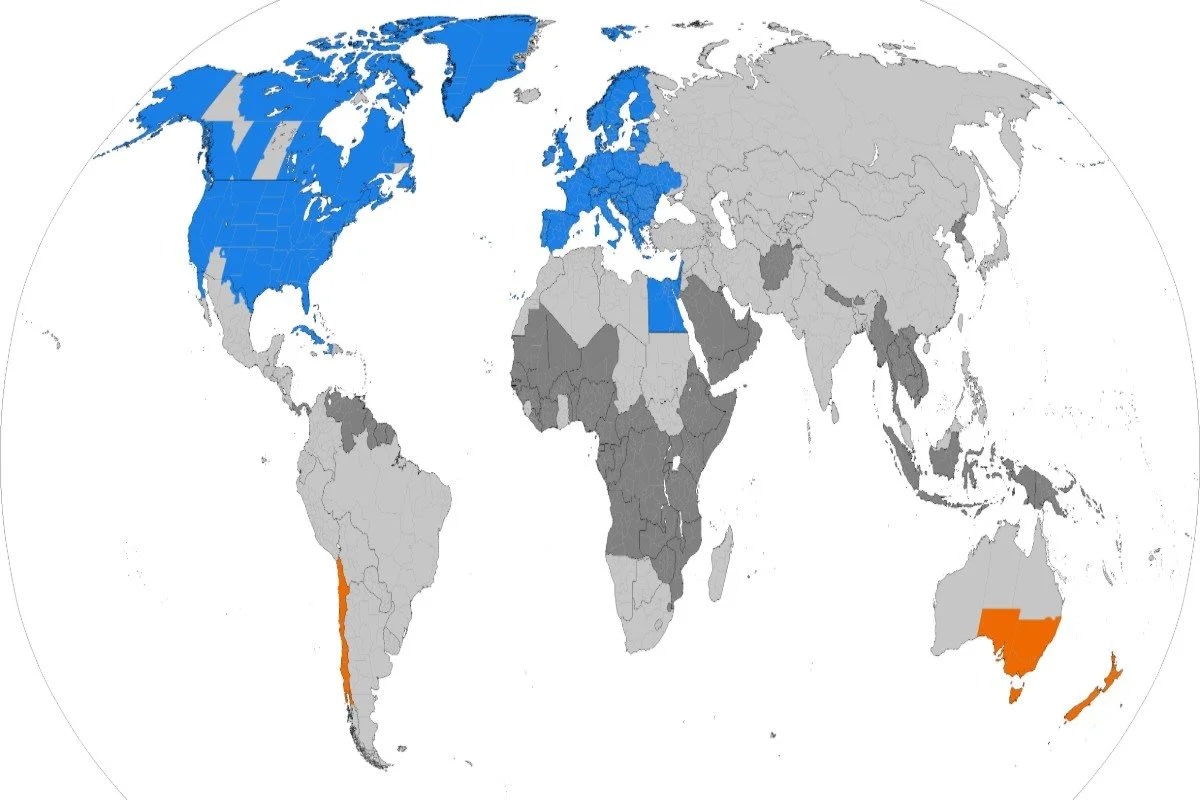
As of 2025, about 70 countries around the world still observe Daylight Saving Time, primarily in Europe, North America, and parts of the Middle East. However, the trend is steadily declining. Over 140 nations either never used DST or have permanently abandoned it. Countries like Russia, Turkey, and Argentina once practiced clock changes but later scrapped them, citing confusion, health concerns, and negligible energy benefits.

Even within countries that still observe it, the debate is growing. In the European Union (EU), a proposal to abolish the biannual clock change has been under discussion since 2018. In the United States, several states have pushed legislation to make either permanent daylight or standard time the norm-all clear signs of a global rethink on whether the old system still fits modern life.

Does Daylight Saving Still Make Sense?

The original argument for DST-energy conservation-has largely faded in the era of air conditioning, digital work, and flexible schedules. Studies, such as those by the U.S. Department of Energy (2008), have found only marginal savings in electricity use, often offset by higher energy consumption during warmer evenings. Health researchers also point to disruptions in sleep patterns and increased stress during the transition weeks.

Economically, the benefits are no longer clear; while retail or leisure industries may see modest gains, the confusion and adjustment costs for global businesses often outweigh them. In a 24/7 connected world, where work and communication transcend time zones, the twice-yearly ritual of changing clocks feels more symbolic than functional-a habit clinging to a bygone era of factory whistles and candlelight economies.

The Habit That Time Forgot

India’s steady, unchanging clocks stand in quiet contrast to this global clock-tinkering. For most Indians, sunrise and sunset remain predictable, and time zones don’t shift with the seasons. Perhaps India’s decision not to adopt Daylight Saving Time was less resistance and more foresight.

As history shows, some traditions linger long after their purpose fades. Daylight Saving Time may have once served a world powered by coal and constrained by daylight. But as humanity advances into a world lit by technology and defined by constant connectivity, perhaps it’s time for the rest of the world to let go of habits that no longer serve their time.


More Articles

Recent Articles

IPL 2026 Setback for RCB as Nuwan Thushara Withdraws, Team Eyes Bowling Alternatives

IPL 2026 Setback for RCB as Nuwan Thushara Withdraws, Team Eyes Bowling Alternatives

Kranthi Shekar - MAR 27, 2026

Revanth Reddy Joins Devotees in Grand Sri Rama Navami Celebrations at Bhadrachalam

Revanth Reddy Joins Devotees in Grand Sri Rama Navami Celebrations at Bhadrachalam

Kranthi Shekar - MAR 27, 2026

Father’s Pride: Chiranjeevi Celebrates Ram Charan with Rare Childhood Photos

Father’s Pride: Chiranjeevi Celebrates Ram Charan with Rare Childhood Photos

Kranthi Shekar - MAR 27, 2026

HBO’s Harry Potter Series Set to Debut This Christmas with a Fresh Take on Hogwarts

HBO’s Harry Potter Series Set to Debut This Christmas with a Fresh Take on Hogwarts

Kranthi Shekar - MAR 27, 2026

‘Peddi Pehelwan’ First Glimpse: Ram Charan Roars in a Fierce, Power-Packed Avatar

‘Peddi Pehelwan’ First Glimpse: Ram Charan Roars in a Fierce, Power-Packed Avatar

Kranthi Shekar - MAR 27, 2026

Petrol and Diesel Get Tax Relief as India Faces Global Oil Market Heat

Petrol and Diesel Get Tax Relief as India Faces Global Oil Market Heat

Kranthi Shekar - MAR 27, 2026

A Promise Kept-The Redemption and Resurgence of Hardik Pandya

A Promise Kept-The Redemption and Resurgence of Hardik Pandya

Kranthi Vegesna - MAR 27, 2026

A Legend Honored: Nandamuri Balakrishna Receives Lifetime Achievement Award in Delhi

A Legend Honored: Nandamuri Balakrishna Receives Lifetime Achievement Award in Delhi

Kranthi Vegesna - MAR 27, 2026

Shift to PNG Gains Momentum: LPG Supply May Stop Where Pipeline Gas Exists

Shift to PNG Gains Momentum: LPG Supply May Stop Where Pipeline Gas Exists

Kranthi Shekar - MAR 26, 2026

From Sacrifice to Inspiration: Narayana Speaks on Potti Sriramulu’s Legacy

From Sacrifice to Inspiration: Narayana Speaks on Potti Sriramulu’s Legacy

Kranthi Shekar - MAR 26, 2026

Hyderabad Traffic Diversions Announced for Sri Rama Navami Procession

Hyderabad Traffic Diversions Announced for Sri Rama Navami Procession

Kranthi Shekar - MAR 26, 2026

₹1000 Crore Rampage: Dhurandhar 2 Targets Pushpa 2: The Rule After Historic First Week

₹1000 Crore Rampage: Dhurandhar 2 Targets Pushpa 2: The Rule After Historic First Week

Kranthi Shekar - MAR 26, 2026

Can Ustaad Bhagat Singh Cross ₹100 Crore This Weekend? Box Office Race Gets Intense

Can Ustaad Bhagat Singh Cross ₹100 Crore This Weekend? Box Office Race Gets Intense

Kranthi Shekar - MAR 26, 2026

Fuel Scare in Hyderabad: Panic Buying Leaves Several Petrol Pumps Running Low

Fuel Scare in Hyderabad: Panic Buying Leaves Several Petrol Pumps Running Low

Kranthi Shekar - MAR 26, 2026

A Bitter Victory—South Africa Claims the Decider in a Series Defined by Scheduling Chaos

A Bitter Victory—South Africa Claims the Decider in a Series Defined by Scheduling Chaos

Kranthi Vegesna - MAR 26, 2026

The Multi-Billion Dollar Changing of the Guard: IPL’s New Ownership Era

The Multi-Billion Dollar Changing of the Guard: IPL’s New Ownership Era

Kranthi Vegesna - MAR 26, 2026

Miami Open 2026: Sinner Rewrites the Record Books as the Draw Opens Wide

Miami Open 2026: Sinner Rewrites the Record Books as the Draw Opens Wide

Kranthi Vegesna - MAR 26, 2026

The Fracturing of Peace-The Alarming Normalization of Hate Speech in India

The Fracturing of Peace-The Alarming Normalization of Hate Speech in India

Kranthi Vegesna - MAR 26, 2026

Self-Governance for Dalit Colonies and Lambada Tandas: Decentralization is the Sustainable Solution

Self-Governance for Dalit Colonies and Lambada Tandas: Decentralization is the Sustainable Solution

Kranthi Vegesna - MAR 26, 2026

“India Lockdown Again?” Viral Rumours Spark Panic After PM Modi Speech - Here’s What’s Really Happening

“India Lockdown Again?” Viral Rumours Spark Panic After PM Modi Speech - Here’s What’s Really Happening

Kranthi Shekar - MAR 25, 2026

Editorial

Daylight savings

Aki - MAR 4, 2026

Share:
Daylight savings

The Daylight Savings Dilemma: A Habit the World Can’t Let Go Of

Every year, around late October or early November, millions across Europe and North America turn their clocks back by an hour as Daylight Saving Time (DST) ends. This annual ritual of adjusting schedules, auto-updating gadgets, and disrupted sleep patterns brings a familiar confusion to many in India’s massive service sector. Suddenly, meetings shift, deadlines move, and "9 a.m. PST" no longer means what it did yesterday. The ritual leaves many Indians wondering: why do so many countries still observe this-and why did India never join in?

The Origins of Daylight Saving Time

The concept of DST wasn't born from modern efficiency but from 18th- and 19th-century necessity. The idea is often humorously attributed to Benjamin Franklin, who suggested in 1784 that people could save candles by waking earlier during summer daylight.

However, it was Germany that formally introduced DST in 1916 during World War I to conserve coal by maximizing daylight hours. Other nations, including Britain and the United States, quickly followed. The practice was revived again during World War II for similar reasons-energy conservation and enhanced productivity.

Despite India being part of the British Empire until 1947, the subcontinent never permanently adopted DST. The reason is simple geography: India’s location near the Equator means daylight hours barely fluctuate across seasons, rendering the concept unnecessary and impractical for a tropical country.

Why Some Countries Needed Daylight Savings

Daylight Saving Time emerged as a direct response to the uneven distribution of sunlight across the year in higher-latitude countries, particularly those in the northern hemisphere. Regions like Scandinavia, Canada, northern Europe, and the northern U.S. states experience dramatically long summer days and short winter days.

By "saving daylight," societies could better utilize the early summer sunrises-which can occur as early as 4 a.m. in June in cities like Oslo or London-and extend usable light into the evening. This adjustment helped synchronize daily activity with natural light, maximizing productivity and reducing the need for artificial lighting before the age of 24-hour electricity. In contrast, countries near the equator, including India, Indonesia, and Kenya, see relatively constant daylight-roughly 12 hours all year-making such clock adjustments largely irrelevant.

Who Still Changes Their Clocks?

As of 2025, about 70 countries around the world still observe Daylight Saving Time, primarily in Europe, North America, and parts of the Middle East. However, the trend is steadily declining. Over 140 nations either never used DST or have permanently abandoned it. Countries like Russia, Turkey, and Argentina once practiced clock changes but later scrapped them, citing confusion, health concerns, and negligible energy benefits.

Even within countries that still observe it, the debate is growing. In the European Union (EU), a proposal to abolish the biannual clock change has been under discussion since 2018. In the United States, several states have pushed legislation to make either permanent daylight or standard time the norm-all clear signs of a global rethink on whether the old system still fits modern life.

Does Daylight Saving Still Make Sense?

The original argument for DST-energy conservation-has largely faded in the era of air conditioning, digital work, and flexible schedules. Studies, such as those by the U.S. Department of Energy (2008), have found only marginal savings in electricity use, often offset by higher energy consumption during warmer evenings. Health researchers also point to disruptions in sleep patterns and increased stress during the transition weeks.

Economically, the benefits are no longer clear; while retail or leisure industries may see modest gains, the confusion and adjustment costs for global businesses often outweigh them. In a 24/7 connected world, where work and communication transcend time zones, the twice-yearly ritual of changing clocks feels more symbolic than functional-a habit clinging to a bygone era of factory whistles and candlelight economies.

The Habit That Time Forgot

India’s steady, unchanging clocks stand in quiet contrast to this global clock-tinkering. For most Indians, sunrise and sunset remain predictable, and time zones don’t shift with the seasons. Perhaps India’s decision not to adopt Daylight Saving Time was less resistance and more foresight.

As history shows, some traditions linger long after their purpose fades. Daylight Saving Time may have once served a world powered by coal and constrained by daylight. But as humanity advances into a world lit by technology and defined by constant connectivity, perhaps it’s time for the rest of the world to let go of habits that no longer serve their time.

More Articles

Recent Articles

IPL 2026 Setback for RCB as Nuwan Thushara Withdraws, Team Eyes Bowling Alternatives

IPL 2026 Setback for RCB as Nuwan Thushara Withdraws, Team Eyes Bowling Alternatives

Kranthi Shekar - MAR 27, 2026

Revanth Reddy Joins Devotees in Grand Sri Rama Navami Celebrations at Bhadrachalam

Revanth Reddy Joins Devotees in Grand Sri Rama Navami Celebrations at Bhadrachalam

Kranthi Shekar - MAR 27, 2026

Father’s Pride: Chiranjeevi Celebrates Ram Charan with Rare Childhood Photos

Father’s Pride: Chiranjeevi Celebrates Ram Charan with Rare Childhood Photos

Kranthi Shekar - MAR 27, 2026

HBO’s Harry Potter Series Set to Debut This Christmas with a Fresh Take on Hogwarts

HBO’s Harry Potter Series Set to Debut This Christmas with a Fresh Take on Hogwarts

Kranthi Shekar - MAR 27, 2026

‘Peddi Pehelwan’ First Glimpse: Ram Charan Roars in a Fierce, Power-Packed Avatar

‘Peddi Pehelwan’ First Glimpse: Ram Charan Roars in a Fierce, Power-Packed Avatar

Kranthi Shekar - MAR 27, 2026

Petrol and Diesel Get Tax Relief as India Faces Global Oil Market Heat

Petrol and Diesel Get Tax Relief as India Faces Global Oil Market Heat

Kranthi Shekar - MAR 27, 2026

A Promise Kept-The Redemption and Resurgence of Hardik Pandya

A Promise Kept-The Redemption and Resurgence of Hardik Pandya

Kranthi Vegesna - MAR 27, 2026

A Legend Honored: Nandamuri Balakrishna Receives Lifetime Achievement Award in Delhi

A Legend Honored: Nandamuri Balakrishna Receives Lifetime Achievement Award in Delhi

Kranthi Vegesna - MAR 27, 2026

Shift to PNG Gains Momentum: LPG Supply May Stop Where Pipeline Gas Exists

Shift to PNG Gains Momentum: LPG Supply May Stop Where Pipeline Gas Exists

Kranthi Shekar - MAR 26, 2026

From Sacrifice to Inspiration: Narayana Speaks on Potti Sriramulu’s Legacy

From Sacrifice to Inspiration: Narayana Speaks on Potti Sriramulu’s Legacy

Kranthi Shekar - MAR 26, 2026

Hyderabad Traffic Diversions Announced for Sri Rama Navami Procession

Hyderabad Traffic Diversions Announced for Sri Rama Navami Procession

Kranthi Shekar - MAR 26, 2026

₹1000 Crore Rampage: Dhurandhar 2 Targets Pushpa 2: The Rule After Historic First Week

₹1000 Crore Rampage: Dhurandhar 2 Targets Pushpa 2: The Rule After Historic First Week

Kranthi Shekar - MAR 26, 2026

Can Ustaad Bhagat Singh Cross ₹100 Crore This Weekend? Box Office Race Gets Intense

Can Ustaad Bhagat Singh Cross ₹100 Crore This Weekend? Box Office Race Gets Intense

Kranthi Shekar - MAR 26, 2026

Fuel Scare in Hyderabad: Panic Buying Leaves Several Petrol Pumps Running Low

Fuel Scare in Hyderabad: Panic Buying Leaves Several Petrol Pumps Running Low

Kranthi Shekar - MAR 26, 2026

A Bitter Victory—South Africa Claims the Decider in a Series Defined by Scheduling Chaos

A Bitter Victory—South Africa Claims the Decider in a Series Defined by Scheduling Chaos

Kranthi Vegesna - MAR 26, 2026

The Multi-Billion Dollar Changing of the Guard: IPL’s New Ownership Era

The Multi-Billion Dollar Changing of the Guard: IPL’s New Ownership Era

Kranthi Vegesna - MAR 26, 2026

Miami Open 2026: Sinner Rewrites the Record Books as the Draw Opens Wide

Miami Open 2026: Sinner Rewrites the Record Books as the Draw Opens Wide

Kranthi Vegesna - MAR 26, 2026

The Fracturing of Peace-The Alarming Normalization of Hate Speech in India

The Fracturing of Peace-The Alarming Normalization of Hate Speech in India

Kranthi Vegesna - MAR 26, 2026

Self-Governance for Dalit Colonies and Lambada Tandas: Decentralization is the Sustainable Solution

Self-Governance for Dalit Colonies and Lambada Tandas: Decentralization is the Sustainable Solution

Kranthi Vegesna - MAR 26, 2026

“India Lockdown Again?” Viral Rumours Spark Panic After PM Modi Speech - Here’s What’s Really Happening

“India Lockdown Again?” Viral Rumours Spark Panic After PM Modi Speech - Here’s What’s Really Happening

Kranthi Shekar - MAR 25, 2026