Deep Learning and Neural Networks
Prakash Ranganathan - MAR 4, 2026
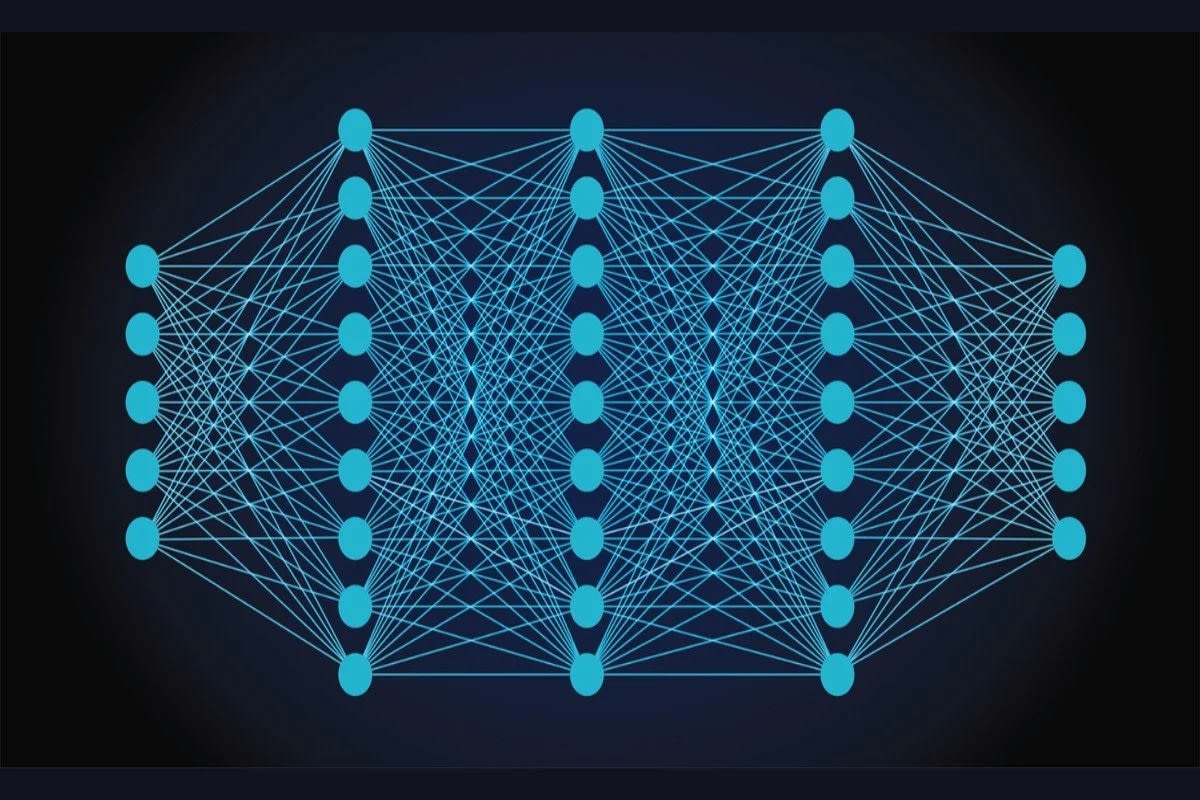
Artificial Intelligence (AI) has made remarkable progress in recent years, largely thanks to a technique called deep learning. At the heart of deep learning are neural networks, which are computer systems inspired by the structure and function of the human brain.
Let’s break down the key components of neural networks in simple terms.
1. What is a Neuron in AI?
In the human brain, a neuron is a cell that receives and sends electrical signals. In an artificial neural network, a neuron is a mathematical function that receives input, processes it, and passes it to the next layer.
Each artificial neuron:
Takes input values (like numbers),
Multiplies them by weights (which determine importance),
Adds a bias (a constant value),
Applies an activation function (which decides the output).
This process mimics how biological neurons fire signals based on stimuli.
2. Layers in a Neural Network
Neural networks are made up of layers:
Input Layer: Receives raw data (e.g., pixels of an image).
Hidden Layers: Perform calculations and extract patterns.
Output Layer: Produces the final result (e.g., classification of an image).
A deep neural network has multiple hidden layers, which allows it to learn complex patterns. The more layers, the “deeper” the network.
Each layer transforms the data and passes it forward. This is called a feed-forward process.
3. How Learning Happens: Backpropagation
To make a neural network learn, it needs to adjust its weights and biases. This is done using a method called backpropagation.
Here’s how it works:
The network makes a prediction.
It compares the prediction to the correct answer (using a loss function).
It calculates the error.
It sends the error backward through the network.
It updates the weights and biases to reduce the error.
This process is repeated many times during training, helping the network improve its accuracy.
Backpropagation is like a teacher correcting a student’s mistakes so they learn better next time.
4. Why Neural Networks Matter
Neural networks are used in:
Image and speech recognition,
Language translation,
Medical diagnosis,
Autonomous vehicles,
Financial forecasting.
They are powerful because they can learn from data without being explicitly programmed.
Diagram of a Neural Network
Input Layer: Nodes on the left.
Hidden Layer: Middle nodes.
Output Layer: Nodes on the right.
Connections: Arrows represent forward propagation.
Backpropagation: Indicated by the dashed arrow at the top.
Pass this article to someone who’d love to learn this!
Neural networks are the foundation of modern AI. Understanding them is the first step toward mastering deep learning.