Great Nicobar Project Controversy — Development vs Environment & Tribal Rights
Kranthi Vegesna - FEB 14, 2026
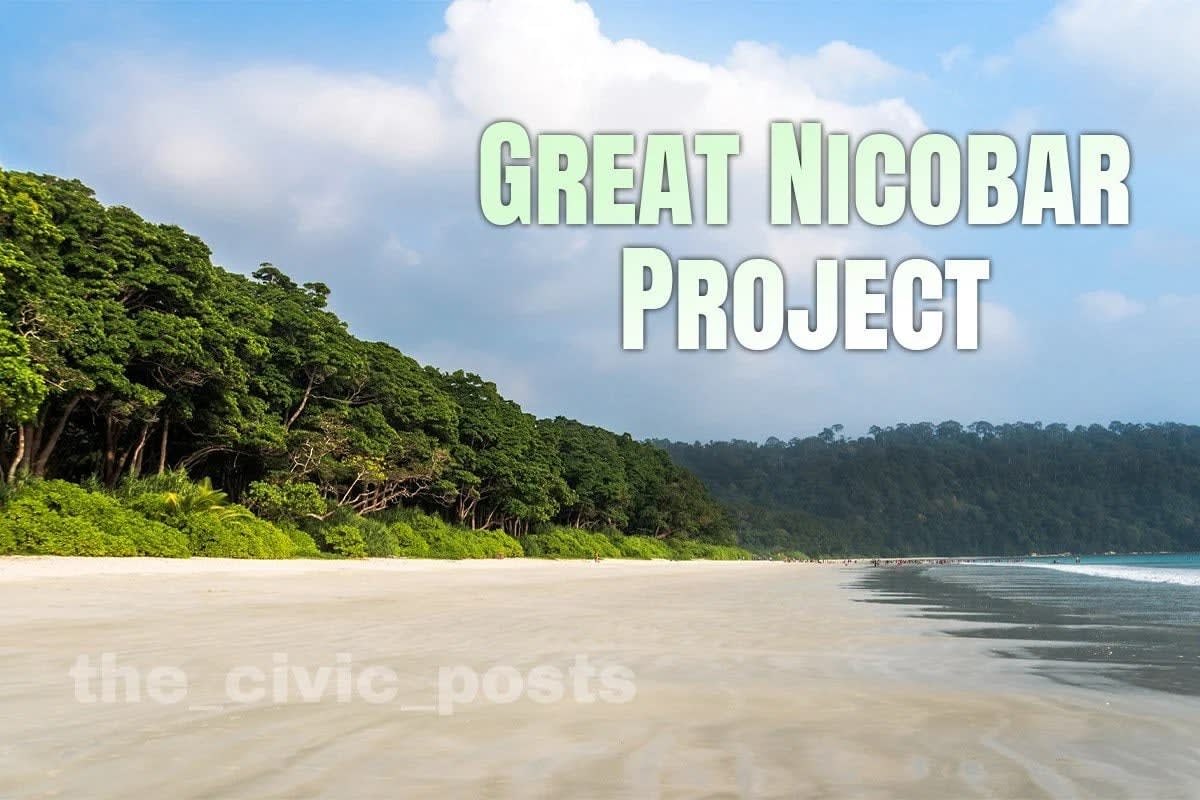
The Central Government has proposed a massive infrastructure project on Great Nicobar Island, with an estimated cost of ₹72,000–₹81,000 crore, known as the Great Nicobar Island Development Project.
The key components of this project include an international container transshipment port, a greenfield airport, a power plant, and a new township.
The Centre views this project as a pathway to national security objectives and economic development.
However, the project has attracted widespread criticism for posing a serious threat to the environment, rare biodiversity, and indigenous tribal communities. This article outlines the background of the controversy and the nature of objections raised by experts, activists, and discussions ongoing across social media platforms.
Key Concerns Raised in Sonia Gandhi’s Letter
Congress leader Sonia Gandhi expressed strong objections to the project and highlighted the following major concerns:
Environmental Damage
Large-scale deforestation would severely impact the island’s ecological balance. Estimates suggest that over 8.5 lakh trees may be felled for the project.
Threat to Tribal Communities
The livelihoods and cultural identity of indigenous communities such as the Nicobarese and Shompen tribes would be gravely affected. She warned that even after the 2004 tsunami, many of these communities have not fully returned to their original habitats, and this project could permanently erase their traditional settlements.
She also strongly criticized the government for proceeding without adequate consultation with local Tribal Councils and statutory bodies such as the National and State Tribal Commissions.
Flawed Environmental Assessments
She pointed out that the Environmental Impact Assessment (EIA) reports were neither scientifically rigorous nor conducted over a sufficient time frame.
In her letter, Sonia Gandhi described the project as a “grave misadventure”, urging the Central Government to reconsider it in the interest of environmental protection and tribal rights.
Debates on Social Media
The project has sparked intense discussions across digital platforms, reflecting sharply divided opinions:
Views of Environmentalists
Many users have called for the protection of forests and conservation of rare species, including leatherback turtles, the Nicobar macaque, and megapode birds. Some have even described the project as a potential “humanitarian disaster.”
Opinions of Tribal Rights Groups
There is widespread concern online that indigenous communities like the Shompen could lose their culture, land, and traditional way of life.
Polarised Arguments
While some argue that the project is a strategic necessity for national security, others fear it could become another example of tribal land acquisition justified in the name of national interest.
The controversy has become more complex due to the overlap of political ideologies, public sentiment, and strategic narratives in the digital space.
Cases and Orders Before the National Green Tribunal (NGT)
Citizens and environmental experts have filed petitions before the National Green Tribunal (NGT) challenging the Environmental Clearances granted to the project.
NGT’s High-Powered Committee (HPC)
In 2023, the NGT directed the formation of a High-Powered Committee to re-examine the environmental approvals. The committee’s report was submitted to the tribunal in a sealed cover, and not made public.
The NGT later stated that sealed portions of the report should not be relied upon during adjudication.
Ongoing Hearings and Key Issues
During hearings, it was highlighted that parts of the project fall within CRZ-1A zones (ecologically sensitive coastal areas), where development activities are legally restricted.
Allegations of Non-Compliance
Environmental analysts allege that the government has not fully complied with NGT orders, and that environmental evaluation data was processed without proper transparency.
Additional Legal Actions
RTI requests were filed with the National Commission for Scheduled Tribes (NCST) seeking information related to the project. However, cases have emerged alleging that the NCST failed to provide information despite statutory obligations.
---
Government’s Arguments & Claimed Benefits
The government portrays the project as a cornerstone for strategic maritime importance, a logistics hub for international trade, and a catalyst for regional development.
According to official claims, the project will generate employment opportunities, boost commercial activity, and enhance infrastructure capacity through ports, shipping services, and township development.
The government also asserts that the project adheres to environmental safeguards, including monitoring committees, regulatory frameworks, and special compliance mechanisms.
---
Critical Issues and Gaps
Environmental Impact
Construction near rainforests, coral reefs, and wildlife habitats could result in irreversible long-term ecological damage.
Tribal Rights & Legal Safeguards
Critics argue that tribal rights were not adequately recognized, and statutory consultations were bypassed before granting approvals.
Seismic and Natural Disaster Risks
Great Nicobar lies in a seismically active zone and was severely affected by the 2004 tsunami. Large-scale infrastructure projects could amplify future disaster risks.
---
Overall Analysis: Development vs Conservation
This controversy reflects a broader national dilemma — should development be pursued at the cost of environmental sustainability and tribal rights?
On one side are claims of economic growth, job creation, and strategic advantage. On the other are concerns about ecological destruction, cultural erosion of indigenous communities, and loss of biodiversity.
Many experts and environmentalists argue that only through transparent, democratic, and inclusive decision-making can such conflicts be resolved.
The struggle over the Great Nicobar Project is not merely about construction — it is about finding a balance between national development, environmental protection, and indigenous rights.
It represents a critical test of our collective ethics and our responsibility toward the future of the land, its people, and the planet.