National Herald Case: A Complete Explanation
Kranthi Vegesna - FEB 16, 2026
Introduction
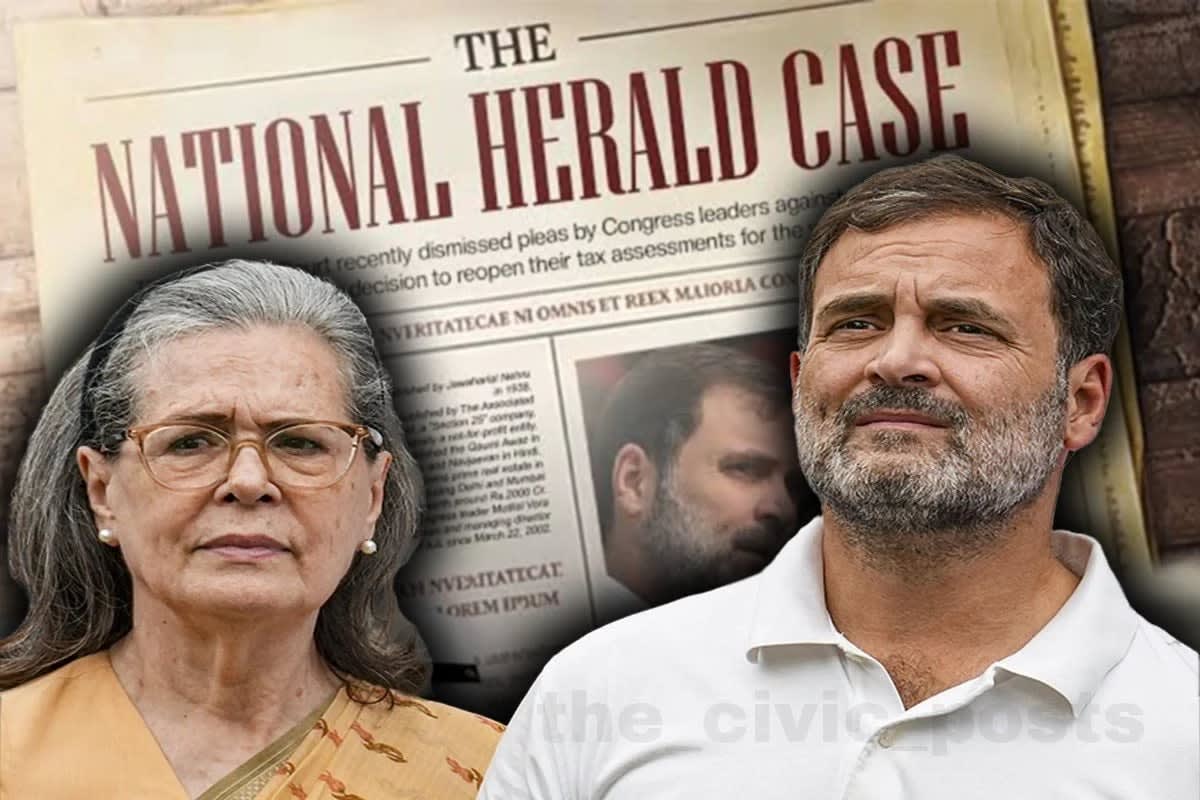
The National Herald case is one of the major ongoing legal disputes in India. The case revolves around doubts related to the transfer of assets, movement of shares, and control of properties belonging to an old newspaper organization. Congress Party president Sonia Gandhi, former president Rahul Gandhi, and a few others have been named as primary individuals in the case. The Enforcement Directorate (ED) is investigating the matter under the Prevention of Money Laundering Act (PMLA) based on allegations of financial misconduct.
The National Herald newspaper was established in 1938. It became a prominent publication supporting the Congress party during the freedom movement. Due to financial difficulties, its publication was stopped in 2008. The controversy focuses on alleged irregularities during the transfer of the newspaper’s assets to a newly created company.
Facts Behind the Case
The National Herald was published by Associated Journals Limited (AJL). This company owns several valuable properties in major cities such as Delhi, Mumbai, and Lucknow. These properties are estimated to be worth around ₹2,000 crore. AJL had accumulated huge debts. In 2010, a new company named Young Indian Limited (YIL) was created. This company acquired the shares of AJL and gained control over its assets.
YIL reportedly promised to clear AJL’s debts amounting to ₹90.21 crore and, in exchange, received several lakh shares of AJL. The value of these shares was only ₹50 lakh. This process is known as a “loan-to-equity conversion.” Through this mechanism, YIL allegedly gained control over AJL’s assets worth thousands of crores by investing a very small amount.
In YIL, 38% shares belong to Sonia Gandhi and another 38% to Rahul Gandhi. The remaining shares are held by Sam Pitroda, Suman Dubey, and others. Because of this, critics allege that assets built using public donations were brought under the control of Congress leaders through YIL.
Key Allegations
According to ED and other investigative agencies, several illegal activities occurred during the transfer process. The major allegations are:
YIL was set up as a “shell company” to acquire control over valuable assets at an extremely low cost.
AJL’s assets were created using public donations. Transferring them to a private company violates public trust.
Income generated through these assets, especially rent collected, is considered “proceeds of crime.”
Money laundering was committed under the Prevention of Money Laundering Act (PMLA).
ED claims that Sonia Gandhi and Rahul Gandhi benefited by ₹142 crore through this transaction. Additionally, assets worth ₹751.9 crore have been temporarily attached.
Case History and Key Events
Year Event
2012 Subramanian Swamy files a private criminal complaint in Delhi court.
2014 Delhi court registers the case.
2021 ED initiates a money laundering investigation.
2022 Sonia Gandhi and Rahul Gandhi questioned by ED.
Nov 2023 Temporary attachment of properties worth ₹751.9 crore.
April 2025 ED files its action report.
May 2025 Court issues notices to Sonia, Rahul, and others.
Nov 2025 Delhi Police’s Economic Offences Wing (EOW) registers a new FIR.
The case is currently under trial in the Delhi court. The judgment has been postponed to December 16.
Opposition’s Stand
The Congress party and the individuals accused claim that the case is politically motivated. Their major arguments are:
YIL was formed only to revive AJL, not to gain personal control over the assets.
YIL is a non-profit company. It cannot distribute dividends, meaning Sonia or Rahul Gandhi did not receive any personal income.
The properties still legally belong to AJL; YIL only manages them.
The entire transfer process was carried out lawfully and involves no money laundering.
Congress argues that the case is being used as a political weapon to suppress opposition parties.
Significance and Impact of the Case
The National Herald case is not just about a newspaper organization. It raises important questions about the handling of assets created through public donations, transparency in share transfers, and protection of public trusts. The core issue is whether one can legally gain control over assets worth thousands of crores through minimal investment.
The case highlights three key points for the public:
1. Assets created through donations must be governed by strict rules and transparency.
2. Corporate transactions, especially share transfers, must be conducted with full clarity.
3. The law must apply equally to all, including political leaders and party institutions.
The verdict will have a major impact on India’s political and legal systems. If the allegations are proven true, it may be seen as a major example of misuse of public trust. If not, it will give strength to the argument that investigative agencies were misused for political motives.
Conclusion
The National Herald case is a complex legal dispute involving asset transfers, share transactions, and the safeguarding of public trusts. It underscores the importance of transparency in asset management and accountability in the use of donated funds. Ultimately, only the courts can deliver a final judgment. The case is likely to shape future guidelines on managing assets in democratic institutions.