POK Unrest : A Tactical Opening, Not an Imminent Merger
AKI - MAR 4, 2026
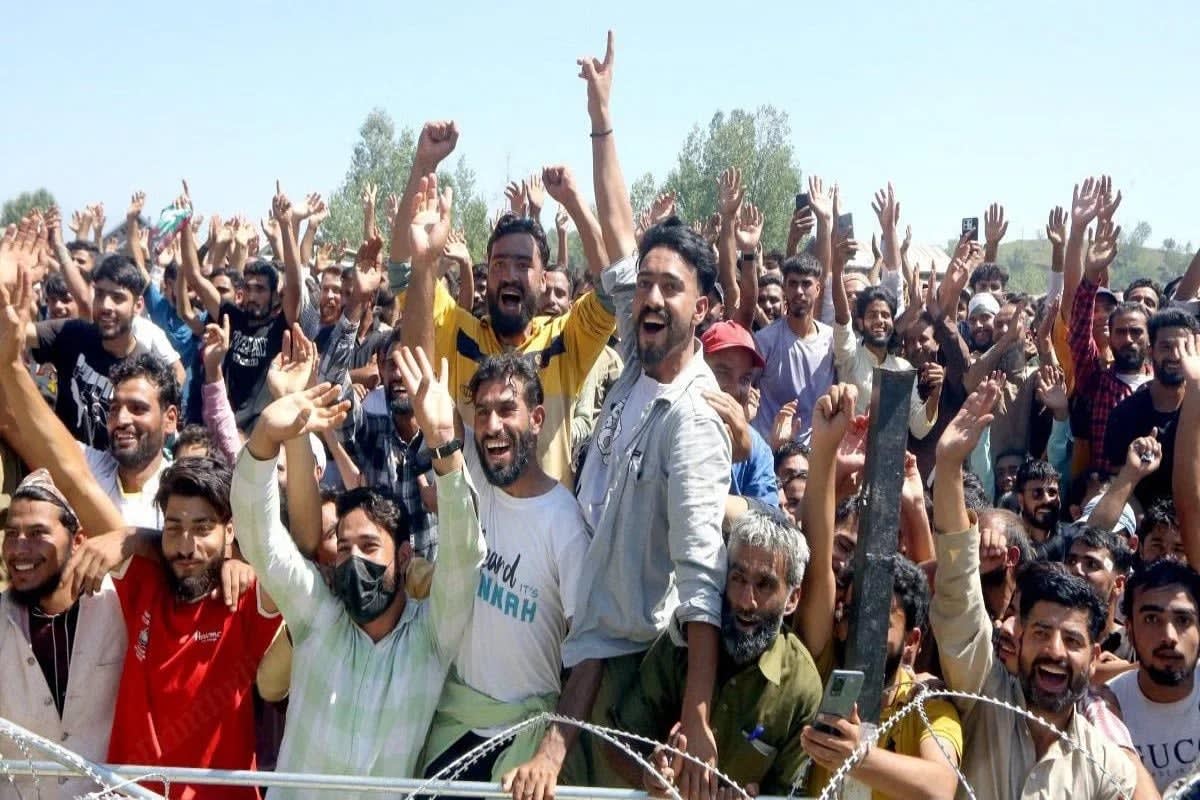
Shuttered markets, deserted streets, and slogans echoing through Muzaffarabad capture the chaos gripping Pakistan-Occupied Kashmir (PoK). The current wave of protests, which intensified after a region-wide shut down on September 29, 2025, is the most severe in recent years. What began in 2023 as anger over rising electricity bills and the shortage of subsidized flour has now escalated into a broad, defiant challenge to Islamabad’s rule. According to local reports, tens of thousands of demonstrators have taken to the streets across Muzaffarabad, Mirpur, and other districts.
Pakistan’s response has been heavy-handed. Authorities have imposed an indefinite lockdown, enforced a near-total communication blackout, and deployed thousands of police and paramilitary troops to suppress the uprising. Eyewitness accounts and rights groups suggest the use of tear gas, rubber bullets, automatic rifles, and live ammunition in crowd-control operations. Security convoys armed with armoured personnel carriers and light artillery-mounted vehicles have been stationed at protest hotspots, signalling a militarized clampdown. The toll has been brutal: at least dozens have been killed, including both civilians and police personnel, and hundreds have been injured, many with gunshot wounds.
For many in India, the turmoil evokes not just sympathy but symbolism. Commentators, politicians, and media houses frame this as a “homecoming,” the long-awaited return of PoK into India’s fold-a narrative of the prodigal son returning after decades of separation. They highlight the stark contrast between Indian-administered Kashmir’s development push and PoK’s poverty, suggesting that ordinary people in PoK now see their future with India. This feeds into the emotionally powerful vision of “Akhand Bharat.”
Yet the reality in the streets of PoK is more grounded. The protests are led by the Jammu Kashmir Joint Awami Action Committee (JKJAAC), a civil society coalition of students, professionals, and traders. Their 38-point charter calls for lower electricity tariffs, subsidized flour, abolition of elite privileges, and greater political rights-not independence from Pakistan, and certainly not accession to India. While anti-Pakistan slogans are heard, the movement’s core demands remain about survival and justice, not geopolitics.
The echoes of history are unmistakable. The crackdown recalls Pakistan’s repression in East Pakistan before 1971, when economic exploitation and political exclusion fuelled Bangladesh’s independence. Yet, India’s experience with Bangladesh also carries a cautionary tale: even after aiding its liberation, New Delhi did not gain a long-term ally. Similarly, today’s unrest in PoK exposes Pakistan’s weaknesses but does not point toward an imminent merger with India.
Globally, reunifications of divided territories are vanishingly rare. Germany’s 1990 reunification is the shining exception, while other attempts-like Yemen’s merger in 1990 or Vietnam’s in 1976-were either fragile or forged through war. The trend since World War II has leaned more toward fragmentation, from the breakup of the Soviet Union to Sudan’s partition, than toward states knitting back together. Expecting PoK’s incorporation into India is, at best, a long and uncertain prospect.
For India, the moment is more tactical than emotional. By amplifying PoK’s unrest on global platforms, New Delhi can weaken Pakistan’s international standing, highlight Islamabad’s oppressive governance, and shift the discourse around Kashmir in its favour. But overreach carries risks. India must carefully calibrate its support, learning from Bangladesh’s precedent: sometimes weakening your neighbour is victory enough, even without redrawing borders.
The chants on Muzaffarabad’s streets may not yet be marching toward India. But every slogan against Islamabad loosens Pakistan’s grip-and that alone makes this unrest a turning point New Delhi cannot ignore.