Poojya Bapu Rural Employment Guarantee Scheme: 18 Years of Journey — Achievements, Failures, and the Road Ahead
Kranthi Vegesna - FEB 20, 2026
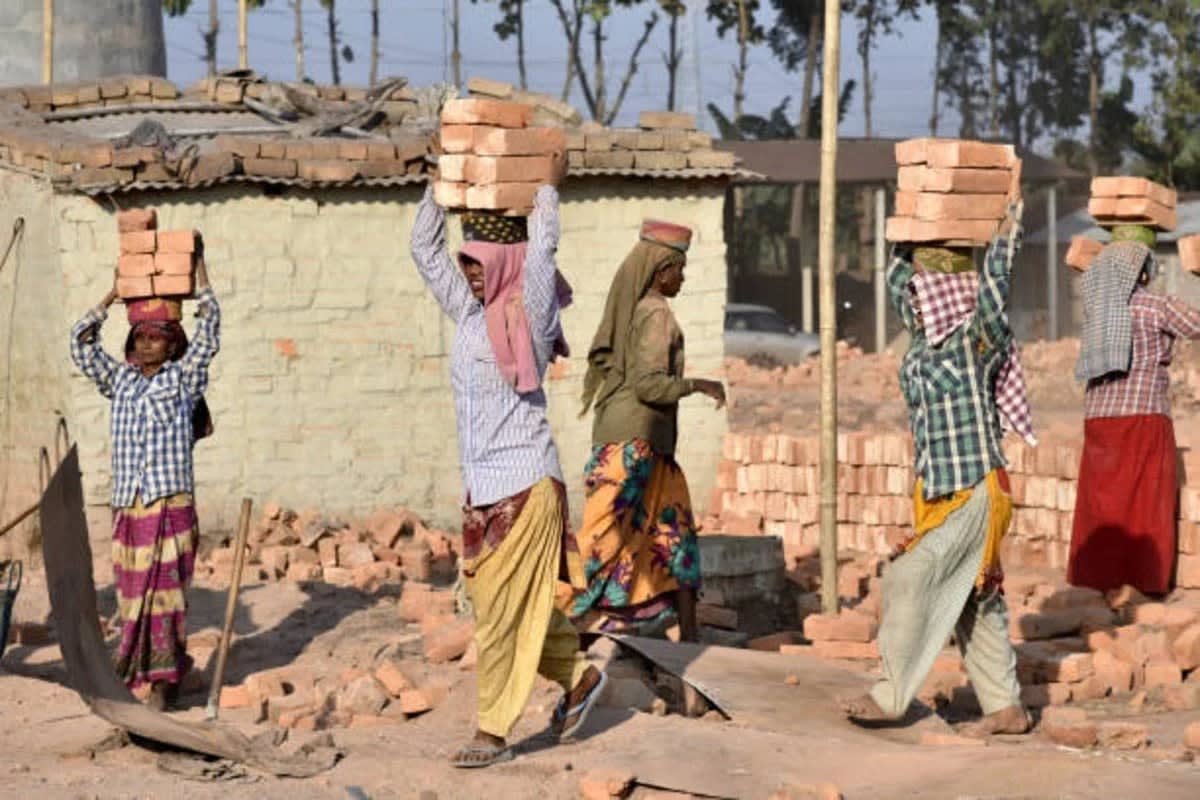
In rural India, one promise still carries immense weight: “If you ask for work, work will be provided.” The scheme that gave this promise legal backing is the Mahatma Gandhi National Rural Employment Guarantee Scheme (MGNREGS). It was launched on February 2, 2006, in Bandlapalli village of Anantapur district, Andhra Pradesh. It is one of the very few schemes in the world that recognizes employment as a legal right.
Today, the scheme enters its 18th year. Over these 18 years, how much has rural India changed? How much has it slipped backward? What impact will recent changes have on the lives of rural workers? The central government has now renamed the scheme as the “Poojya Bapu Rural Rozgar Guarantee Bill 2025” and increased guaranteed workdays to 120. How effective will these changes be?
To answer these questions, a comprehensive review of the scheme’s successes, failures, controversies, and future direction is essential.
Origins and History — Employment as a Right for Rural India
The National Rural Employment Guarantee Act (NREGA) was introduced by the UPA-I government in 2005 and implemented in 2006. In 2009, Mahatma Gandhi’s name was added to the scheme.
Key Objectives of the Scheme:
1. Guaranteed employment of at least 100 days per year for every adult in a rural household
2. Creation of durable assets in villages, such as:
Ponds/Roads/canals/Tree Plantation/ Land Development
3. Minimum 33% reservation for women
4. Direct transfer of wages to bank accounts (DBT)
This is not merely an employment scheme—it is one of the most revolutionary steps taken for rural development and economic revival.
MGNREGS as a Lifeline During the COVID Pandemic
Between 2020 and 2022, when the pandemic gripped the nation, millions of migrant workers were forced to return from cities to villages. During that time, MGNREGS became their only support system.
Pandemic-Era Records:
111.9 million people employed in 2020–21 — the highest ever
38.9 million households completed 100 days of work
Best-performing states: Telangana, Andhra Pradesh, Rajasthan, West Bengal, Chhattisgarh
Economists wrote at the time:
> “Without MGNREGS, rural India would have faced starvation.”
The truth of this statement became evident during the crisis.
But… Did Real Development Happen?
A closer look at villages today reveals that many assets created under the scheme have not lasted.
Ground Realities in Villages, Ponds getting filled up again, Roads deteriorating, Trees drying up due to lack of watering, Severe decline in cleanliness, Clogged drainage systems,Garbage left unattended in villages outside municipal limits
Why Did This Happen?
Lack of priority to local needs while selecting works
Focus only on “doing some work”, not on outcomes
Public apathy and lack of community ownership
Absence of monitoring to ensure long-term sustainability
As a result, despite rising expenditure, the quality of rural infrastructure has not improved as expected.
---
Where Does MGNREGS Stand Today?
In 2024–25, budget allocation for the scheme wass was lower than the previous year, leading to a sharp reduction in available workdays per family.
Key Statistics:
Average work availability: only 45–50 days per year
In several states: just 20–30 days
Budget allocation: ₹86,000 crore (reduced)
Employment Scenario (CMIE Data):
Unemployment rate crossed 8.5%
Large proportion of rural youth remain unskilled
In such a situation, 100 days of work is clearly insufficient.
Recent Changes: Renaming and Increase in Workdays
The central government recently, Renamed the scheme as “Poojya Bapu Rural Rozgar Guarantee Bill 2025”.
Increased workdays from 100 to 120, Jammu & Kashmir already provides 150 days
However, the real impact of this increase will depend on implementation and budget support.
Job Card Deletions — A Major Controversy
Between 2019 and 2025:
45.7 million job cards were deleted
Government’s Explanation:
Deaths/ Fake cards/ Migrated families
Opposition’s Allegation:
Job cards of opposition supporters are being deliberately removed
In some states, mass deletions running into lakhs have gone viral. While conclusive evidence is still lacking, public suspicion has grown.
Corruption — A Pain Without Treatment
Reports from the CAG and social audits highlight:
Fake job cards
Wages paid for non-working days (ghost days)
Corruption in material bills
Nexus between officials and contractors
Despite Aadhaar linking and DBT, irregularities continue.
Solutions:
Genuine social audits
Strong Gram Sabha discussions
Mandatory online photos and videos of works
Community monitoring of work quality
Why Is Increasing to 200 Days Essential?
1. To Reduce Unemployment
Income security for nearly half the year
2. To Strengthen the Rural Economy
More work → more wages → higher purchasing power
3. For Durable Asset Creation
Large infrastructure works cannot be completed in 100 days
The “100 + 100” Model — A Future Path
First 100 Days: Development Works
Ponds, Canals, Roads, Land leveling,
Second 100 Days: Village Cleanliness, Plastic waste removal, Drain cleaning, Drain cleaning, Solid waste management, Tree maintenance, Village beautification
Two Major Benefits:
Increased employment
Healthier villages
Diseases like dengue and malaria would also decline.
200 Days Are Meaningless Without Wage Hikes
Current Daily Wages:
Telangana: ₹300–₹320
Andhra Pradesh: ₹280
Bihar: ₹228
Uttar Pradesh: ₹230
Considering inflation, these are far too low.
Minimum wages should be ₹400–₹450 per day.
---
Clean Surroundings — The Foundation of Public Health
Lack of cleanliness in villages leads to:
Increase in diseases
Water contamination
Rising healthcare costs
If the government ensures integrated implementation of:
Drinking water
Toilets
Waste management
Rural health outcomes will improve significantly.
Conclusion — MGNREGS as a Tool to Revive Rural India
Over 18 years, MGNREGS has saved crores of families and acted as a lifeline during the pandemic.
But today, the scheme faces serious challenges:
Budget constraints
Reduced workdays
Corruption
Job card deletion controversies
Declining quality of development works
To sustain rural India, the following are essential:
Increase to 200 workdays
Wage revision
Strong anti-corruption mechanisms
“100 + 100” model for development and cleanliness
Transparency and accountability
Only then will villages truly be strengthened.
Only then will Mahatma Gandhi’s dream be realized—clean, healthy villages with dignity of work.
MGNREGS is not just an employment scheme;
it is the backbone of India’s rural socio-economic system.
Strengthening it means strengthening the nation’s future.